coaching

Shall we talk about it?

c/o Ralph Hutter

Why do organisations reward politics instead of performance?

Effective leadership interrupts this pattern. Leaders who prize transparency, evidence-based evaluation, and emotionally intelligent communication create cultures where performance is understood, recognised, and fairly rewarded. These leaders model accountability, reduce ambiguity, and ensure that each person can trust the system they are part of. When leaders actively listen, offer clarity, and address inequities, the political environment weakens and psychological safety rises. Performance becomes visible again.

If you feel frustrated by internal politics or unsure how to influence your organisation without compromising your values, a coaching conversation can help you understand your position, expand your options, and strengthen your leadership presence.

If any of this resonates, you are welcome to book a complimentary 30-minute discovery call to explore how coaching can support your leadership journey. Link here


Three questions

There are three questions that can instantly diffuse a difficult conversation:

  1. What would you suggest?

  2. What would it take for you to agree?

  3. Can you live with it?

Every time I have ever gone through this cycle of questions or coached someone to do this, the result has been a breakthrough. I think these questions shift the conversation from defensiveness to problem-solving and create space for clarity, ownership, and shared solutions. What do you think?


The power of support

c/o @GregorPurdy

Many people still distrust counsellors, therapists, or other support professionals, and as a result, become too numb to resist the weight of their struggles. However, working with a coach can be transformative. After working with me for three, six, or twelve months, my clients develop a deep understanding of themselves, learn to trust their instincts, and to feel secure in their own decisions.

I think when guiding leaders, the aim is always to empower them to think independently and act on their own behalf, ultimately making the coach’s role unnecessary. Through this process, clients come to recognise and harness the remarkable strength that lies within them.

“I have never learned anything from talking. I only learn things by asking questions.”
— Lou Holtz

Mental toughness

When we tie our identity to external achievements, we actually become more fragile, not stronger. The brain interprets failure as a threat, for example, if I don’t reach this goal, I’m not good enough, and this triggers a stress response.

True resilience comes from knowing you are secure in who you are, regardless of whether you win or lose. It still hurts when things don’t go your way and that’s human. I think that instead of getting stuck in “protect mode,” try shifting your mind into “learning and growth mode.” One simple and powerful way to do that? Spend time with people who lift you up. Social connection releases oxytocin, which calms the brain and helps you recover faster from setbacks.


Everything has a season

As a coach I don’t take responsibility for the outcome as that belongs to the client. I’m not a performance or outcome-only coach, as AI is better at that, for example:
“How to make a plan.”
“Here’s a checklist.”
“Here’s how to do X, Y and Z.”

For me, coaching is about human connection. It’s about creating a space where we can be vulnerable, reflective, and curious. A space to explore what gets in the way when we are navigating the situations we find ourselves in.

If any of this resonates, you are welcome to book a complimentary 30-minute discovery call to explore how coaching can support your journey. Link here

“More is lost by indecision than wrong decision. Indecision is the thief of opportunity.”
— ​Marcus Tullius Cicero

Why they choose me?

I often meet leaders who feel siloed, they are successful on the surface, yet deeply isolated in their roles. It’s not that they don’t have people around them; it’s that they have no safe space to think out loud.

They can’t talk openly at home, because after a long day at the office, the last thing their spouse wants to hear about is another work crisis. They can’t speak up to the board or the C-suite, because vulnerability at that level is often misunderstood as weakness. And they can’t confide in their peers, who are managing their own pressures and politics. Managing down isn’t an option either as no leader wants to offload their worries onto the people who report to them.

So where does that leave them? Alone, carrying the full weight of responsibility without a space to process it.

That’s where coaching comes in. Once a leader steps into a coaching space, they finally have room to pause, unpack, and think clearly, without judgement or expectation. It’s a place to explore ideas, challenge assumptions, and reconnect with the values that make them the kind of leader people want to follow.

Many of the leaders I work with want to use their authority in a way that supports both their teams and themselves. They want to lead with strength and compassion, to deliver results while remaining approachable. To be good at what they do, and still be a good person.

Executive coaching helps them achieve that balance. It allows leaders to step back from constant performance mode, to regain perspective, and to lead with clarity and authenticity again. If any of this resonates, you are welcome to book a complimentary 30-minute discovery call to explore how coaching can support your leadership journey. Link here


Knowledge is an insight

We have all been socialised to provide value, to share our wisdom and knowledge to make things easier for others. And I think that this instinct can be hard to let go of. As a coach, I have had to push my ego aside and remember that my role isn’t about what I know. Interestingly, the ICF recently updated their Core Competencies, changing the language from “sharing knowledge” to “sharing insights.” It’s a subtle but meaningful shift, one that highlights how coaching is less about teaching and more about creating space for awareness.

Now I have started approaching it this way: Here’s some knowledge I have gained, and this is how I learned it. What do you think about it? That simple change invites reflection instead of direction. What do you think?


Nature knows best

Do you tie your sense of identity to your achievements?

Many high performers do, often without realising it. Promotions, recognition, and external success can become the markers we use to measure our worth. Research shows that when we prioritise the external over the internal, our wellbeing suffers. I think the drive for achievement can easily blur into anxiety, self-doubt, and fear of falling short.

That inner voice , the one that questions your ability or tells you to hold back, often speaks loudest when you are stretching yourself. Yet, those same moments can be opportunities to grow. Learning to recognise and work with that voice, rather than against it, is one of the most powerful shifts you can make as a leader.

With the right tools, it’s possible to reframe stress from something threatening to something that signals growth, a challenge you can rise to and learn from. If this feels familiar, you are welcome to book a complimentary 30-minute discovery call to explore how coaching can help you strengthen your mindset and reclaim a healthier relationship with achievement. Book me…

“Never complain. Never explain.”
— Benjamin Disraeli

Growth is not linear

You don’t grow in comfort. You grow in chaos. The pressure that’s breaking you now, that’s the same pressure that will make you unstoppable. So, when you are thinking that it can’t get any worse, it isn’t the end, it’s just the rebuild. The moment life forces you to let go of what no longer serves you is the moment something stronger begins to take form. Most people quit when it hurts, but the chosen ones walk throughout the fire until their purpose starts to glow. I think growth doesn’t announce itself, it refines you quietly, through resistance, until one day you realise: the chaos didn’t break you. It built you.

If this resonates with you, book a complimentary 30-minute discovery session with me via this link.

The paradox of success

I think as your status and power grow, so do pressure and responsibility. True leadership means accepting this reality and learning to thrive under it. It’s essential to remember that genius and madness are linked, just like stress and success, love and loss are also intertwined. You cannot separate reward from risk. Embrace the duality, and you will build the resilience that great leaders are made of.

If this resonates with you, book a complimentary 30-minute discovery session with me via this link.


The inner voice of doubt

Everyone carries a persistent inner voice that whispers doubts, suggesting we are fraudulent in our pursuits. This feeling of shame acts as a barrier to creative expression, stifling our willingness to take risks. When shame is paired with resistance, it can become a significant obstacle, making progress even more difficult.

I think instead of fighting against shame and resistance, the key is to acknowledge these emotions and use them as guidance. For some, resistance signals that they are moving in the right direction. Rather than avoiding uncomfortable feelings, embracing them and proceeding regardless can lead to moments of true growth and innovation. This is where the magic happens.

If this message resonates with you, I invite you to book a complimentary 30-minute discovery session with me via this link.


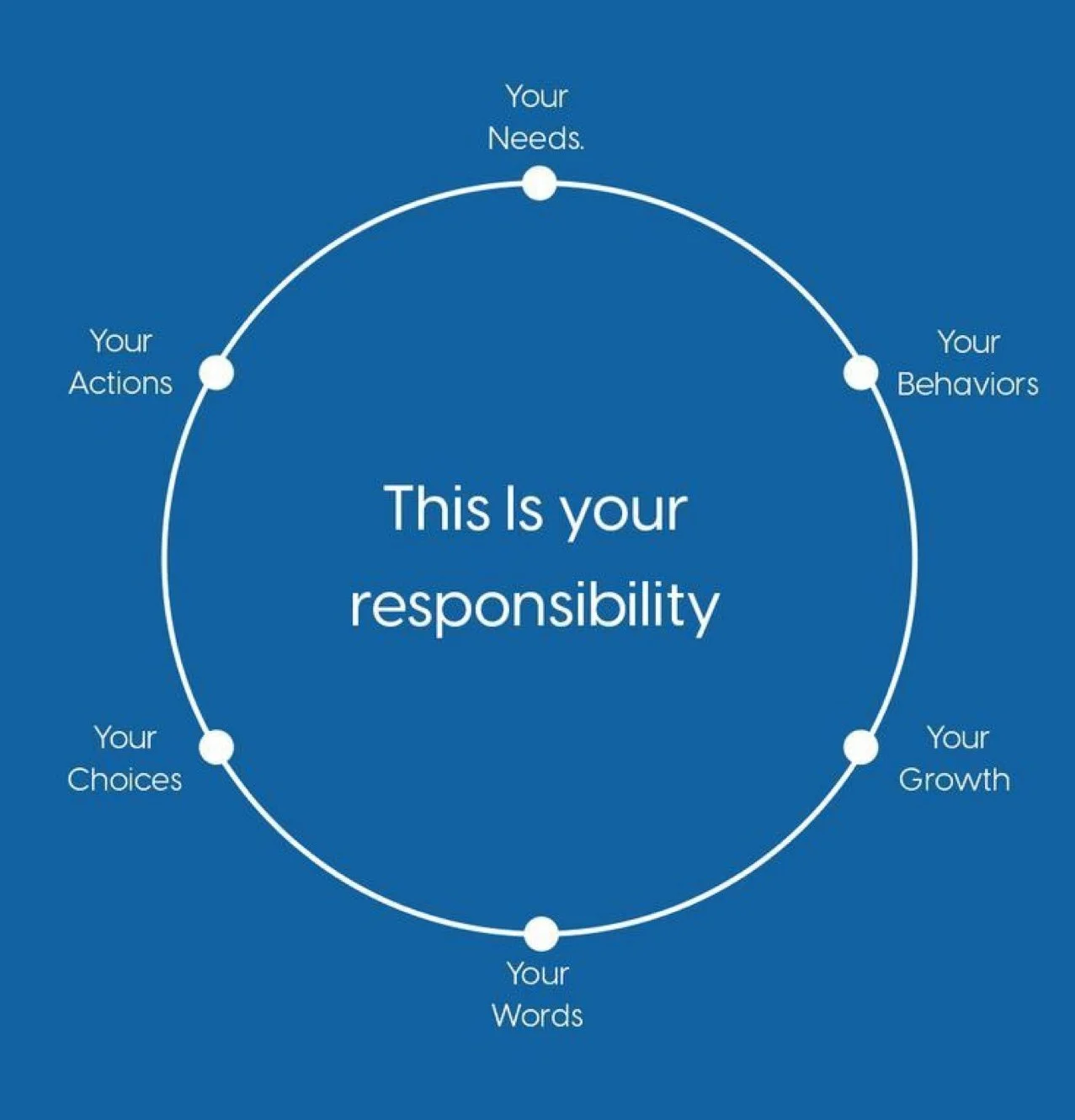
You own this

If you are easily offended, you are easily manipulated. The real question is: How do I handle what comes at me?

There’s a big difference between being reactive and being responsive. I think reactive means: “He did this to me, so I’m going to react.” And, “It’s not my fault I blew up; he said that.” In this mode, you give away your power. On the otherhand, responsive means: “He did something, I feel it, I process it, I regulate it, and then I choose how to respond.” I think in this mode, you own your emotions, your choices, and your power.

When you learn to respond instead of react, you stop letting others control your state and start leading yourself. If this message resonates with you, I invite you to book a complimentary 30-minute discovery session with me via this link.


This is a breakthrough

How someone treats you reflects their capacity, not your worth. When someone mistreats you or acts unkindly, it’s never truly about you, it’s about them, their state, and where they are in their own growth.

Once you understand that, something shifts. You stop giving others so much power over your emotions, your peace, and your life. You begin to let go. It’s not even about forgiveness anymore, not of them, and not of yourself. It’s about seeing things clearly for what they were. And in that clarity, you find freedom.

If this message resonates with you, I invite you to book a complimentary 30-minute discovery session with me via this link.

The transformative power of coaching

How do people change in sustained and desired ways?

When people say they are looking forward to change or adapting easily, they are often being economical with the truth. Real change, I mean the kind that lasts is rarely comfortable. All learning and growth involve stress because they demand self-control and a willingness to step into uncertainty. Helping others through change can be equally taxing. It carries the weight of responsibility and requires continuous self-regulation, what some call power stress. Are you curious about how coaching can support your growth journey? If so, contact me via email to book a free 30 minute discovery call.


Life is not linear

I think in order for a goal to be effective, it must involve change. Everyone wants to grow and scale fast, but in the rush to move forward, we often forget that growth isn’t just about speed or size. Sometimes, the most valuable insights come from slowing down, asking the right questions, and reconnecting with the people who already know your business best, who are your existing customers. Real change doesn’t always mean chasing something new, it can start by listening to what’s already there.


5 points of discussion

  1. Difficulty creates opportunity.
    The moments that challenge us most often reveal where growth and innovation live.

  2. Action brings clarity.
    Moving forward even when the destination isn’t clear is often what helps us discover it.

  3. Diversity fuels innovation.
    Cross-cultural perspectives spark creativity and unlock new ways of thinking.

  4. Timing matters.
    The right idea needs the right moment to take root and grow.

  5. Networks have power.
    Passionate, connected communities can turn ideas into lasting impact.


Empowering your leadership skills

Leaders and executives and don’t need coaches to tell them what to do, they need thought partners. As a coach, it’s easy to slip into problem-solving mode, but my clients are bright, capable leaders who don’t need me to strategise for them. I have learned instead to hold space for them to think differently and see familiar challenges from a new perspective.

My role is to ask questions that help them check in with themselves and uncover what’s already there. When I coach, I don’t make assumptions, I stay curious and keep asking questions. That’s where real insight and growth begin. Contact me via email for a complimentary 30 minute discovery call


The journey has started

My role as a coach is to help you move from where you are now to where you want to be, facilitating meaningful transformation that goes beyond to-do lists and addressing the inner obstacles that hold you back. To be effective as an executive coach, team coach, or leader, I draw on internationally recognised coaching benchmarks to guide clients when they feel stuck whether it’s resistance to change, a personal growth challenge, or a sense of overwhelm.

Often I find that it’s not enough to simply reframe, challenge limiting beliefs, or hold space for solution-focused conversations. Where I truly make a difference is in enabling deep behavioural change by helping clients remove inner obstacles and find the balance between depth, accountability, and structure. I think that’s the sweet spot where lasting transformation happens.

I was featured on the International Coaching Federation (ICF) Danish Chapter’s LinkedIn page yesterday. Click on the link to read more.