clarity

I feel stuck

What can I do?

In my experience, this often comes down to a small number of underlying factors, sometimes in combination. First, consider what you may be avoiding. Lack of progress is often linked to something that feels uncomfortable or unclear. Second, simplify the starting point. Break your goal down into something practical and achievable today. Progress begins with clarity and small, deliberate action. Third, focus on immediate wins. Identify two or three actions you can move forward today, complete them, and repeat the process consistently. Momentum is built through repetition. Finally, reflect on your habits. Consider which behaviours may be misaligned with where you want to go, and where adjustments are needed.

If this resonates, please contact me via email or book a complimentary discovery session.


Strong desire

Intelligence in a leadership context is not defined by knowledge alone, but by how effectively it is applied. Three capabilities consistently distinguish effective leaders. First, the ability to solve problems with clarity. This involves structuring complexity, identifying what matters, and moving towards practical solutions without unnecessary noise. Second, the ability to adapt. Change is constant, and the capacity to adjust with composure rather than defaulting to blame or resistance is a defining strength. Adaptability reflects both resilience and emotional intelligence. And third, the ability to make thoughtful decisions. This requires clarity of purpose, sound judgment, and a willingness to take responsibility for outcomes.

I think as these capabilities develop, so does internal stability. They can be strengthened through consistent practice, reflection, and a willingness to learn. Over time, this is what will shape how leaders think, and how they lead. What do you think?


How do you see the world?

Quality will always matter more than quantity, particularly in a world that often rewards visibility over substance. There is a tendency to equate more with better, yet a focused and intentional approach consistently creates deeper value than constant activity without direction. When you begin to prioritise what truly matters, you realise that not everything deserves your time, attention, or energy.

You do not need an audience to validate your worth. Confidence is not something that is granted by others; it is something that is developed internally through self-awareness, lived experience, and the quiet discipline of trusting your own judgment. There is a certain strength that emerges when you become comfortable standing on your own, grounded in who you are without the need for constant reassurance. This sense of internal stability changes how you relate to the world around you. You become more selective with your energy and more intentional about who you allow into your life. You begin to step away from drama, from gossip, and from environments that disrupt your sense of peace, not out of avoidance, but out of clarity about what you are no longer willing to compromise.

I think with that clarity comes a deeper understanding of what you want and what you are building. You stop chasing what is misaligned and instead focus your energy on what supports your growth, your values, and your long-term direction. There is a calmness in this approach, a steadiness that allows you to move forward with intention rather than distraction, knowing that a meaningful life is not built through accumulation, but through alignment.



Leadership is always on display

Effective delegation requires judgment and discipline, and I think these two elements are critical:

  1. Clarity of ownership
    Delegate responsibilities appropriately. This means knowing when to step back and allow others to lead, and when to provide guidance and support to ensure outcomes are delivered.

  2. Level alignment
    Regularly assess whether you are operating at the right level. Seek input to identify tasks or decisions you are holding onto that could be owned by others. Delegation is not only about efficiency; it is about enabling capability and growth within the team.

It is also important to recognise that decisions are ultimately made by those who hold the authority to make them. Accepting this reality allows leaders to focus their energy on influence, alignment, and execution rather than control.


Stay grounded

What happens when you stop seeking external validation?

A quiet confidence begins to develop when you no longer depend on external approval, you will start to hear a more important voice — your own. A different kind of confidence emerges, one that encourages you to continue and reminds you that your path is unique, and your purpose cannot be measured against someone else’s timeline.

I think calmness protects this clarity, and it creates the space to navigate uncertainty with intention rather than reaction. If this reasonates with you, contact me via this link and book a complimentary discovery call.


Active questions

6 active questions to ask yourself every day.

  1. Did I do my best to be happy?

  2. Did I do my best to find meaning?

  3. Did I do my best to be fully engaged?

  4. Did I do my best to build positive relationships?

  5. Did I do my best to set clear goals?

  6. Did I do my best to make progress toward goal achievement?

“Our mission in life is to make a positive difference, not to prove how smart we are and not to prove how right we are.”
— Peter Drucker

This is a breakthrough

How someone treats you reflects their capacity, not your worth. When someone mistreats you or acts unkindly, it’s never truly about you, it’s about them, their state, and where they are in their own growth.

Once you understand that, something shifts. You stop giving others so much power over your emotions, your peace, and your life. You begin to let go. It’s not even about forgiveness anymore, not of them, and not of yourself. It’s about seeing things clearly for what they were. And in that clarity, you find freedom.

If this message resonates with you, I invite you to book a complimentary 30-minute discovery session with me via this link.

Executive coaching

I see coaching as the ability to further your learning and development by understanding your goals, challenging you, giving you timely feedback, and offering you my support. My executive coaching is a powerful catalyst for your personal and professional growth. As you are already an exceptional performer, my executive coaching will help you uncover blind spots, strengthen your leadership skills, and focus on specific areas to optimise your performance. I will be your trusted partner, guiding you through a process towards a deeper understanding of yourself, sharpening your decision-making abilities, supporting your transition into a new role, and preparing you to take on more responsibilities.

Are you ready to embark on a transformative journey that fosters continuous learning, self-mastery, and the realisation of your career objectives? If so, contact me via email to schedule a free 30 minute discovery meeting.


Clear expectations

Human beings are deeply motivated by their social standing within groups. Recognition and acknowledgment are powerful tools to elevate an individual’s status, activating the brain's reward system, which encourages positive behaviours. Research shows that when people feel recognised, they are more likely to be engaged and supportive in their roles. On the other hand, uncertainty can trigger defensive behaviours as the brain perceives it as a threat. Providing clarity and predictability helps to reduce anxiety and create psychological safety. I think this allows individuals to focus on collaboration rather than self-protection, boosting performance and engagement​.


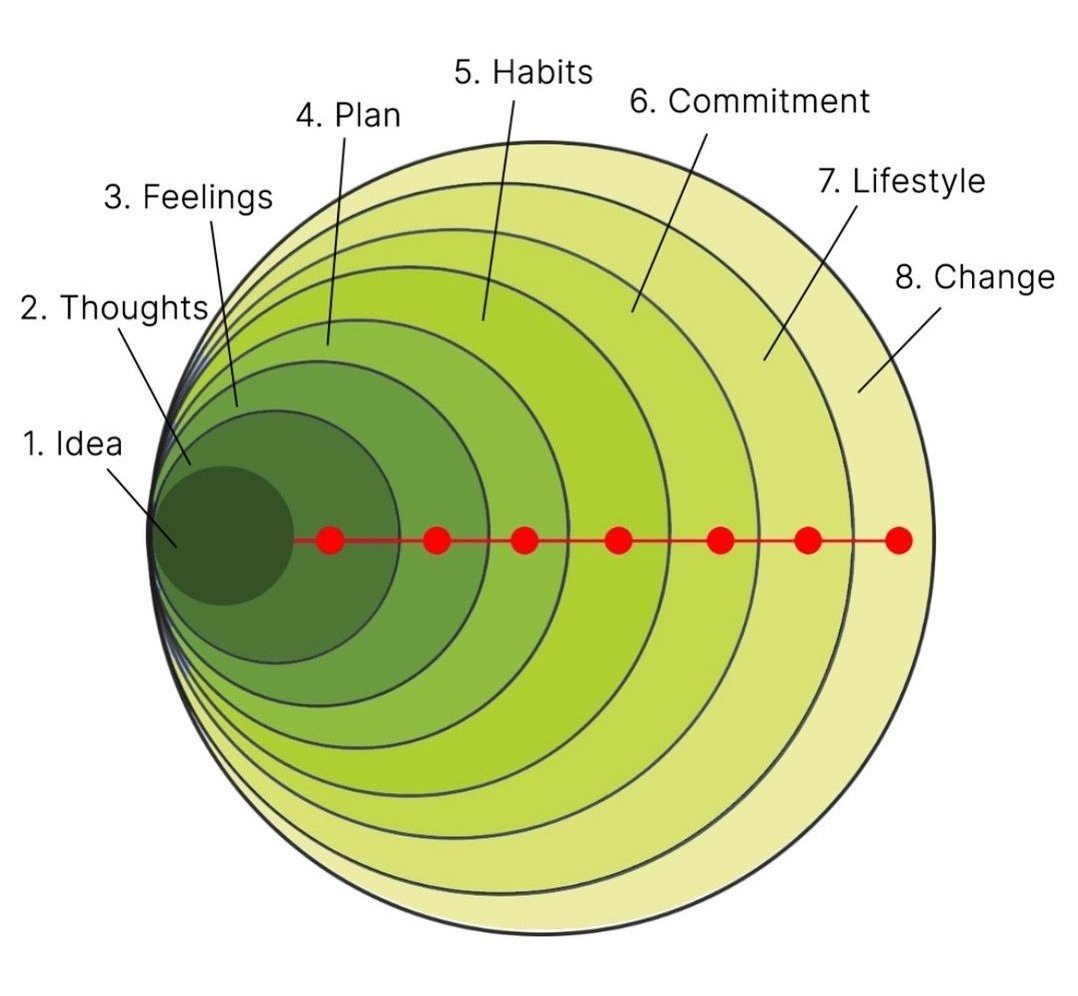
How is change created?

Key questions for change:

  1. What specific change are we trying to make?

  2. Who are we aiming to influence?

  3. Given our agreed-upon constraints and goals, is there a better path forward to reach our destination?

To proceed, we need clarity on the following:

  • Constraints:
    What are the limitations or boundaries we’re operating within?

  • Objectives:
    What are the precise goals we are working toward?

  • Target Audience:
    Who are we trying to affect or change?

Without alignment on these key points, productive conversation becomes difficult. If we’re not on the same page, we risk revealing that we’re metaphorically on different journeys (or buses), heading in different directions. Contact me via email for a confidential conversation about your journey.


Setting a compelling vision

As a leader, you need to maintain the right balance between distance and closeness. When giving instructions, be clear and direct about what needs to be done, and when explaining how to accomplish the tasks, be approachable and supportive. I think it's also essential to provide your team with a clear understanding of both the tasks at hand and the underlying purpose behind them. This clarity helps them see the value in their work and understand why it matters, motivating them to fully commit to the goals you set.


Clarity 3 of 3

Do or should you care?

I think this question is crucial for individual employees and their engagement within an organisation. When leaders effectively communicate the organisation's purpose, values, and goals, employees will evaluate their alignment with these factors. Clarity in communication allows individuals to understand the impact of their work and whether it resonates with their own values and aspirations. When employees see the significance of their contributions, this fosters a sense of commitment, pride, and engagement within the organisation.


Clarity 2 of 3

What value does your organisation serve?

Identifying the value or purpose an organisation serves is closely tied to its mission. I think this involves recognising the impact the organisation has on its stakeholders, whether it's customers, clients, employees, or the broader community. Leaders should be able to clearly articulate the unique value proposition of the organisation and how it differentiates itself from competitors. This clarity helps employees understand the significance of their contributions and how they can create value through their work.


Clarity 1 of 3

Why does your organisation exist?

I think understanding the purpose and reason for an organisation's existence is essential for both leaders and employees. It also provides a sense of meaning and helps guide the decision-making process. By articulating the organisation's mission and vision, leaders can clarify the overall objective and communicate it to the entire team. This clarity allows individuals to understand how their work contributes to the larger picture and motivates them to strive towards shared goals.


Be extremely clear

Write down your goals, the more detailed the better and be flexible about the process of achieving them. Always be open and remain sensitive to the possibility of serendipitous events and I think, one should also be open to inspiration and inputs from other people. The best leaders I have encountered share some of the same characteristics, they are good listeners, they ask lots of questions and they take in all the information possible before making up their minds or concluding. When they make a mistake, these leaders also admit failure and cut their losses quickly so that they can move onto bigger and better things.


Sounds obvious

I think clarity comes from engagement not thought, as we learn best by action not through theory. I have observed many great marketeers throughout my career and the advise would give to anyone aspiring a career in marketing would be to study consumer psychology and focus on the following:

• Cognitive biases
• Objections
• Struggles
• Emotions
• Behavior
• Triggers
• Beliefs
• Desires


Redefining your goals

A campaign without a clear goal is essentially a waste of money, as you won’t know how to measure the impact or value of the work you’ve put in. Goals are there to provide clarity, purpose, direction and vision. Whether personal or commercial, they are what lead to success for you, your department, and the business as a whole. Hitting your goal proves you're making an impact. Contact me via e-mail for an evaluation of your goal setting procedures.


How clear are your questions?

After you ask a question, be silent and listen for their answer. 

⁃ Active listening means you’re concentrating on their response, making direct eye contact, and taking notes.

⁃ Are you paying attention to nonverbal cues?

⁃ What’s not being said is usually more important than what is said.

⁃ Keep it positive and focus on what can be done, not what can’t be done.


Movers and shakers

movers-and-shakers.jpg

If you don’t know where you are going then any road will take you there! Human beings are goal seeking organisms and we only function at our very best when we are working towards accomplishing something that is important to us. Clarity is the starting point of all success, and this means clarity in thinking. Clarity means the ability to determine exactly what it is that you want to be, have, or do in life. The more I study successful men and women, the more I find that every single one of them are very clear about where they are going and what it is they want to accomplish. 


All the great movers and shakers throughout history have been dreamers. If you’re leading the ship and don’t know how to operate a compass, the journey will not be a fun one - for you or your shipmates. It’s vital to have a clear sense of where you are going. Clarity is especially important when you’re introducing change or working towards new goals with your team. The common mix of excitement and anticipation alongside anxiety and fear can be challenging and even unsettling. The differences between successes and failures are not that successful people make right decisions, it’s that successful people make their decisions right.