

Many coaching session starts with this question: What would be important for you to achieve in this session?
The goal belongs to the client, not the coach. Perhaps they want to be seen differently as a leader, have a difficult conversation, understand a recurring reaction, gain more confidence, or simply make sense of something that is happening.
From there, we explore. I listen carefully to what they are saying, reflect what I am hearing, and ask questions that help them look at the situation from different perspectives. We explore the thoughts, emotions, assumptions, beliefs and behaviours sitting beneath the issue.
Sometimes I might say: “This is what I hear you saying. I wonder if this is what is happening underneath it, but I could be wrong.”
The aim is not for me to provide the answer. It is to help the person discover something for themselves. When they say, “I get it,” I might ask: “What is it that you have got?” That question matters, as articulating the new awareness helps turn an insight into something they can actually use.
Then we move towards action: What are you going to do with this awareness? What will you do differently? What are you willing to commit to?
Coaching creates a space where you can put your dreams, fears, emotions and assumptions on the table, step back from them, and ask: What is really going on here? I think this is where clarity begins.
It’s already within you

We are living in a world that gives us more information, more opinions, and more comparisons than ever before. Attention is constantly fragmented, and it can feel as though we are not only living our lives but also evaluating how those lives appear to everyone else in real time. I think this changes us as it encourages us to become highly self-conscious without necessarily becoming more self-aware. We spend so much time managing how we are perceived that we lose touch with how we actually feel. We begin performing our lives rather than fully inhabiting them.
Yet our greatest resource is rarely found outside ourselves. It is found in our accumulated experience, our instincts, our values, and our capacity to think clearly when we are fully present. We often know far more than we give ourselves credit for and what gets in the way is the internal commentary. The voice that questions our ability, magnifies our fears, and convinces us that we are not ready. This is where coaching can make a profound difference as a coach does not give you your potential. A coach helps you access it through thoughtful questions, reflection, and honest dialogue, coaching quietens the internal noise so that your own judgment, wisdom, and natural intelligence have room to emerge.
““A fourth monkey has emerged. He sees no one, hears no one and speaks to no one.””
Nobody can be you but you

How would you like people to describe you when you are not in the room?
Many of the most significant decisions that shape your career are made when you are not present. Decisions relating to compensation, promotion opportunities, high-profile assignments, and leadership potential are often discussed and determined in rooms where you do not have a seat at the table. Therefore, I think the question should be: What do people say about you when you are not there to speak for yourself?
Choose three adjectives that you would want others to use when describing you in your absence. Identifying the three qualities you want to be known for helps you build a deliberate professional reputation and ensures your actions consistently reinforce the perception you want others to have of you.
Exercise: Facts vs. Stories

This simple exercise can help us slow down, challenge assumptions, and respond more thoughtfully rather than reacting emotionally.
Take a sheet of paper and divide it into two columns. In the first column, write down the facts. These are the things you know to be objectively true, without interpretation or assumption. In the second column, write down the stories. These are the meanings, assumptions, fears, or conclusions you may be attaching to the facts.
Then ask yourself:
• Do I feel safe?
• Do I feel seen?
• Do I feel heard?
I think clarity emerges when we separate what has actually happened from the story we are telling ourselves about what has happened. Contact me here and book a complimentary 30 minute discovery session.
We have the ability

Image c/o Sukhraj Singh ©
I often frame personal and professional growth around three questions: How strongly do you want it? What are you prepared to endure to achieve it? And, most fundamentally, what do you actually want?
I think clarity of intention is where meaningful progress begins. Many people struggle not because of a lack of ability, but because they have not taken the time to define what they truly want from their lives. Each day presents an opportunity to act with purpose and shape the direction of one’s own story.
Active questions
6 active questions to ask yourself every day.
Did I do my best to be happy?
Did I do my best to find meaning?
Did I do my best to be fully engaged?
Did I do my best to build positive relationships?
Did I do my best to set clear goals?
Did I do my best to make progress toward goal achievement?
““Our mission in life is to make a positive difference, not to prove how smart we are and not to prove how right we are.” ”
Four question framework

This four-question framework helps you explain any topic with precision and clarity.
1. Why is this important?
Begin by anchoring the topic in relevance for your audience. I think a useful approach is to ask a question that meets them where they are.
2. What is this about?
Share the essential facts, context, or background information. I think it’s a good idea to keep it direct and concise..
3. How does this work?
Outline what needs to happen next, and describe the steps, actions, or frameworks that will move the work forward.
4. What if we did this?
Invite your audience to explore possibilities as this is where learning becomes applied. Present scenarios, highlight opportunities or risks, and encourage dialogue. I think this is also the moment to surface concerns and co-create solutions that fit the context.
Critical thinking questions
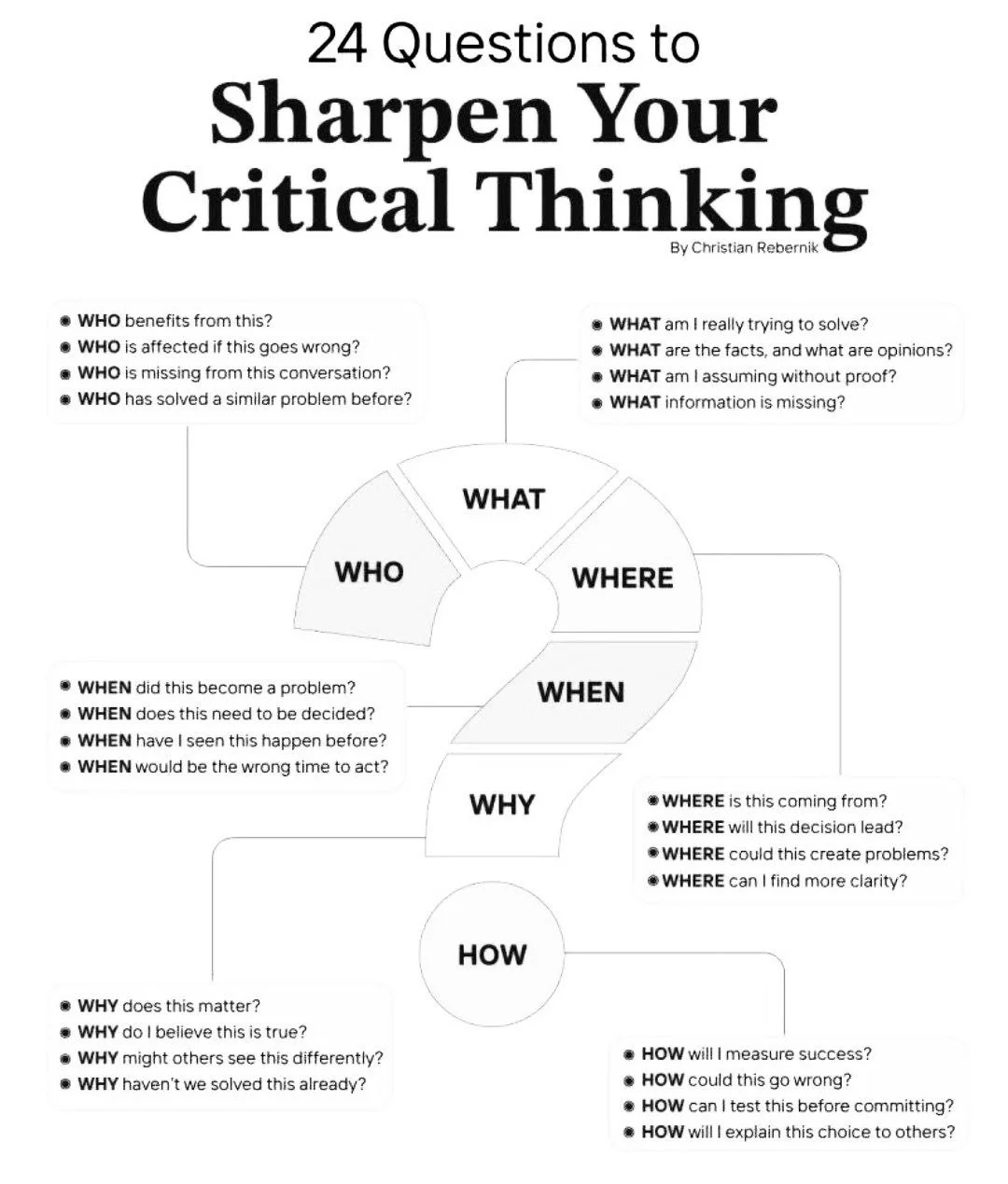
Awareness is everything

Thoughts can influence feelings, which in turn can affect actions and outcomes. To obtain effective answers, it is beneficial to ask clear and thoughtful questions. For example:
· What am I thinking?
· Why am I choosing to think this?
· What does this thought evoke?
· What thought is causing this feeling right now?
I think when you ask a great question, you come up with great thoughts to think.
It's your responsibility

Traditional engagement surveys often ask passive questions, and when people respond negatively, they tend to blame the environment. This teaches employees to complain rather than reflect. A more powerful approach is to ask active questions for example:
Did I do my best to be engaged today?
Did I do my best to find meaning?
Did I do my best to build positive relationships?”
Instead of waiting for the company to “engage them,” individuals are encouraged to take ownership of their own engagement. I think true growth happens when people move from blaming circumstances to taking personal responsibility for how they show up each day. What do you think?
Business vs. coaching
In business, why questions often generate creativity by reframing problems and leading to new solutions. But in coaching, the opposite is true. Asking why can trigger defensiveness or pull a client into justification. Instead, coaching thrives on what and how questions, because they invite reflection, unlock new perspectives, and move the client toward action.
Solving writer’s block
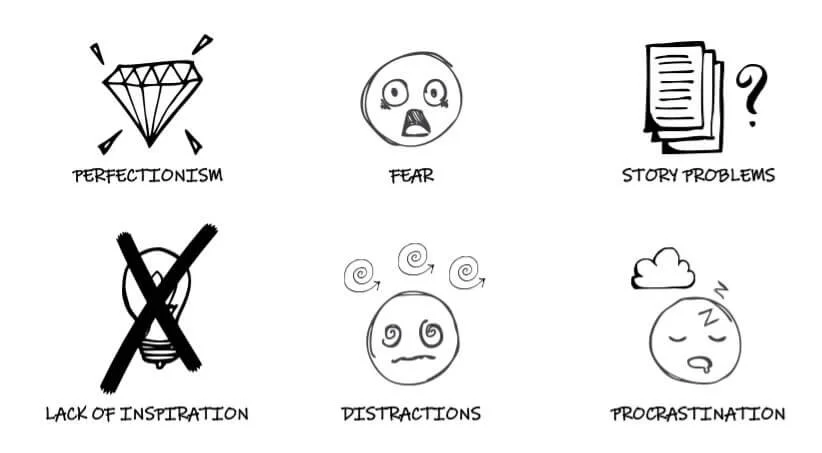
Writer’s block is often a symptom of something deeper, for example, anxiety. At its core, it’s the fear that what you are writing isn’t good enough. Anxiety is essentially wasting present energy on a future outcome you don’t want. When you expect your writing to fail, it becomes almost impossible to invest your full energy into it and sometimes, you can't even begin. If you or someone you know is struggling with writer’s block, the key is to change the internal narrative. I think the mental “movie” playing in your head isn’t working, so play a new one.
How? Ask better questions.
Instead of: “What if my writing isn’t good enough?”
Ask: “How amazing is my writing going to be once it’s done?”
Then say: “Congratulations – I did it.”
Making a difference

You are doing great at climbing, but are you climbing the right mountain? I think you should pause and reflect: What are you doing?
Make better plans by answering these questions:
· Who are you at your core?
· What is your vision?
· What is your mission?
· Who are you serving?
When your plans align with your true self and what you genuinely want, it can make all the difference in the world. Does this resonate? If so, contact me via email for a confidential 30 minute discovery session.
This calls for maturity

Do you have the curiosity and empathy to ask:
When bad things happen, how did that impact you?
What can I do to help? Tell me about your life journey and lived experiences.
How might they help you succeed here?
What insights and innovative ideas can you bring to our organisation?
Easy to consume
I want my website to be crystal clear and easy to understand for everyone who visits. Can you tell me if it answers these questions?
Do you understand what I do?
Is it clear how I can help solve your problem?
Do you see the benefits of working with me?
Is it easy to know how to get in touch?
Questions to ask yourself

As we are in the last day of 2024, here are some questions to reflect on:
What are you thinking right now?
What patterns or themes do you notice in these thoughts?
Why are you choosing to think this thought?
Is this thought serving you, or is it holding you back?
How does this thought feel?
What emotions are tied to it, and how are they influencing your actions?
What thought is causing the way I feel right now?
How can I reframe this thought to shift my mindset or energy?
As you reflect on these questions, take a moment to write down any insights or patterns that stand out. What shifts do you want to make heading into 2025? If you’re ready to explore these thoughts further and create a plan for the year ahead, contact me via email for a free 30-minute discovery session. Together, we can build momentum and set you up for success!
Language is vital

Curiosity becomes even more powerful when paired with knowledge. I mean the knowledge of how the brain works, how humans form beliefs, how trauma can be released from the body, and how conflicts of values and identities can be resolved. In my coaching sessions, I build on this foundation of curiosity by layering high-level questions as I believe this is where real transformation happens. People’s beliefs often reveal themselves through their language although most of the time, they don’t even notice it. That’s why I focus on active listening. I just let go of any attachment to what I think I might need and simply stay present. And when I do, the words my clients speak naturally guide me to the next question, the one that could change everything.
A good asking machine

I don’t know anyone who’s afraid of their ability to be curious, but I do know plenty of people who fear not having all the right answers. The power of coaching lies in curiosity, because coaching isn’t about having answers; it’s about asking questions. I think the best coaches are not the ones with the best answers, they are the ones with the best questions. That’s why I don’t want to be an answering machine, I prefer to be a good asking machine.
Let's ask questions

Coaching focuses on asking impactful questions rather than knowing all the answers. The strength of these questions comes from intentional preparation, but it’s essential for coaches to avoid overpreparing and relying on an overload of information. Instead, they need to be guided by genuine curiosity to uncover the client’s unique worldview. I aim to understand the coachees perspective before jumping in with solutions, using curiosity-driven questions to foster meaningful exploration and breakthroughs.
I think simplifying coaching by prioritising humanity and curiosity will create transformational change. Identifying clear outcomes helps guide coachees through initial steps toward their goals, considering the wider influence coaching can have on their surroundings. I also think by focusing on understanding and thoughtful inquiry, coaches can amplify their impact, empowering clients effectively.
One plus one in not always two

I always hold a discovery session with each client and during these session’s I ask questions like:
Where do you come from?
What’s it like in your world?
Who are you?
What traditions and values are important to you?
What might be holding you back?
I think it’s important to understand their cultural background and values. While we may never fully understand someone else’s culture, we can approach it with genuine curiosity and empathy, inviting clients to bring their whole selves into the conversation.