


Mastering delayed gratification requires an understanding that much of the work is done out of sight, often long before any visible results appear. What is built in private may take years before it is recognised publicly. I think there are, broadly, two phases: sowing and reaping. The harvest is what people see and celebrate, but it is the sowing phase that shapes the outcome. This is where discipline is developed, standards are set, and character is formed. The individuals who are able to sustain effort without immediate reward are often the ones best prepared when the results begin to show. The visible success is a reflection of the consistency and intent applied when no one was watching. What do you think?
The outcomes tend to follow
The first step in solving any problem is recognising that it exists. Without that awareness, there is no foundation for meaningful change. I think clarity creates the starting point, and from there, progress becomes possible.
Consistently doing good work builds credibility over time. When that work is combined with the willingness to address difficult challenges, expecially the ones others avoid then you’ll create a distinction. Many people hesitate in the face of uncertainty, complexity, or discomfort, and those who are prepared to step into those spaces, with discipline and intent, position themselves differently.
As a result, opportunities tend to follow. Respect is earned through consistency, trust is built through action, and value is recognised when it is delivered where it matters most. Over time, this can translate into stronger relationships, broader networks, and tangible rewards. It is not about seeking recognition directly, but about focusing on the standard of work and the choices you are willing to make.
Brand associations

c/o @CardwellBeach
Branding is not defined by logos or visual identity alone, I think it’s shaped by the impression a business creates at every point of interaction with its customers. Every experience contributes to how the brand is perceived and remembered. And strong brands move beyond recognition to become embedded in everyday language and behaviour. There was a time when soft drinks were commonly referred to as “Coke,” and today, search engines are often synonymous with “Google.” This level of association reflects more than visibility, it reflects relevance and consistency over time. In an increasingly experience-driven market, brand loyalty has become a critical driver of retention. Customers who trust and connect with a brand are more likely to return, advocate, and contribute to its long-term growth.
Let’s meet each other where we are

In the early stages of building anything, whether a business, a team, or a reputation, growth depends on how effectively you engage with people. Expanding your user base or customer base requires more than visibility; it requires openness and a willingness to connect beyond familiar circles.
I am conscious of the influence of groupthink. When surrounded by people who share similar backgrounds or perspectives, it becomes easy to reinforce existing views. For that reason, I actively seek out different perspectives, at times deliberately challenging assumptions to broaden the conversation. Exposure to diverse thinking sharpens judgment, challenges bias, and ultimately leads to better decisions. It is not only about meeting others, but about creating the space to see things differently together.
““I cannot give you a formula for success, but I can give you the formula for failure, which is: try to please everybody.””
I feel stuck

What can I do?
In my experience, this often comes down to a small number of underlying factors, sometimes in combination. First, consider what you may be avoiding. Lack of progress is often linked to something that feels uncomfortable or unclear. Second, simplify the starting point. Break your goal down into something practical and achievable today. Progress begins with clarity and small, deliberate action. Third, focus on immediate wins. Identify two or three actions you can move forward today, complete them, and repeat the process consistently. Momentum is built through repetition. Finally, reflect on your habits. Consider which behaviours may be misaligned with where you want to go, and where adjustments are needed.
If this resonates, please contact me via email or book a complimentary discovery session.
Principles for responsibility and restraint

A number of enduring principles offer useful guidance for how we think, decide, and act. Murphy’s Law reminds us that the more we fixate on something going wrong, the more we risk creating the conditions for it to happen. In contrast, Kidlin’s Law emphasises clarity, suggesting that defining a problem precisely goes a long way toward resolving it. Gilbert’s Law reinforces personal accountability, highlighting that when we take on a task, the responsibility for finding the best way forward sits with us. Wisson’s Law points to the long-term value of prioritising knowledge and intelligence, trusting that financial outcomes tend to follow. Finally, Falkland’s Law offers a counter balance, reminding us that not every situation requires a decision, and restraint can often be the most effective choice.
Unhealthy patterns

Guilt-based communication can emerge when individuals are unable to express needs directly. Rather than making clear requests, they may transfer emotional responsibility onto others. I think over time, this creates unhealthy patterns and imbalance in relationships. Emotional maturity involves articulating needs openly while respecting the boundaries of others.
Altering your tone

Passive-aggressive behaviour is another indicator. Instead of communicating directly, individuals may withdraw, alter tone, or create ambiguity, leaving others to interpret what is unspoken. This often reflects an underlying discomfort with expressing frustration openly. I think that emotional maturity is characterised by clarity and directness, even in difficult conversations.
Deflecting responsibility
A common pattern is the deflection of responsibility. Accountability can feel threatening when self-perception is fragile, leading to shifting narratives or redirecting blame. I think this limits both individual and organisational growth. Emotional maturity is demonstrated through the ability to acknowledge responsibility clearly and without defensiveness.
Feeling exposed

Individuals with low emotional maturity often struggle to separate feedback from personal attack. As a result, their response can become defensive, particularly when the feedback is accurate. What appears as resistance is often a reaction to feeling exposed rather than an objective engagement with the message. I think emotional maturity, by contrast, involves the ability to sit with discomfort, reflect, and respond thoughtfully rather than reactively.
Help when you can

When people are under pressure or facing uncertainty, support matters. If you have something of value to offer, whether it is insight, experience, or guidance, then the question becomes whether you choose to share it. Leadership is not only about individual success; it is about contributing to the progress of others. When you view your work as part of a broader journey, withholding value becomes a missed opportunity. I think the most effective leaders are those who recognise their role in enabling others and are intentional about sharing what they know to support growth, performance, and progress.
I see you

In the modern professional world, "Inclusion" has become a powerful currency. It appears on mission statements, company values, corporate banners, and social media feeds. But as recent critiques of performative inclusion highlight, there is a growing and dangerous gap between saying the right things and doing the work.
High performance indicators
In my experience, three qualities consistently distinguish top performers:
1. Self-awareness
Self-awareness enables individuals to understand their impact on others and adjust accordingly. It allows leaders to engage in a way that brings out the best in the people around them. The question is simple: how well do you truly understand yourself?
2. Collaboration
Effective leaders recognise that they do not have all the answers. They create space for others to contribute, ask thoughtful questions, and are comfortable acknowledging what they do not know. This is what allows teams to operate at a higher level.
3. Decision-making
A core capability of high performers is the ability to make clear, timely decisions. This becomes difficult when individuals are overly conflict-averse or focused on pleasing others. Avoiding tension can lead to compromised judgment and suboptimal outcomes. Strong leaders are willing to make decisions that may not satisfy everyone, but are aligned with what is right for the organisation.
Please note that these qualities are not fixed, and they can be developed through reflection, experience, and the willingness to be challenged.
Keep your people
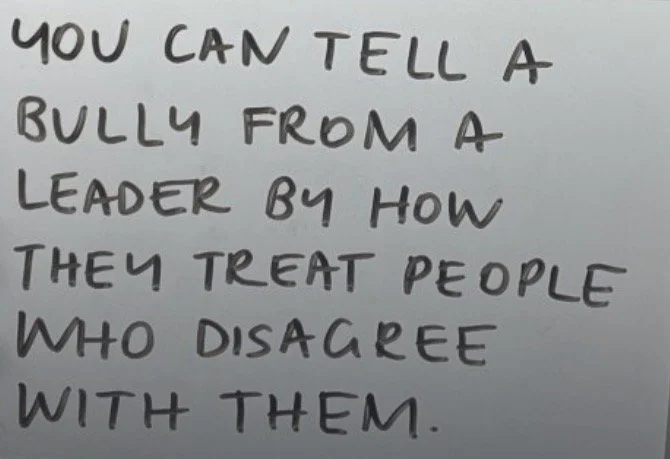
Roles can be replaced, but trust cannot, and loyalty, once lost, is rarely regained. This is where many leaders fall short. When people are treated as interchangeable resources rather than individuals, and talent is taken for granted, the long-term impact is often underestimated. The assumption that anyone can be replaced overlooks the relational capital that individuals build within teams and organisations. I think trust is developed over time, and loyalty is earned through consistent leadership behaviour. When these are compromised, the consequences are significant, and not always immediate. By the time this becomes visible, the individuals who contributed most to the organisation’s strength have often already chosen to leave.
Adjust your approach
At senior levels, technical competence is largely a given. What differentiates leaders is their ability to work effectively with people. I think as responsibility increases, success becomes less about individual capability and more about how well leaders adapt their behaviour to meet the evolving demands of their role. Many leaders do not struggle because they lack expertise, but because they are unable to adjust their approach as complexity grows. The margin for error also narrows, and small misjudgments can have disproportionate impact at the top. This is why effective leaders remain committed to their own development. They recognise that sustained performance requires continuous self-awareness, adaptation, and growth. If this resonates with you, contact me via email and book a complimentary discovery call.
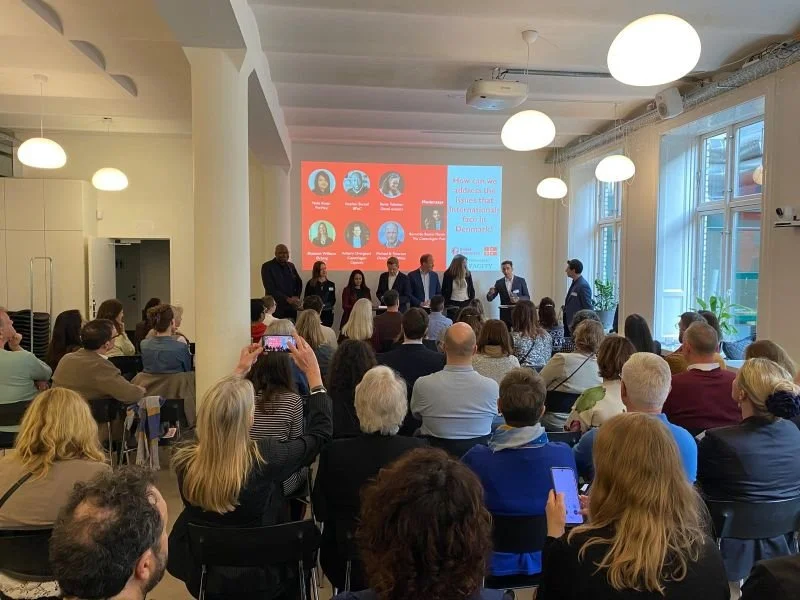
It was a full house
Performative inclusion occurs when organisations adopt the language of diversity without addressing the underlying structures that shape outcomes. In practice, this often looks like celebrating difference while maintaining rigid, one-size-fits-all expectations around productivity, communication, and behaviour.
When inclusion is treated as a branding exercise, it risks undermining the very intent it seeks to advance. Organisations communicate that people belong, yet the physical, sensory, or systemic barriers remain unchanged. I think true inclusion requires more than visibility as it demands a willingness to examine, challenge, and redesign the systems that define how people experience the organisation.
Are you ready to do the hard work? If so, contact me via email, and I’ll be happy to discuss how I could assist your organisation.
A house is not a home

Leadership at its core is about exercising our humanity as development does not happen in isolation. It requires care, attention, and the willingness to invest in others to nurture is to create the conditions for growth, and that is central to how I work as a coach. This perspective is grounded in something deeper. I come from a background where nurturing was not a concept, it was a way of life. It was about patience, consistency, and understanding that growth takes time.
I also hold a strong belief in values such as respect, integrity, and accountability. I see these as a modern expression of a code of honour, not performative, but lived through actions and decisions. In my work, I aim to create a space where leaders can think clearly, reflect honestly, and grow with intention. I think at the end of the day, leadership is about both performance and how we show up for others. If this resonates, feel free to contact me via this link for a complimentary discovery call.
““Do not use your energy to worry. Use your energy to believe, to create, to learn, to think and to grow.” ”
A balancing act
Organisations must learn to balance two priorities:
1. Exploiting what they already know, and
2. Exploring what they have yet to discover.
Optimising existing sources of value is essential, and I think it should not come at the expense of curiosity and innovation. Sustainable success requires both discipline and exploration. What do you think?
Strong desire

Intelligence in a leadership context is not defined by knowledge alone, but by how effectively it is applied. Three capabilities consistently distinguish effective leaders. First, the ability to solve problems with clarity. This involves structuring complexity, identifying what matters, and moving towards practical solutions without unnecessary noise. Second, the ability to adapt. Change is constant, and the capacity to adjust with composure rather than defaulting to blame or resistance is a defining strength. Adaptability reflects both resilience and emotional intelligence. And third, the ability to make thoughtful decisions. This requires clarity of purpose, sound judgment, and a willingness to take responsibility for outcomes.
I think as these capabilities develop, so does internal stability. They can be strengthened through consistent practice, reflection, and a willingness to learn. Over time, this is what will shape how leaders think, and how they lead. What do you think?
Human to human interactions

As AI continues to reshape the service landscape, many routine interactions will become automated. In this environment, the value of human-to-human connection will not diminish, it will increase. The quality of personal interaction, judgment, and presence will become a defining differentiator. A well-executed face-to-face experience is not transactional; it is relational. It is the difference between being processed and being understood. Whether it is a leader taking the time to listen, a consultant applying contextual judgment, or a frontline employee creating a moment of genuine connection, these experiences leave a lasting impact.
I think an individual with the ability to apply discretion, interpret context, and respond intelligently brings a level of value that no algorithm can fully replicate. Lasting change often begins not by trying to reshape the world directly, but by influencing how people see it. When perception shifts, behaviour follows, and over time, that is what drives meaningful transformation.