biases

Inviting people into the conversation

Most of us see ourselves as fair-minded people, and in many cases we are. Yet human beings naturally identify more easily with some people than others. I may feel warmth towards you, for example, while unconsciously questioning your competence or credibility. These subtle biases can influence our decisions even when our intentions are positive. It is also important to recognise that not all biases operate in the same way. Individual prejudice exists, and some biases are reinforced by organisational systems, cultural norms, and historical patterns. The distinction matters because the challenge is often larger than any one individual's beliefs or behaviours.

One of the reasons I think there is so much resistance to diversity and inclusion work is that people often feel they are being told they need to be fixed. Most people do not respond positively to that message. Diversity fatigue can emerge when the conversation is framed around blame, correction, or moral judgment rather than shared benefit and collective progress. Instead, I think we need to invite people into the conversation. We need to engage those in majority or dominant groups as active participants rather than positioning them as part of the problem. The evidence is compelling: diverse teams tend to produce stronger innovation, better problem-solving, and more robust decision-making. These outcomes benefit everyone, not just specific groups.

When I encounter resistance, I try to approach it with curiosity. I ask myself: What could I do differently to invite this person into the conversation? And more importantly, what might I be doing that is contributing to their resistance? As the goal is not to win an argument, the goal is to create an environment where more people want to participate, contribute, and be part of the solution. That is how meaningful and sustainable change happens.

It affects us all

Do you place a higher value on familiarity than experience when assessing someone's potential for success?

Human beings naturally gravitate towards people who think, communicate, and behave in ways that feel familiar. That sense of comfort can create an unconscious preference for those who are most like us. What is interesting is how often we rationalise these preferences. We tell ourselves that someone is a "better fit," that they are easier to work with, or that they align more closely with the culture. These explanations may sound logical, but they can sometimes mask an underlying bias towards familiarity.

This has important implications for equality and inclusion because affinity bias is not limited to any one group. Men and women alike can be drawn towards people who feel familiar and can unintentionally overlook talent, potential, and capability in those who are different from themselves. I think the challenge for leaders is to distinguish between what feels comfortable and what creates value as the two are not always the same. Diverse teams often outperform homogeneous ones precisely because they bring different experiences, perspectives, and ways of thinking to the table. The question is not who you naturally click with, the real question is whether you are making decisions based on familiarity or on capability.


Let’s meet each other where we are

In the early stages of building anything, whether a business, a team, or a reputation, growth depends on how effectively you engage with people. Expanding your user base or customer base requires more than visibility; it requires openness and a willingness to connect beyond familiar circles.

I am conscious of the influence of groupthink. When surrounded by people who share similar backgrounds or perspectives, it becomes easy to reinforce existing views. For that reason, I actively seek out different perspectives, at times deliberately challenging assumptions to broaden the conversation. Exposure to diverse thinking sharpens judgment, challenges bias, and ultimately leads to better decisions. It is not only about meeting others, but about creating the space to see things differently together.

“I cannot give you a formula for success, but I can give you the formula for failure, which is: try to please everybody.”
— Herbert Bayard Swope

We need a societal rethink

Why are equal opportunities still out of reach?

In many industries, Black professionals continue to face limited access to opportunities, particularly in management and leadership roles. This is often shaped by entrenched perceptions about capability, influenced by systemic bias and institutional barriers. I think the question is about access and perception. When will assumptions about a Black professional’s ability to think critically, lead effectively, and contribute at a strategic level be fully challenged? When will intellectual and moral parity be recognised without hesitation?

For organisations, this requires more than stated intent. It demands a consistent commitment to evaluating talent based on merit, capability, and potential wich is free from bias. We are watching, and progress will be measured not by statements, but by decisions: who is trusted, who is developed, and who is given the opportunity to lead.


We are all biased

c/o BOLD community

We are all biased, none of us can be 100% neutral. It’s not a bad thing, it’s not a negative, it’s part of our own uniqueness. Obviously we don’t want to be judgemental. It’s always healthy to ask: What do I believe in? And why do I believe it? My mentor calls these beliefs “family heirlooms” – the ideas and messages we inherited from our upbringing. Some of them we want to keep and others we might want to let go. I think this awareness gives us a choice.


We are one

Growing up in South London and later moving to Copenhagen has shown me that there is not much difference among people in Northern Europe. We are all human beings who want to be liked and understood, and we all hold passions and beliefs. I think the key is to ensure those beliefs are grounded in facts rather than opinions, biases, or stereotypes.

“No one will really understand politics until they understand that politicians are not trying to solve our problems. They are trying to solve their problems - of which getting elected and re-elected are number one and number two. Whatever is number three is far behind.”
— Thomas Sowell

We also belong here

When we assert our dignity, intelligence, or leadership, we are often labelled "uppity" or "difficult" which is a form of social policing meant to put us "back in our place." There are a lot of painful and persistent truths that resonates deeply with many people of colour, especially Black and brown individuals navigating spaces where systemic bias still thrives. This is why spaces that affirm our worth, celebrate our excellence, and centre our voices, for example, the Brotherhood for Professionals of Color (BPoC) are so critical. They don’t just counter the false narratives; they help us heal, thrive, and lead without apology.

“Sometimes I want to treat people how they treat me. But l can’t because that’s not my character.“
— Burrellism

Respect for different cultures

As coaches, much like in sales, we are constantly required to think on our feet, navigating new and often unpredictable situations by relying on our instincts and quick judgment. To be truly effective, we must examine our own biases to ensure we do not discriminate, and approach every interaction with a deep respect for different cultures. I think our values are embedded in everything we do, from how we treat people to how we resolve conflict, both with others and within ourselves.


There is enough

Meritocracy assumes a level playing field, but structural inequalities (e.g., access to education, networking, and mentorship) mean some groups start with disadvantages. Research shows that unconscious biases influence hiring, promotions, and leadership opportunities. The big question is would DEIB (Diversity, Equity, Inclusion, and Belonging) initiatives be necessary if true meritocracy—where individuals are evaluated and rewarded solely based on their abilities, performance, and contributions—worked perfectly?

“Even after all this time the sun never says to the earth, “You owe me.”
Look what happens with a love like that, it lights the whole sky.”
— Hafiz

The privilege of invisibility

Humans tend to judge others based on the most visible and easiest characteristics to perceive. This behaviour can be traced back to our evolutionary history, as early humans relied on quick assessments of their environment and others for survival. Recognising friend from foe, identifying members of their group, and judging potential threats were crucial for avoiding danger and ensuring the survival of the fittest.

In modern society, these deeply ingrained instincts persist, often manifesting as biases based on skin colour, size, or other physical traits. For me, as a Black person who is 2 meters tall and weighs over 100 kilograms, I stand out, and I don’t have the luxury of getting mad as I am perceived as a threat before I even open my mouth.

This visibility also brings opportunities, for example, standing out makes me more memorable in both professional and social settings, which is advantageous when networking or building connections. My physical presence can naturally command attention, making it easier to step into leadership roles or influence group dynamics. Additionally, visibility amplifies my voice when advocating for important causes or challenging inequalities, as people are more likely to notice and listen. Finally, for those who feel underrepresented, my presence can serve as a source of inspiration, showing that it’s possible to break barriers and thrive despite societal biases.

It’s easier to judge someone based on their skin colour than their skills, character, or beliefs. In today’s world, you can look at someone from 100 meters away and form a judgment about them solely based on their skin colour, long before you know any other aspects of their identity, such as their sexual orientation or religion.


The voice inside your head

In leadership, it’s not just about what we say; what truly matters is how others interpret and internalise our words and actions. Similarly, how we perceive others, based on ingrained assumptions can heavily influence our decisions and interactions. For example, consider a workplace scenario involving diversity bias. A woman of colour applying for a leadership position might be overlooked because decision-makers unconsciously associate leadership qualities with traits they've historically observed in male leaders from similar cultural backgrounds. Despite her strong qualifications, the cognitive dissonance between their stereotype of a "leader" and her identity as a candidate may prevent them from recognising her potential.

This highlights why it's essential to challenge our biases and broaden our perspectives to ensure fairer, more effective leadership practices. How are you dealing with your biases?


Think differently

We use social characteristics to determine who is similar to us and who’s different from us. What are their values? What are their perspectives? What are their experiences? What is it they bring to the table? There are surface level differences and deeper differences, and due to our biases, we use what we see on the surface to make predictions about people. To make predictions about what they think and how they feel. Diversity is also about what people actually think.


Be mindful of other people's perspectives

We have a responsibility to identify our biases and stereotypes and try to unlearn them. At work we need to consciously choose the right words and create space for everyone to contribute to the discussion. This may involve using anonymous surveys after meetings or sending post-meeting emails to ensure that everyone's ideas are considered in the decision-making process. I think expressing phrases like "I value what you think" and welcoming new team members with questions such as, "Hi, you are new to our ensemble. Have you seen this done a different way? Do you have any experience you would like to share?" can help foster an inclusive environment.


The starting point should be diversity

How often do you tell yourself that you are in your job because you’re the best qualified for it? We all know that HR departments have preferences and often make decisions influenced by biases rather than solely on talent. When talent acquisition teams, hiring managers, and HR professionals keep recycling the same pool of candidates, it raises the question of whether they have truly considered the best person for the job. Based on my lived experience, I do not trust the capitalist system to consistently allow the most talented individuals to rise to the top.


Free from biases

Diversity, equity and inclusion (DEI) is not only about skin colour; it’s about giving people who have talent the opportunity to express that talent. Often, the starting point can be biased, leading those who are not white to question:
a) Whether they possess the required skills, and
b) If they are the best person for the job.

I advocate for DEI policies because I recognise that many talented individuals from minority backgrounds deserve the same opportunities as the majority. In practice, minorities often need to be exceptional to secure white-collar jobs because societal structures have historically disadvantaged them. I think the western world was built on a patriarchal framework by the white majority, and it was not originally designed to include minorities.


Humility and sensitivity

c/o Penn Medicine

I am always going to be misunderstood! 

I have been prepared for character assassination, being marginalised, and pushed to the side when it comes to trying to tell the truth about people whose suffering has been rendered invisible for so long in the mainstream narrative. I’m not claiming to be right, and I have been thinking about it for decades, so I am open to challenges to my findings. Raised by deeply humble parents who instilled in my sisters and myself the values of treating others with respect and humility, and to never ever think you are better than anybody else.

“The reason facts don’t change most people’s opinions is because most people don’t use facts to form their opinions. They use their opinions to form their facts.”
— Neil Strauss

Just an illusion

What is the illusion of objectivity?
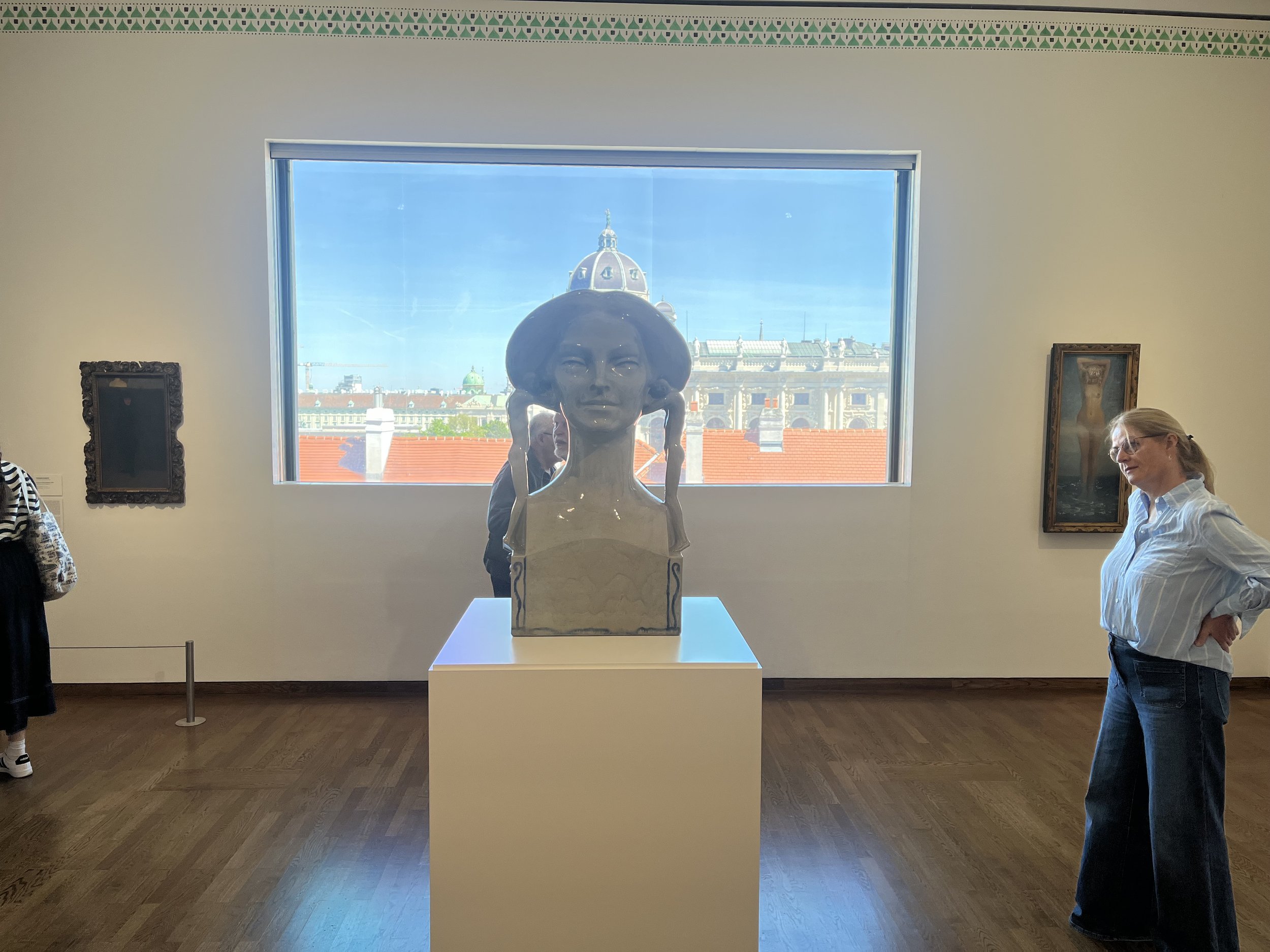
In simple terms the “Illusion of objectivity” allows us to believe we are free of biases we recognise in others. For example, imagine you are in a museum looking at a painting with one of your friends, and each of you have a different opinion about what the painting means or how good it is. You might think it's amazing, while your friend thinks it's just okay. Now, imagine there's an art critic who's supposed to judge the painting objectively, meaning they should have no personal biases and just look at the painting for what it is. In reality, even though the art critic tries to be fair, they may still be influenced by their own experiences, preferences, or background. This is called the “Illusion of Objectivity” – the idea that something can be completely unbiased or neutral when, in reality, everyone brings their own perspectives and biases to the table, whether they realise it or not. So, remember even when we try to be objective, it's important to recognise that our opinions are shaped by who we are and what we've experienced.


Depending on your experience

c/o LinkedIn

We all have biases, as it's these biases that allow our brains to sort through vast amounts of material very quickly. While some biases are conscious, others operate at an unconscious level. In an ideal world we would not have to justify the necessity of discussing diversity as a business case, but for some leaders’ economics is the only language they understand. And in some cases I think this is the only way to underscore the need for dialogue as we strive for greater inclusivity within our communities and workplaces.


We tend to favour affinity

Organisational preference occurs when a group of like-minded people who share similar backgrounds, values, information, and perspectives, embeds these traits into the organisation's policies, procedures, and practices. I think this tendency often results in favouring a limited set of norms, behaviours, and individuals, mistakenly perceived as the only "right" approach. The issue arises when organisations claim to value diversity but fail to embrace genuine change when welcoming individuals from diverse backgrounds. Instead, organisational preference continues a cycle of seeking people who closely resemble those already present within the organisation.


Don't be afraid to admit it

The term 'affinity bias' is used in neuropsychology to describe an unconscious bias that causes people to gravitate toward others who appear to be like them (including those with similar interests, backgrounds, and appearances). I think the best way we can reduce unconscious bias and achieve a culture of equality is to become aware of them. It’s important to note that biases, conscious or unconscious, are not limited to ethnicity and race. 

One of the greatest values of interacting with people who are different is the mirror it provides on seeing my own identity. Contact me via e-mail if you want your employees and leaders to learn more about discrimination, biases, and stereotyping, through unconscious bias training workshops.

”Diversity training doesn’t work!”
— Dr. Frank Dobbin