


Organisations navigating change need to slow down, examine their assumptions and avoid snap judgments that can alienate employees. I think building shared psychological safety means ensuring everyone feels heard and considered, not just the loudest or most senior voices. Leaders need to be willing to sit with discomfort, recognising that genuine transformation often challenges their own perspectives. Too often, the emotional burden of change is outsourced to middle managers or HR teams, who are expected to absorb employees’ fears and frustrations without adequate support themselves. While HR typically serves the strategic interests of the organisation, it’s crucial to balance this role with a genuine commitment to employee wellbeing and ethical practices.
Solving writer’s block
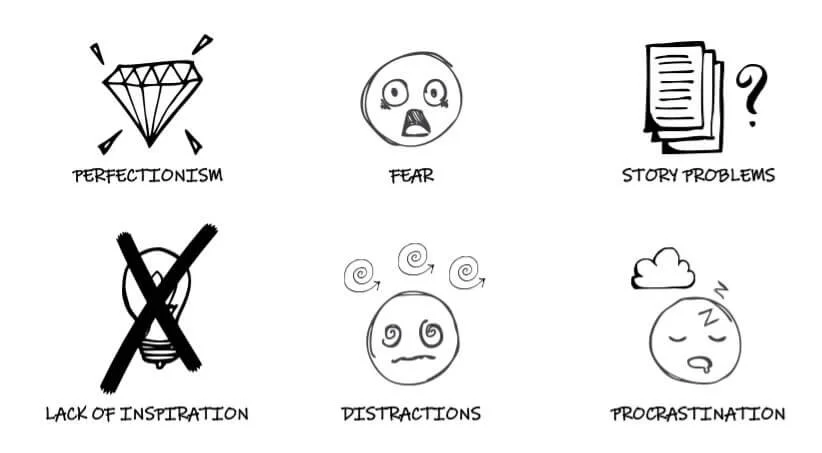
Writer’s block is often a symptom of something deeper, for example, anxiety. At its core, it’s the fear that what you are writing isn’t good enough. Anxiety is essentially wasting present energy on a future outcome you don’t want. When you expect your writing to fail, it becomes almost impossible to invest your full energy into it and sometimes, you can't even begin. If you or someone you know is struggling with writer’s block, the key is to change the internal narrative. I think the mental “movie” playing in your head isn’t working, so play a new one.
How? Ask better questions.
Instead of: “What if my writing isn’t good enough?”
Ask: “How amazing is my writing going to be once it’s done?”
Then say: “Congratulations – I did it.”
Key drivers for personal growth

c/o Indeed.com
I don’t usually give any advice unless specifically asked for, but after yesterday's blog post I thought it necessary to follow up with some key drivers for personal growth.
- Take care of your appearance; it shows respect for yourself and others.
- Define and pursue meaningful goals.
- Don’t give up at the first obstacle.
- Commit to ongoing self-improvement.
- Build trust and connection through empathy.
- Hold yourself to high standards.
- Learn from “no” without letting it define you.
These drivers aren’t about avoiding failure or discomfort, theyare about meeting it head-on. True growth requires us to risk the “no,” to keep showing up, and to keep becoming someone who is not just capable, but also kind, resilient, and worthy of trust.
You have to get used to “no”

Why are so many young men choosing porn over the risk, effort, and vulnerability of real-life connection? Recent research shows that 51% of young American men have never asked a woman out in person. That stat doesn’t just speak to fear, it suggests a skill gap. Engaging in conversation, dressing well, showing up with purpose, and persisting through discomfort takes practice. Maybe it’s time we started training men in “no” exercises, because success in life comes down to your willingness to ask, for example, to ask for help, friendship, a job or a date…and be ready to hear “no.” Again and again. Porn, by contrast, offers a quick dopamine hit with no risk, no rejection, no growth.
I think without learning to face rejection, how will men ever develop resilience, confidence, or presence? Where do they learn to demonstrate excellence? That venue used to be social life, now it’s time to reclaim it.
Roskilde Festival update


Old friends from gymnasium meeting up at Roskilde, and then you realise that your proximity to royalty is really close.
Seek to understand

Open-minded people do not care to be right; they care to understand. For them, the goal isn’t to win an argument but to expand their perspective. There is never simply a right or wrong answer, everything is about understanding. I think it’s also worth considering: while understanding is vital, there are times especially in matters of justice, science, or safety when distinguishing between right and wrong becomes necessary. And even in those cases, approaching the issue with a mindset of seeking understanding can lead to more compassionate and effective outcomes.
Focus your attention

Many people think leadership is about giving orders and always having the answer. I thnk real leadership is about making people feel safe, coaching and inspiring others to grow by holding them accountable. It also means listening with full attention, leading with compassion, and knowing when to take a step back.
Two broad definitions of coaching

Photo: Søren Meisner © c/o Dansk Danseteater
Coach as Instructor:
An expert who teaches you how to do something practical. for example, a football coach who trains players in specific techniques, a wellness coach who guides clients in adopting healthier habits, or a language coach who helps improve communication skills.
Coach as Facilitator:
A trained professional who uses non-directive approaches to help clients achieve their own goals. Non-directive means there is no teaching and minimal advising; instead, the coach supports the client’s self-discovery, clarity, and decision-making through questioning and reflection.
All ICF-accredited coaches have one distinct rule:
“We ask rather than tell.”
Are your employees engaged?

Scientific knowledge provides robust evidence about human motivation, emotional intelligence, and effective leadership, showing us how to create better, healthier, and more productive workplaces. However, this knowledge is often not systematically applied in daily organisational practice. As a coach and DEIB practitioner, I am dedicated to exploring methodologies for translating empirical findings into practical strategies that address the complex demands of everyday working environments. Contact me via email if I can be of service to you or your organisation.
Employee fulfilment

There are three fundamental needs people must have met to feel fulfilled in the workplace: autonomy, competence, and relatedness.
Autonomy means having the freedom to make decisions and manage one’s work. Competence is the sense of knowing how to do something well and feeling that this knowledge is both valued and put to use. Relatedness is the feeling of being connected with others.
When these three needs are met, employees can work and function in ways that are highly satisfying for themselves while also delivering strong results for their employers and clients.
It's OK

Emotional intelligence isn’t just about being kind or approachable, it’s about being powerful with people, not over them. And that’s the kind of leadership organisations need if they are serious about meaningful, sustainable transformation. I think this is because in times of transformation, your presence matters as much as your strategy.
Focusing on practical aspects

Leadership today is not just about vision, strategy, or performance metrics, it’s about presence. And not just the kind that shows up in meetings or quarterly reports, but the kind that’s felt by the people around you. Authentic leadership is not about being universally liked, it's about being consistent, grounded, and brave enough to embody values even when they challenge the norm.
I think in transformation contexts where uncertainty is high and morale can be fragile this kind of leadership becomes critical. It stabilises teams without sugarcoating reality. It encourages innovation without glossing over fear, and it helps people stay resilient through the messy, human process of change.
Making a difference

You are doing great at climbing, but are you climbing the right mountain? I think you should pause and reflect: What are you doing?
Make better plans by answering these questions:
· Who are you at your core?
· What is your vision?
· What is your mission?
· Who are you serving?
When your plans align with your true self and what you genuinely want, it can make all the difference in the world. Does this resonate? If so, contact me via email for a confidential 30 minute discovery session.
Powerful life tools

Simple actions that strengthen your presence and impact:
1. Be calm
2. Talk less
3. Observe more
4. Show respect
5. Move in silence
6. Make eye contact
7. Manage your time
8. Think before speaking
These tools cost nothing but can change everything. I think mastering them helps you navigate challenges, build trust, and lead with quiet confidence. Keep them close as they work in any room you enter.
Musical improvisation

““I told them an artist’s first responsibility was to himself. I said if he kept getting upset with what other people think he ought to do, he never would get too far, or he sure wouldn’t last. I tried to make them see how I had worked all my life to play myself… They said they understood. I hope they did.””
The tension

I think authentic leadership doesn’t always land softly. It can challenge cultures that are resistant to change. It can unsettle environments where vulnerability feels risky. And that’s okay. Emotional intelligence isn’t about being agreeable, it’s about being grounded, intentional, and human. It’s about holding space for discomfort anddriving momentum forward. If you are leading transformation, you should expect a bit of friction as that’s not failure, it’s the work.
This is a critical factor

Leaders with high emotional intelligence (EQ) don’t just command respect they also create connection. Their ability to self-regulate, empathise, listen actively, and respond with intention builds psychological safety, trust, and long-term engagement within their teams. Some people call them soft skills but in reality they are strategic skills.
Emotional intelligence also has a disruptive edge, and when practiced with authenticity, it can surface discomfort in environments resistant to change. I think people may resist vulnerability, they may distrust candor, and in many legacy organisations, empathy can even be misread as weakness. This is why senior leaders must not only model emotional intelligence, but also be prepared to manage the disruption it can cause.
““Nothing is given, everything is earned.””
Choosing meaning with intention

Leaders are constantly required to interpret complex, ambiguous situations. Whether it's a missed target, a team conflict, or a career crossroads, the story you tell yourself about what’s happening will either empower you or hold you back.
As a coach, I help leaders explore the stories they are living by:
· Is this challenge a threat, or a signal for growth?
· Is that tension in your team a problem, or an invitation to lead differently?
· Is your current frustration a dead-end, or a turning point?
Reframing isn’t about denial or false optimism. It’s about choosing meaning with intention. It’s about emotional mastery. It’s about creating space to respond rather than react. And I think it’s one of the most powerful tools in a leader’s toolkit. If you are at a place where your old stories are not serving you, maybe it’s time to rewrite them, with support from a coach. Contact me via email to book a free 30 minute discovery call.
Look at it differently

We can’t control everything around us, but we can control the meaning we attach to it. I think by changing the meaning, we often change how we see the situation. From a leadership perspective when you change the meaning, you will shift your emotion. And that change in your emotion will you change how you lead.
As a coach, I help leaders step back, reframe, and see with fresh eyes. Not with false positivity, only with intention and clarity. This is because sometimes, a new perspective is all it takes to unlock your next move. Are you ready for a different kind of conversation? Contact me via email to book a free 30 minute discovery call.
Positive impacts

In many organisations, leadership conversations still default to top-down communication. Meetings become one-way updates, with leaders doing most of the talking and very little listening. The focus is often on delivering information rather than inviting dialogue. I think real conversations, the kind that shifts thinking is a two-way street. It asks everyone at the table to stay open, curious, and willing to let go of fixed positions when new insight emerges. The challenge is that many workplace structures still reward authority over inquiry. And when maintaining control is prioritised over mutual understanding, the space for real dialogue and the transformation it can bring, shrinks.