
coaching

Human to human interactions

As AI continues to reshape the service landscape, many routine interactions will become automated. In this environment, the value of human-to-human connection will not diminish, it will increase. The quality of personal interaction, judgment, and presence will become a defining differentiator. A well-executed face-to-face experience is not transactional; it is relational. It is the difference between being processed and being understood. Whether it is a leader taking the time to listen, a consultant applying contextual judgment, or a frontline employee creating a moment of genuine connection, these experiences leave a lasting impact.

I think an individual with the ability to apply discretion, interpret context, and respond intelligently brings a level of value that no algorithm can fully replicate. Lasting change often begins not by trying to reshape the world directly, but by influencing how people see it. When perception shifts, behaviour follows, and over time, that is what drives meaningful transformation.


How do you see the world?

Quality will always matter more than quantity, particularly in a world that often rewards visibility over substance. There is a tendency to equate more with better, yet a focused and intentional approach consistently creates deeper value than constant activity without direction. When you begin to prioritise what truly matters, you realise that not everything deserves your time, attention, or energy.

You do not need an audience to validate your worth. Confidence is not something that is granted by others; it is something that is developed internally through self-awareness, lived experience, and the quiet discipline of trusting your own judgment. There is a certain strength that emerges when you become comfortable standing on your own, grounded in who you are without the need for constant reassurance. This sense of internal stability changes how you relate to the world around you. You become more selective with your energy and more intentional about who you allow into your life. You begin to step away from drama, from gossip, and from environments that disrupt your sense of peace, not out of avoidance, but out of clarity about what you are no longer willing to compromise.

I think with that clarity comes a deeper understanding of what you want and what you are building. You stop chasing what is misaligned and instead focus your energy on what supports your growth, your values, and your long-term direction. There is a calmness in this approach, a steadiness that allows you to move forward with intention rather than distraction, knowing that a meaningful life is not built through accumulation, but through alignment.


Think about it

The highest form of intelligence is metacognition, the ability to think about your own thinking. It is the capacity to observe your mind in real time, to notice your thoughts, question your reactions, and interrupt automatic emotional responses. It allows you to update beliefs rather than defend them. Each time you pause and ask, “Why did I respond that way?”, you create an opportunity for change. Research in neuroscience shows that self-observation activates the anterior prefrontal cortex which is the part of the brain associated with reflection rather than reaction. In effect, your attention shifts inward, enabling greater awareness and control.

Most people run their mental software internally, metacognition introduces a different approach, one where you can examine and adjust those patterns while they are in motion. This is why self-aware individuals tend to evolve more quickly as awareness enables adaptation. I think this process is not comfortable as it requires the discipline to pause instead of reacting, questioning instead of defending and watching your own behaviour with honesty. It may challenge your ego, but meaningful growth requires it.


Leadership is always on display

Effective delegation requires judgment and discipline, and I think these two elements are critical:

  1. Clarity of ownership
    Delegate responsibilities appropriately. This means knowing when to step back and allow others to lead, and when to provide guidance and support to ensure outcomes are delivered.

  2. Level alignment
    Regularly assess whether you are operating at the right level. Seek input to identify tasks or decisions you are holding onto that could be owned by others. Delegation is not only about efficiency; it is about enabling capability and growth within the team.

It is also important to recognise that decisions are ultimately made by those who hold the authority to make them. Accepting this reality allows leaders to focus their energy on influence, alignment, and execution rather than control.


It’s showtime

In my work as an executive coach, I partner with senior leaders to drive sustained behavioural change. As a leader, your team is constantly observing you; your words, your tone, and your non-verbal cues. Every interaction shapes perception, influences trust, and sets the standard for how others show up. I think ultimately, these moments define how you are understood and how effectively you lead. What do you think?


Helping people to have a better life

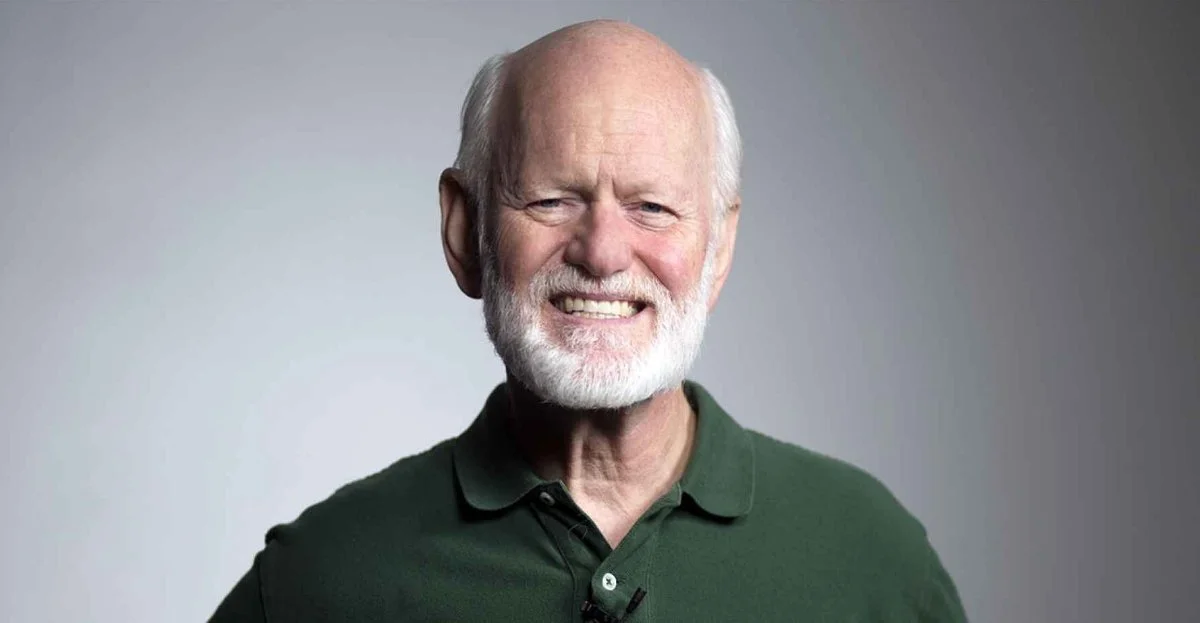
Successful people can easily fall into what Marshall Goldsmith calls the superstition trap. As humans, we naturally repeat behaviours that are followed by positive reinforcement. The more success we experience, the stronger that reinforcement becomes. Over time, this can lead to a false conclusion: “I behave this way, I am successful, therefore my success must be because of this behaviour.”

As a coach, I challenge that assumption as success is rarely the result of a single behaviour. More often, it comes from doing many things well, while also succeeding despite habits or decisions that are, at times, unhelpful or even counterproductive.

“The quality of a leader is reflected in the standards they set for themselves.”
— Ray Kroc

The power of touch

Many organisations assume that once people understand something, they will naturally act on it. My experience shows otherwise, the challenge is rarely a lack of information, the real challenge is execution. This is why I think coaching is relevant as the role of the coach is not to provide more theory or information. Our role is to support follow-up, accountability, and disciplined reflection so that insight becomes action. If this resonates with you, please contact me via this link to book a complimentary 30 minute discovery session.

“When excellence steps into the room, mediocrity gets paranoid.”
— Hannah L. Drake


Silence is discipline

There comes a point where constantly explaining yourself becomes exhausting. Life becomes lighter when you stop carrying the expectations and opinions of others. People will interpret you through their own experiences, fears, judgments, and that is not something you need to control. I think self-focus is essential and when you shift your energy away from validation the obvious destination is towards intentional growth. What do you think?


Stay grounded

What happens when you stop seeking external validation?

A quiet confidence begins to develop when you no longer depend on external approval, you will start to hear a more important voice — your own. A different kind of confidence emerges, one that encourages you to continue and reminds you that your path is unique, and your purpose cannot be measured against someone else’s timeline.

I think calmness protects this clarity, and it creates the space to navigate uncertainty with intention rather than reaction. If this reasonates with you, contact me via this link and book a complimentary discovery call.


The 20 hour rule

AI generated image

There is a distinction between competence and mastery. I think achieving world-class performance may require thousands of hours whilst reaching functional competence does not. Approximately 20 hours of focused, deliberate practice is often enough to move from zero to capable. The barrier for most people is not ability, it is the perception that the investment required is too high. Therefore, by reducing the threshold to the first 20 hours makes skill acquisition accessible and actionable. What do you think?


St. Patricks Day

Confidence doesn’t come from seeking approval, it doesn’t come from likes, compliments or from someone telling you that you are good enough. Confidence develops from action, it comes from proving yourself through your own effort that you are capable. The more you take action for yourself the less you’ll require external validation from others. Confidence is a skill that you can build like a muscle via practice. It’s a good idea to make small, deliberate choices every day.


What is in it for me?

To understand behaviour, you first need to understand motivation as people do not act without a reason. They are seeking change, improvement, or movement in some aspect of their lives. This could be a result, a benefit, or a meaningful transformation.
Research suggests that a significant portion of buying behaviour is driven by anticipated outcomes rather than past experience. In practical terms, people make decisions based on what they believe will happen as a result of that decision. I think our customers do not buy products or services, they buy improvement. They invest in the change they expect to experience in their lives or work and that decision is ultimately a calculation. The perceived value of the outcome must outweigh the cost, the effort, and the inconvenience required to achieve it. When the improvement feels meaningful enough, people move forward.


The lack of knowledge is not the problem

A common assumption in organisations is that once people understand something, they will naturally act on it. Experience shows that this assumption is flawed. The challenge is rarely a lack of information or theory as the real difficulty lies in execution. I think this is where coaching plays an important role. The coach does not primarily provide answers; the coach supports follow-up, accountability, and disciplined reflection so that insight translates into action.


Choose wisely

These statements can be true. You can deserve to feel good about yourself, and at the same time still be learning how to treat yourself with more kindness. Self-belief is rarely built in one decisive moment, it develops through practice. One thought, one choice, one moment of awareness at a time. Real change begins when you start noticing how you speak to yourself and decide to respond differently.
If you are ready to do that work, contact me via email for a complimentary 30 minute discovery session.


Train the leaders

Athletes dedicate most of their time to training, with only a fraction spent performing. In corporate settings, we often see the opposite: continuous performance demands with limited time for development. Research in performance science confirms that expertise emerges from deliberate practice and feedback, not one-off learning experiences. Habit formation research reinforces that consistent action in context is what sustains behaviour change. As a coach, I support leaders in embedding new capabilities through consistent, applied practice.
Interested? Book a complimentary discovery meeting via this link.


Is value subjective?

If we accept that value is subjective, reputation becomes a critical signal of trust. When an individual or organisation invests significant time, attention, and resources in building and maintaining a reputation, they create something meaningful at risk. The existence of reputational risk signals accountability, which increases confidence for those considering engagement.

I think a strong reputation indicates that the relationship extends beyond a single transaction. It suggests a long-term orientation in which future interactions, referrals, and broader networks matter. This ongoing stake in how one is perceived is what reassures others and supports trust in decision-making.


Seeing yourself

Reality can be understood like a mirror: there is an image and there is a reflection. You cannot change the reflection directly, but you can change the image that produces it. In my work, I often use this metaphor to describe the relationship between the mind and lived experience. The reflection represents your life, while the image represents your mind. What you consistently think, believe, and attend to is what becomes expressed outwardly.

To change what is reflected, you first need to understand how the mind operates. I think of the human mind as functioning across three dimensions. The first is the conscious level, where we perceive and interpret the world through our senses. The second is the subconscious level, where core beliefs and patterns are shaped by experience, upbringing, and culture. The third is a field of potential, a space of possibility where different outcomes can emerge depending on what we attend to and reinforce.


Why suffer in silence?

Where are the support structures for men?

Emotional intelligence is the ability to recognise, name, and regulate your own emotions, and then communicate them in healthy and constructive ways. Many men struggle to express emotions beyond anger or sadness, not because they lack depth, but because they have been socialised to suppress their inner experiences and were never given the language to reflect on them. This emotional silence is harmful, both to men themselves and to the relationships they try to build with others. In this context, the growing loneliness epidemic is not surprising. I think now is the time to acknowledge that being human includes vulnerability, and that it is both acceptable and necessary.

If this resonates with you and you want to explore how emotional intelligence can support your personal or professional growth, contact me via email to book a complimentary discovery call.

Creating value

In my experience, you bring a presence that has a calming effect on others, which is a powerful quality in uncertain and demanding environments. At the same time, I believe you cannot create anything of real value without holding both self-doubt and self-belief. Self-doubt keeps you questioning, refining, and avoiding complacency. Self-belief gives you the conviction to act and persist as without doubt, you risk stagnation. I think that without belief, you hesitate and never fully commit, and meaningful work requires the discipline to live with both.