


The experiences that once felt unrelated eventually revealed a pattern and the setbacks developed resilience. The disappointments refined my judgment, and the conversations that went nowhere often prepared me for the ones that mattered most. Rejection did not diminish my value, in reality it redirected my energy. Today, I see rejection less as a verdict and more as information. Sometimes it tells us to improve, sometimes it tells us to persevere, and sometimes it simply reminds us that the right opportunity requires the right timing. I think one has to allow rejection to shape our character without allowing it to define our worth.
Contact me via this link when you are ready to harness your resilience, set benchmarks, and turn setbacks into personal growth.
The work speaks for itself
Sometimes the most meaningful work often happens without recognition. It is built through consistency, integrity, and a willingness to show up, day after day, even when nobody is watching. Not everyone will remember your name. They may not quote you, recommend you, or speak about you publicly but they may remember how you made them think differently. They may lead with greater courage because of a conversation you had together. They may create opportunities for someone else because someone once created one for them. That is the kind of influence I aspire to have because real impact is rarely about being remembered. It is about leaving something behind that continues to make a difference. The work that stands the test of time, even when the spotlight has moved elsewhere.
““One of the biggest mistakes we make is assuming that other people think the way that we think.””
Growth changes relationships
One of the things I have learned is that boundaries rarely create problems. More often, they reveal expectations that have gone unspoken. When people have become accustomed to your constant availability, accommodation, or sacrifice, a healthy boundary can feel unfamiliar. Some will respect it immediately. Others may question it, test it, or struggle to adjust because the relationship is changing. That does not necessarily make them bad people, it simply highlights that a new pattern is being established.
Self-respect is sometimes misunderstood by those who benefited from the absence of boundaries. The real test comes not when you set the boundary, but when you maintain it with consistency. I think boundaries are not about controlling other people's behaviour, they are about communicating what you are, and are not, willing to accept. And over time, consistency transforms boundaries into trust. People begin to understand that your limits are not temporary reactions just expressions of your values. And healthy relationships do not fear boundaries, in fact, they respect them.
Confidence opens doors

People often notice confidence before they recognise competence, not because confidence makes you more capable, but because it encourages others to listen.
- Have you ever had an excellent idea but chosen to stay silent?
- Have you ever started speaking and suddenly lost your train of thought?
- Have you ever walked away from a conversation thinking, "That's not what I wanted to say."
If so, you're not alone as speaking with clarity is not an innate talent reserved for a fortunate few. It is a skill that can be learned, practised, and refined. I think that when you communicate with confidence and clarity, people are more likely to hear your ideas. When those ideas are backed by competence, they earn trust, influence, and respect. Your voice matters, so the question is: are you giving it the opportunity to be heard?
Who do you want to be?
I think leadership begins long before you receive a title as it begins with understanding who you are, what you value, and how you choose to show up when no one is watching. From time to time, I encourage leaders and senior professionals to pause and ask themselves a few honest questions.
About your work
- Under what conditions do you do your best work?
- Which strengths do you consistently bring to your team?
- What are you most proud of?
- Where are you heading, and are your daily actions moving you in that direction?
About your leadership
- Do you model personal responsibility and accountability?
- Are you willing to advocate for your team when they are not in the room?
- Do people know you as someone who develops others, solves problems, and creates opportunities?
About yourself
- When was the last time you invested in your own development by speaking with a coach, mentor, or another trusted professional?
- Are you building your skills because they matter to you, or because you are seeking approval from others?
And perhaps the more difficult questions:
- Do you find yourself shrinking in meetings, code-switching, or over-explaining your expertise?
- Are you trying to make yourself more palatable in environments that were never designed with you in mind?
- Are you still waiting for someone else to tell you that you are good enough?
- Do you undervalue your expertise because you are relying on external validation rather than trusting the value you already bring?
In my experience, the quality of our leadership is closely linked to the quality of the questions we ask ourselves because every decision, every conversation, and every interaction shapes the leader we are becoming.
The roots and the fruits
Giving someone the same ingredients as Gordon Ramsay does not mean they can cook like Gordon Ramsay. The ingredients matter, but they are only one part of the equation. What makes the difference is years of learning, deliberate practice, judgment, repetition, and the ability to make thousands of small decisions that others barely notice. I think the same is true in leadership, business, and life. Many people admire the fruits of success, for example, a thriving business, an accomplished leader, or an elite athlete. Far fewer are interested in studying the roots that made those outcomes possible as the roots are rarely glamorous. They are built through discipline, preparation, failure, reflection, and continuous learning. They develop quietly, often long before anyone notices the results.
I have found that sustainable success comes from focusing on the roots rather than chasing the fruits. When you invest in your habits, your thinking, and your character, the outcomes have a far stronger foundation. The fruits may attract attention but in my exaperience it’s the roots determine whether they continue to grow.
Acceptance is not resignation
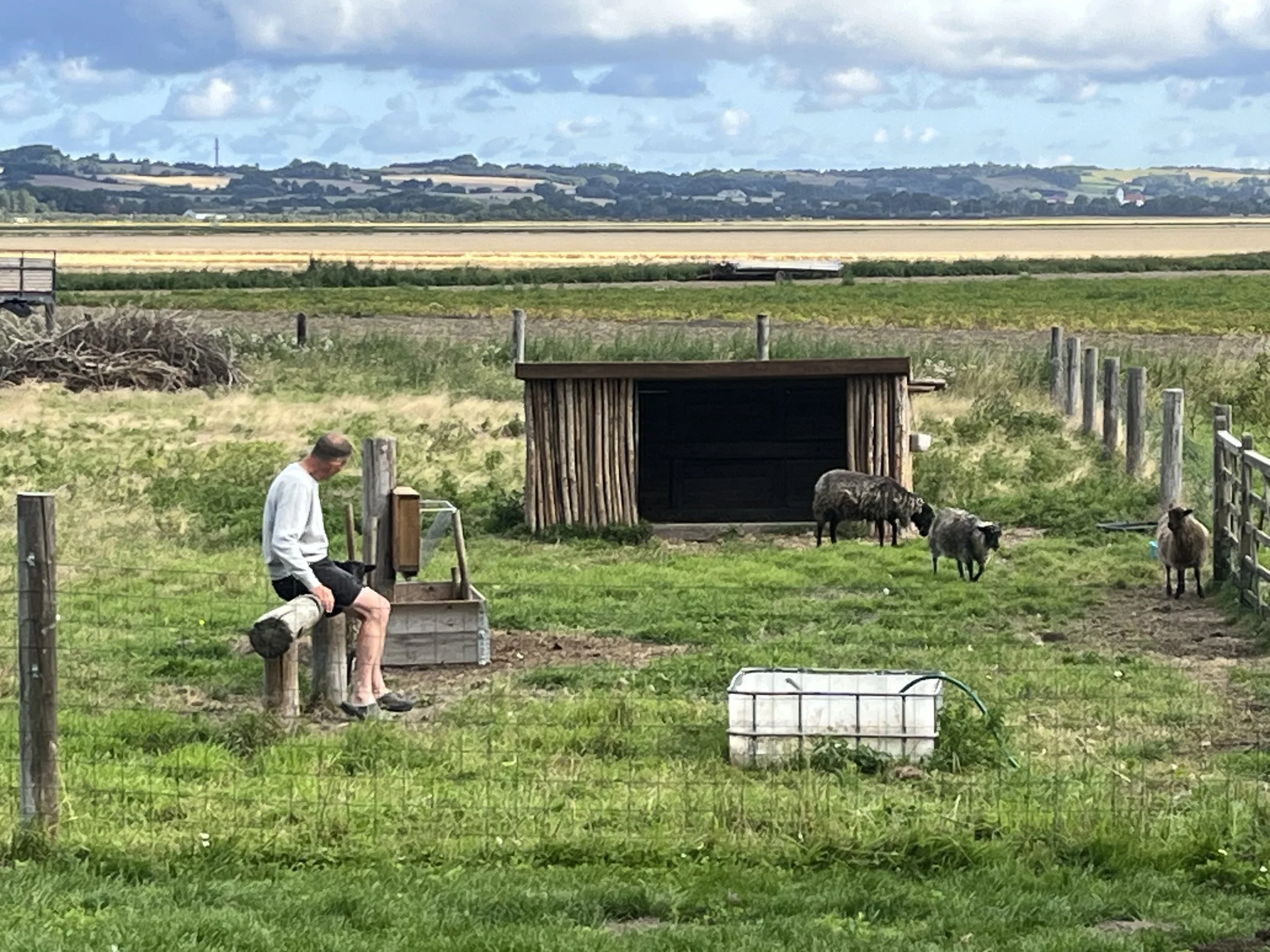
One of the lessons I have learned is that resisting suffering often amplifies it. When we slow down, reflect, and allow ourselves to acknowledge our suffering without immediately trying to escape it, something begins to shift. The circumstances may not change overnight, but our relationship with them can. Acceptance is recognising reality as it is, rather than exhausting ourselves fighting against what has already happened. I think from that place, we create space to think more clearly.
When we are consumed by panic or overwhelmed by emotion, our decisions are often reactive. When we develop the capacity to sit with discomfort, we build resilience, and resilience allows us to respond with greater clarity, wisdom, and intention. As it’s from that place of strength that we begin to find solutions, make better decisions, and change the environment around us. Remember we cannot always choose our circumstances, however, we can choose how we meet them. Maybe the first step towards changing your life is learning to remain present with it.
It’s already within you

We are living in a world that gives us more information, more opinions, and more comparisons than ever before. Attention is constantly fragmented, and it can feel as though we are not only living our lives but also evaluating how those lives appear to everyone else in real time. I think this changes us as it encourages us to become highly self-conscious without necessarily becoming more self-aware. We spend so much time managing how we are perceived that we lose touch with how we actually feel. We begin performing our lives rather than fully inhabiting them.
Yet our greatest resource is rarely found outside ourselves. It is found in our accumulated experience, our instincts, our values, and our capacity to think clearly when we are fully present. We often know far more than we give ourselves credit for and what gets in the way is the internal commentary. The voice that questions our ability, magnifies our fears, and convinces us that we are not ready. This is where coaching can make a profound difference as a coach does not give you your potential. A coach helps you access it through thoughtful questions, reflection, and honest dialogue, coaching quietens the internal noise so that your own judgment, wisdom, and natural intelligence have room to emerge.
““A fourth monkey has emerged. He sees no one, hears no one and speaks to no one.””
Same voice, different stage

Timothy Gallwey's "The Inner Game" distinguishes between Self 1 and Self 2 is highly respected in coaching, sport psychology, and leadership.
Self 1 is the internal commentator. It judges, compares, analyses, and replays conversations long after they have ended. It questions whether you are good enough and often fills the mind with self-doubt. Self 1 is not the enemy, it is trying to protect you but it can become a poor leader when its voice dominates your thinking.
Self 2 is different. It represents your experience, your instincts, and the capabilities you have developed through learning and practice. It is the part of you that performs naturally when you stop overthinking. Athletes describe it as being "in the zone." Psychologists often refer to it as flow.
One of the goals of coaching is to quiet that internal commentary. Not to eliminate it, but to prevent it from drowning out the capability that already exists. When Self 1 becomes quieter, Self 2 has the space to perform. Perhaps confidence is not about becoming someone different. Perhaps it is about learning to trust the person you have already become. What do you think?
We are all mammals
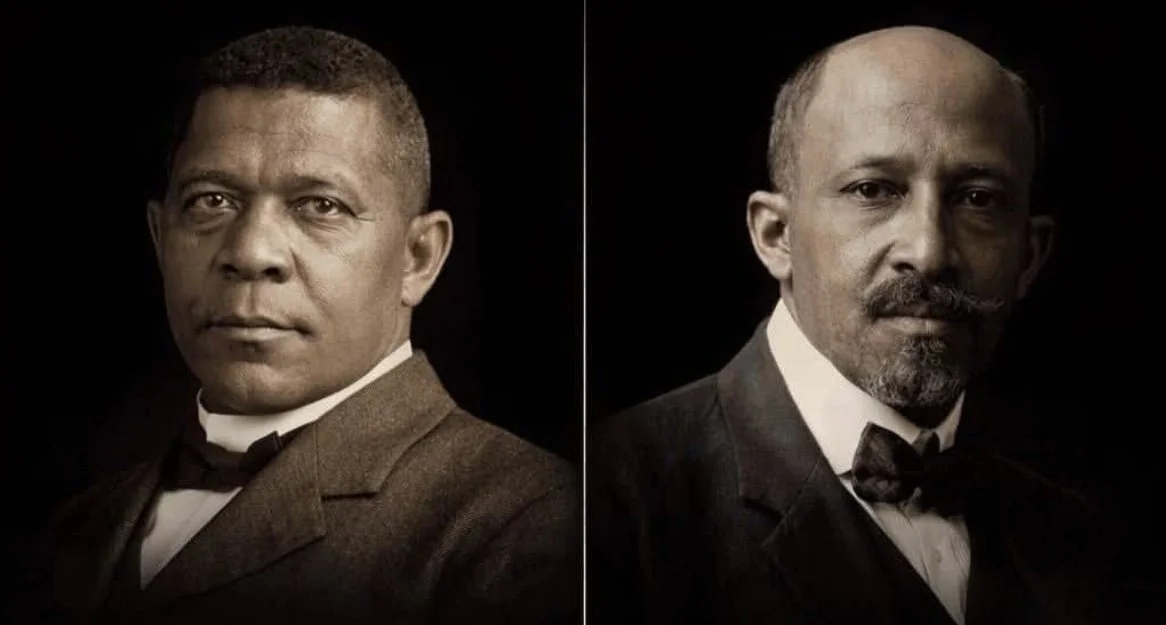
Inclusive leadership begins with recognising that our brains naturally rely on shortcuts and assumptions. The responsibility of leadership is to move beyond those automatic reactions and create environments where people are evaluated on their contribution rather than on what feels familiar. I think the goal of diversity and inclusion is not to change human nature, it is to create experiences that gradually transform the unfamiliar into the familiar. And when that happens, curiosity begins to replace fear, and understanding replaces assumption. What role do you think leaders play in helping people move from instinctive reactions to intentional inclusion?
Performance = Potential – Interference

One of my favourite coaching models comes from Sir John Whitmore's work on performance: Performance = Potential – Interference
In other words, our performance reflects what we are capable of once the interference has been reduced. Sometimes that interference is external, for example, a lack of resources, organisational politics, or unclear priorities. Often, however, it comes from within: limiting beliefs, fear of failure, perfectionism, or the need for external validation. The encouraging part is that internal interference can be recognised, challenged, and reduced.
I think this is where coaching can make a profound difference, as a coach does not give you all the answers. A coach helps you think more clearly, challenge assumptions, and uncover the obstacles that are preventing you from performing at your best. The goal is not to become someone else. It is to remove what is standing between you and the best version of yourself, because when interference decreases, potential has room to emerge. Contact me via this link for a complimentary 30 minute discovery session.
Awareness is curative
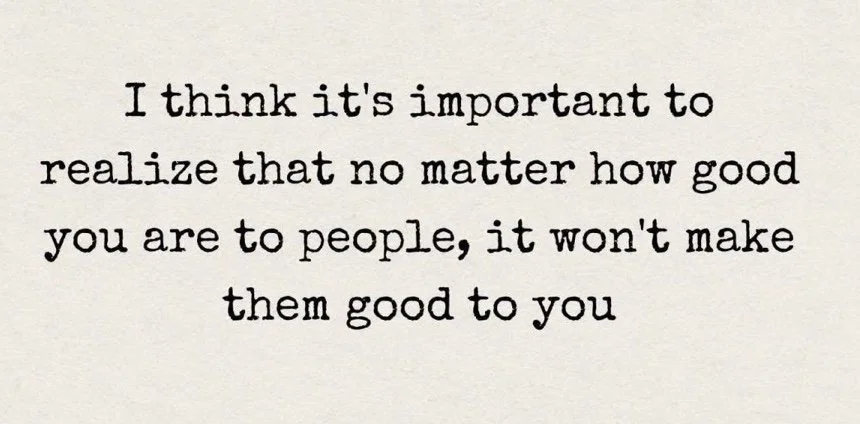
In many ways, we are all performers. The stage simply changes, for some, it is the boardroom and for others, it is a client meeting, a team presentation, or a difficult conversation. Today, those stages are louder and more visible than ever as we are no longer just focused on doing our work well; we are increasingly aware of how our performance is being perceived by others. That constant awareness can become distracting. We begin to imagine what everyone else is thinking, second-guess our decisions, and allow self-doubt to occupy space that could otherwise be used for creativity, learning, and growth. I think that self-doubt is one of the greatest obstacles to excellence. The question is not whether you have potential as most people have far more potential than they realise. The more important question is: What is preventing you from accessing it?
““All the world is a stage, and all the men and women are merely players.””
There is a difference

The difference between managing performance and developing people is significant. Great leaders look beyond output as they recognise potential, create opportunities, and use their influence to advocate for others when they are not in the room. This is one of the reasons I am so passionate about coaching. I see coaching as a process of helping people reconnect with themselves, gain clarity about what they stand for, and lead with greater confidence, purpose, and intention.
Some of the most meaningful transformations happen when people rediscover strengths, values, and qualities that have been overshadowed by pressure, expectation, or self-doubt. They begin to lead from a place that feels authentic and aligned with who they are. Now if that is a journey you are ready to begin, I would be honoured to walk alongside you.
Contact me via this link for a complimentary 30 minute discovery meeting.
Preserve your power
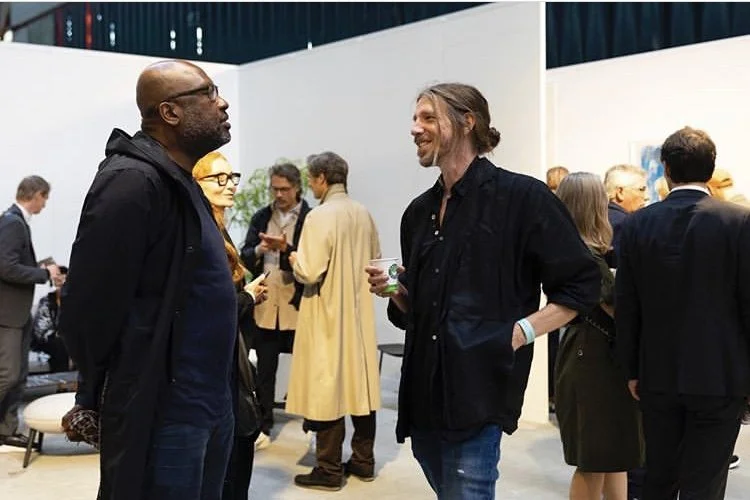
One of the most underrated leadership qualities is the ability to observe before reacting. When people underestimate you, they often reveal far more than they intended. They speak more freely, make assumptions, and demonstrate how they think. If you are paying attention, you learn far more by listening than by trying to prove a point. Not every assumption needs to be corrected, not every opinion deserves a response, and not every room is designed to understand your perspective.
There is strength in remaining composed as sometimes the most effective response is to ask another question, to listen a little longer, or to allow silence to do its work. Calm observation often provides better information than immediate reaction.
I think that the people who feel the greatest need to prove how intelligent they are rarely the strongest leaders. Confidence speaks quietly and it does not need constant validation. Strategic restraint should never be confused with weakness. It is the discipline to respond with intention rather than emotion, to gather information before forming conclusions, and to choose carefully where your energy is invested. In leadership, influence is rarely built by saying more, in my experience it is built by understanding more.
A systematic approach to better decisions

One of the biggest mistakes organisations make is rushing to solutions before fully understanding the problem. Effective decision-making is rarely about acting faster; it is about thinking more clearly. I find it helpful to follow a simple, systematic process.
1. Observe
Pay close attention to people, customers, products, and the market. Be curious rather than certain. The quality of your decisions will always depend on the quality of what you notice.
2. Gather
Collect relevant information before drawing conclusions. Focus on evidence rather than assumptions, and seek data that reflects what is actually happening rather than what you expect to see.
3. Analyse
Challenge your own thinking by testing assumptions against real-world behaviour. What customers say and what they do are not always the same, so look for patterns that reveal the underlying reality.
4. Decide
Once you have sufficient information, commit to a course of action. Execute with clarity and purpose, without creating unnecessary complexity or delaying progress through overanalysis.
The process is straightforward, but it requires discipline. I think the best leaders are the ones who consistently make thoughtful decisions because they take the time to observe, understand, and act with intention. What do you think?
Scaling up your leadership
Communication, trust, and motivation are the invisible infrastructure that every strategy depends on. Without them, even the best plans struggle to succeed. Teams that communicate effectively move faster because information flows freely and decisions are made with greater clarity. Teams that trust their leaders are more willing to take ownership, exercise initiative, and navigate uncertainty with confidence. And teams that remain motivated are far more likely to sustain performance through the challenging phases of a project, when momentum slows and the finish line still feels distant.
This raises an important leadership question: How do you keep your team engaged during the development phase, when progress feels slow and the outcome is still uncertain?
In my experience, the answer is rarely another incentive scheme. More often, it is about connection. Helping people understand why their work matters, creating opportunities for them to contribute, and ensuring they feel heard, particularly when challenges arise. People remain engaged when they see purpose in their work, trust the people they work with, and believe their contribution makes a meaningful difference. Leadership is about creating the conditions in which people can do their best work rather than just setting the direction. What do you think?
The goal is not to be right

One of the biggest obstacles to good decision-making is the desire to win the argument. When our identity becomes attached to being right, we stop listening and we defend our position, seek evidence that confirms our views, and become less willing to consider alternatives. The discussion shifts from finding the best solution to protecting our ego.
I do not claim to be right about everything, and I do not feel the need to be. In fact, I think one of the most valuable leadership qualities is intellectual humility: the willingness to challenge your own thinking, update your beliefs, and change your mind when presented with better evidence. For me, the goal is not to prove that I am right. The goal is to become less wrong.
This mindset creates space for curiosity, better questions, and more thoughtful decisions. It encourages diverse perspectives, reduces defensiveness, and leads to stronger outcomes for teams and organisations. The best leaders are rarely those with all the answers, they are the ones who create the conditions for better thinking. What do you think? Is the role of leadership to be right, or to help the organisation make better decisions?
Why resistance is human
The human brain is a remarkable product of evolution. While the prefrontal cortex enables us to reason, plan, and solve complex problems, older parts of the brain remain highly attuned to potential threats and uncertainty. One of these structures, the amygdala, plays an important role in detecting what is unfamiliar or unexpected. When it perceives a potential threat, it can trigger a stress response that prepares us to fight, flee, or protect ourselves. This mechanism has helped our species survive for thousands of generations. The challenge is that our brains often respond to social uncertainty in much the same way they respond to physical uncertainty. When we encounter unfamiliar people, perspectives, or situations, we may experience discomfort before we have had time to think rationally about them. I think this is why change can feel difficult, even when it is beneficial.
The goal is not to eliminate these instinctive reactions as they are part of being human. The goal is to recognise them and create environments where unfamiliarity becomes familiarity. In leadership, organisational change, and inclusion work, this matters enormously. The more exposure people have to different perspectives, experiences, and ways of working, the more the unfamiliar becomes expected. As trust grows, anxiety decreases, collaboration improves, and people become more open to new ideas. Sometimes progress is not about changing what is inside people, it is about changing what people are exposed to, so that what once felt unfamiliar no longer feels threatening.
The power of the crowd
In 1895, French social psychologist Gustave Le Bon published a book called “The Crowd.” This book would go on to influence political leaders, marketers, and social theorists for decades. His central idea was both simple and provocative: when individuals become part of a crowd, their behaviour can change. Emotions become contagious, critical thinking can be reduced, and people may act in ways they would not normally act on their own.
Whether or not one agrees with all of Le Bon's conclusions, his work raises an important question for leaders: How much of our thinking is truly independent, and how much is shaped by the groups we belong to? We like to think of ourselves as rational decision-makers, yet social psychology consistently demonstrates the influence of conformity, social proof, and group dynamics on human behaviour.
This matters in organisations, it matters in politics and it matters in culture. I think groupthink can suppress innovation and social pressure can discourage dissenting views. Teams can become so aligned that they stop challenging assumptions. The lesson is not to fear the crowd. The lesson is to remain curious enough to question it. As leaders, one of our responsibilities is to create environments where people feel safe to think independently, challenge ideas respectfully, and contribute perspectives that may differ from the majority view. Research show that progress rarely comes from everyone thinking the same way.
Your value already exists
When we are willing to face ourselves honestly, we gain the ability to change our lives intentionally as self-awareness creates choice. It allows us to understand our patterns, challenge our assumptions, and take responsibility for the direction we want to move in. Focusing on yourself is not only about becoming self-centred, it is about developing emotional independence. Over time, you stop relying on praise to feel valuable and stop depending on attention to feel important. Your sense of worth becomes rooted internally rather than being determined by external validation.
I think one of the most liberating realisations is that your value does not increase when someone compliments you, nor does it decrease when someone criticises you. Feedback may be useful, and recognition may be appreciated, but neither defines who you are. It is reflected in your character, your actions, your integrity, and your willingness to continue growing. When you truly understand this, the opinions of others lose their power to control your emotions, and you become free to focus on what matters most: becoming the best version of yourself.