Persist until you succeed

Persistence is self-discipline in action and is the true measure of individual human character. Every great success in your life will represent a triumph of persistence. Your ability to decide what you want to begin and then to persist through all the obstacles and difficulties until you achieve your goals is the critical determinate of your success. And the flip side of persistence is courage. I think the greatest challenge you will ever face in life is the conquest of fear and the development of the habit of courage.

“Courage is the greatest virtue because it guarantees all the rest.” 
— Winston Churchill

Our rewards

Ralph Waldo Emerson, in his essay, “Compensation,” wrote that each person is compensated in like manner for that which he or she has contributed. In other words, the amount of money we receive will always be in a direct ratio to the demand for what we do.

“The Law of Income: You will be paid in direct proportion to the value you deliver according to the marketplace.”  
— T. Harv Eker

The control process

Why is it that most people don’t realise that they have control over their lives?
I have never understood why human beings are so reactionary, they are reactive to their subconscious mind and the feelings and impulses they have in the moment. For example, how would you react when someone is driving irrationally and when they overtake you, they give you the bird (finger)? The natural reaction for most people would be to return the gesture. Now who are you relinquishing control to, the “twat” who gave you the bird or would you remain in control - what would your response be? The outcome would be extremely different depending on which decision you take. I think in general, when you react you relinquish control of the situation, and you only remain in control by not responding.


What time is it?

© Zac Freeland/Vox

Nowadays the majority of people use their telephones as a means of telling the time. Over the weekend when I said, “the second hand never negotiates,” the majority of people in the group thought I was speaking about clothing. Time management isn’t just about time as you can manage how you use time, but time can’t be managed. Here are a few tips to help you master the art of time management:

·      Plan ahead
·      Conduct a weekly review
·      Use time management tools
·      Focus on a single task
·      Say “No” occasionally
·      Block out distractions
·      Prioritise activities

Contact me via e-mail to book coaching, mentoring or 1:1 sparring sessions.


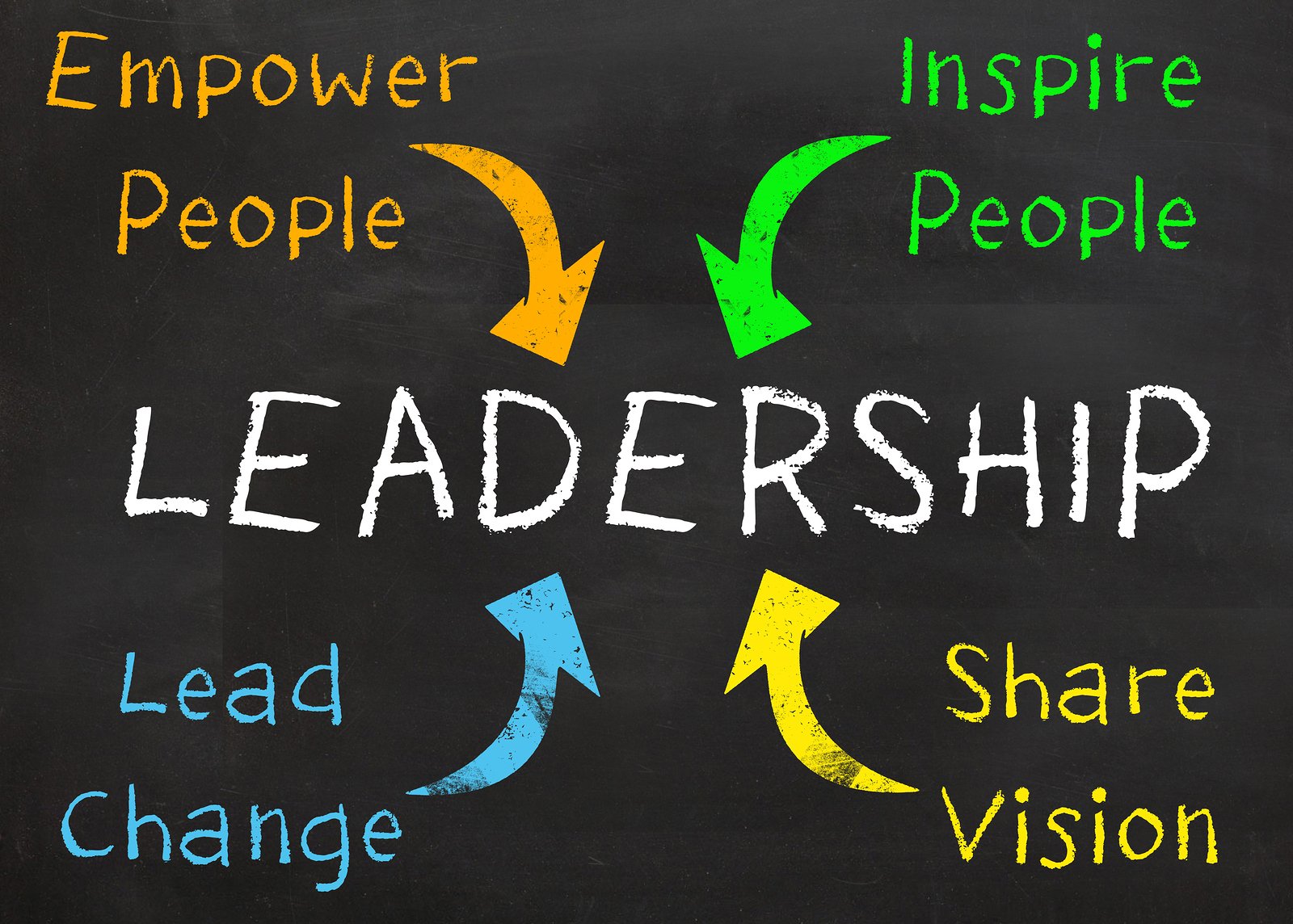
Leadership is about

The single most important characteristic of a leader that people will willingly follow is honesty.  Leadership must live these values as no one likes being tricked by a business or, within a business, by its leaders. Ensure that your company is purpose as well as commercially driven. We need to make more of an effort to showcase successful leaders who build great companies based on honesty, fairness, respect, and generosity.

Leadership is NOT about:
Authority
Egocentric
Fame
Greed
Position
Power
Title


Louis Vuitton in Paris

How can you tell better stories about your products?
Stories speak to emotions, and it will result in a higher response. Facts and data can be leveraged but it’s the narrative that helps us to make sense of that data. I think that when you find a common ground and your audience can nod in agreement, then you will be in a better place to sell them something. All storytellers use contrast whether intuitively or consciously and it’s one of the most powerful devices in storytelling, for example, day and night, heroes and villains, good and bad, etc. When selling new products, I have found that we operate in the realm of what is versus what can be, and this is a powerful contrast. Don’t limit yourself to the story about the problem and the solution, see beyond and see what you can do in terms of contrast.

“My way of life is very simple, even though nowadays, success tends to be linked to fame, high life, and luxury.”
— Burrellism

Right and wrong

You believe X and I believe Y, but I need to convince you that my Y is the right solution. Does your attitude affect my outcomes? When something doesn’t feel right then the cause is always the other person. 100% of the time you are making decisions about what looks right and what doesn’t based on different information. Whenever you disagree you have to make attributions for disagreement, I mean you have to explain to yourself. Why is it we disagree and it’s basically a story we make up in your own mind about what is the cause of this disagreement (*Professor Lee Ross’ “fundamental attribution error”). And the simplest version is that we disagree because the other person is wrong.


*The fundamental attribution error is the tendency people must overemphasise personal characteristics and ignore situational factors in judging others' behaviour. Because of the fundamental attribution error, we tend to believe that others do bad things because they are bad people.


Yes you can

The first and most important thing is the courage to begin and step out in faith. You develop courage by acting courageously wherever courage is called for. The courage to start something new and move out of your comfort zone with no guarantee of success is extremely important, as the future belongs to the risk takers not the security seekers. I think life is perverse in the sense that the more you seek security the less of it you will have, but the more you seek opportunity, the more likely it is you will achieve the security you desire.

“I learned that courage was not the absence of fear, but the triumph over it.”
— Nelson Mandela

A leap of faith

The mastery of fear and the development of courage are essential prerequisites for a happy and successful life. Create a clear mental picture of the person you would like to become performing the way you would like to perform. Remember that there is nothing wrong with having thoughts of fear if you temper them with thoughts of courage and self-reliance. With the commitment to acquire courage, you’ll reach the point where your fears no longer play a major role in your decision-making process. And you’ll be able to face every situation with calmness and reassurance, and these are the keys to courage.

“You can never cross the ocean unless you have the courage to lose sight of the shore.”
— Christopher Columbus

Let's talk about it again

Rest and relaxation build courage and confidence as much as any other factors. All intelligent people are afraid of something, it is normal and natural to be concerned about your physical, emotional, and financial survival. A courageous person is not a person who is unafraid, the question is how you deal with fear. The courageous person is just the person who goes forward despite of fear. Contact me via e-mail to book coaching, mentoring or 1:1 sparring sessions.


Confronting your fears

I have learned that when you confront your fears and move towards what you are afraid of, your fears diminish whilst at the same time your self-esteem and self-confidence increases. However, when you avoid the thing you fear, the fear grows, and it will begin to control every aspect of your life. And as your fear increases, your self-esteem, self-confidence, and self-respect diminishes accordingly. Therefore, I think that if you do not do the thing, you fear then fear will control your life. Contact me via e-mail to book coaching, mentoring or 1:1 sparring sessions.


External validation

c/o Health Shots

Are you comfortable in an environment where you must figure a lot of things out for yourself? I mean making decisions on your own. If you are someone who really needs a lot of validation to decide and is uncomfortable with having that blank slate and thinking for yourself then self-employment is not for you. You can grow so quickly at a start-up where you can build your skills after being thrown into the “deep end.” Contact me via e-mail to book coaching, mentoring or 1:1 sparring sessions.


The corridors of uncertainty

What are you afraid of, fear of rejection or loss, fear of criticism?
All intelligent people are afraid of something. I think people who are dominated by the fear of failure us an enormous amount of energy to justify or cover up their mistakes as they cannot deal with the fact that they have made a mistake. Others are preoccupied by the fears of rejection and are so sensitive of how they appear to others, they don’t have the ability to take any independent actions and refrain from doing anything until they are certain that someone else will approve.


By objectively analysing your fears you will begin the process of eliminating them, as anything you practice repeatedly will eventually become a new habit. Make a list and organise your fears in order of importance. Here a few example questions:
·      Which fear has the greatest impact on your thinking?
·      How does this fear hold you back?
·      How does this fear help you?
·      How would you benefit by eliminating this fear?
Contact me via e-mail to book coaching, mentoring or 1:1 sparring sessions.


The looking-glass self concept

A lot of what we experience in the world today is challenge because of how we see ourselves. According to sociologist Charles Horton Cooley, individuals develop their concept of self by observing how they are perceived by others, a concept Cooley coined as the “looking-glass self.” I agree that behavior and self esteem are dictated by a person's predictions of how they’ll be perceived by others. In other words, we live in a perception of a perception of ourselves, for example, if I think that you think that I am smart, then I am smart. And in contrast, if I think that you think that I am dumb, then I think that I am dumb.


The challenge is we are basing what we think about ourselves on what we think someone thinks of us. And the greatest challenge with this is how do you have any idea if what you think someone thinks about you is even true. This is where identity struggles, we start pursuing things in life because we think other people value them. Go to the root of the issue, it’s easy to say just take two of these a day or maybe you just need to do this, but when you look at it from the root perspective we have look at where our challenges arise.

“The challenge today is I’m not what I think I am. I’m not what you think I am. I am what I think you think I am.”
— Charles Horton Cooley

Overcoming a crisis

If you are living a busy life, you are likely to experience a problem every 2-3 months throughout your life, for example, business crisis, family crisis, financial crisis, health crisis and other crisis’s. The problems and crisis’ never stop, they will keep coming like the waves of the ocean, and the only thing you have in your control are your responses to these problems and crisis’. Successful people respond effectively to problems and unsuccessful – I mean ineffective – people do not. Successful people take a deep breath and respond accordingly, they look for the good in every situation and they focus on finding a solution – “What can be done?” – rather than what has happened and who is to blame.


Complex interdependencies

Probability is a much healthier conversation than if I was to speak about risk, as the word risk conjures up a negative picture. The first rule of mathematics and statistics is that if there is anything unrepresentative about your sample set, you’ve got to compensate for it. And with marketing we tend to look at what happened last year rather than what’s going to happen next year, or in 5 years’ time. What we deal with as marketers is the future, and the future is to some degree unknowable. In fact, the only thing you can say with any certainty is the future is going to be very different from the past.


The speed at which change occurs varies, in some cases last year will be very similar to this year and in other times you may for example have a pandemic or a global inflation crisis, which means the future is unrecognisably different. The butterfly effect is the idea that small things can have non-linear impacts on a complex system. In other words, the butterfly effect rests on the notion that the world is deeply interconnected, such that one small occurrence can influence a much larger complex system.


Start of the week

I have decided to only post motivation blogs on Monday’s as it will help you start your week on a positive note. Choose what’s good for your soul, not for your ego as true power comes from uplifting others, not tearing them down. Your diet is not only what you eat, but also what you watch, listen to, and read, the people you hang out with and the things you subject your mind and soul to. Always be mindful of the things you put into your body emotionally, physically, and spiritually.


What now?

c/o Getty images

A wise man once told me: “Be careful who you let on your ship, because some people will sink the whole ship just because they can’t be the captain.” Based on what you now know, is this the best course of action? If not, what else could you do? Here’s a few tips on how to improve social skills:

1.    Say 'Thank you'
2.   Say 'Please'
3.   Listen without interrupting
4.   Do not brag
5.   Wait your turn
6.   Choose kind over clever
7.    Hold doors open longer
8.   Forgive first
9.   Talk less, but say more
10.  Show gratitude
11.  Do not respond to negativity
12.  Be humble


The confidence gap

It’s not a weakness or character flaw to be wrong, make a mistake or change your mind. In fact, in areas of knowledge, technology and competition, it’s a mark of courage, character and flexibility to be willing to cut your loses quickly and practice the reality principle in everything you do. I think that once you say I was wrong or I made a mistake or I changed my mind, the issue is largely over. One must be prepared to deal with the world as it is rather than the way you wish it were or the way it might have been in the past. Face the truth whatever it is and be honest with yourself and everyone around you. Always be open to reevaluating your goals and objectives in the light of new information, technology, or competition.