Life is just a moment

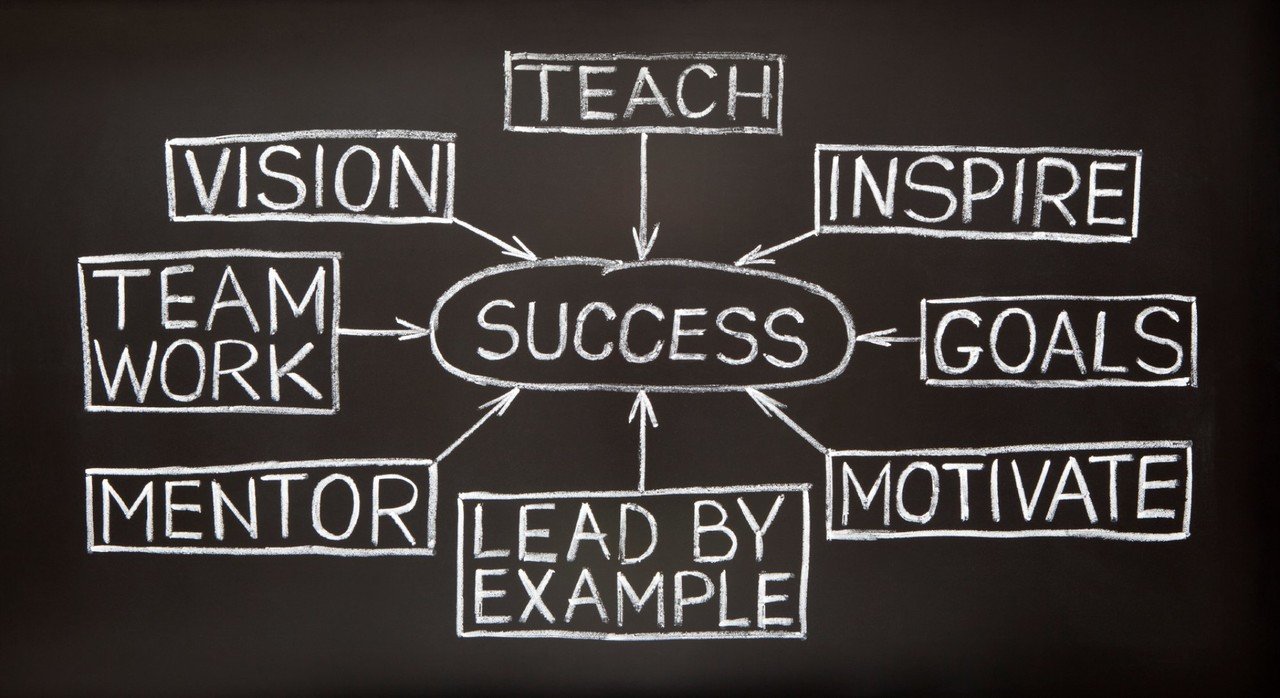
There are times when we all long for a simple way out, a procedure to follow rather than a process to understand. I think a mentor is someone who shares their knowledge, skills, and experience, to help another to develop and grow; and a coach is someone who provides guidance to a client on their goals and helps them reach their full potential. There is no reason why you cannot be both a coach and mentor, as the skillsets required to fulfil these roles are similar and to some degree interchangeable, for example, forming relationships to help a person develop. They are both rooted in learning and training and require a level of trust, respect, and communication in order to work.


When I am coaching, I usually coach on a specific topic or skill and focuses on “you”. I expect that after coaching this specific topic or skill you will be able to perform in a day-to-day basis using the knowledge gained from it. When mentoring, I’m focused on the present and future whilst using my experience and perspectives gained from the past elevate and evolve the current relationships. Does this make sense? Contact me now to book your coaching and mentoring sessions.

Making change with marketing

The sole purpose of marketing is to make a change is a big statement. Marketing is the generous act of leading people to get them to make things better. Marketing is also when we want things to be different, for example, what we do when we want to change culture and behaviour. I think marketing is the work of telling a story that’s true to someone specific to help them see the world differently and take a different action. And in my opinion, this is a fact because if change doesn’t happen then there is no marketing.

Our job as marketers is not to do what we did yesterday, just faster and cheaper. Our job is to figure out how to change the people in the market who want to be changed.
— Seth Godin

To begin the marketing journey, we have to be specific and ask ourselves two questions:
1)    Who is it for? For example, target audience, and
2)    What changes are we seeking to make? For example, how would they like to receive this content?


A young entrepreneur in India

How to add value to discarded materials?
Ashay Bhave is a 24-year-old Indian entrepreneur who makes sneakers from plastic bags and bottles. The brand is called Thaely and they manufacture 15.000 pairs of shoes per week. Ashay’s start-up procures raw material from a waste management company. Plastic bags are turned into a fabric called ThaelyTex with the help of heat and pressure. The fabric is then cut into shoe patterns. Plastic bottles recycled as recycled as a fabric called rPET (Polyethylene Terephthalate), is used for lining, shoe laces, packaging and other parts.

Can a small company like this compete with global brands like Adidas, NIKE, and New Balance? See video here


See and be seen

Lawrence Weiner © 1972

Why can’t we be seen until we learn to see?
I think to see mean that you have empathy, it means to realise that no one cares about you and your opinion, they care about themselves and their own opinion. If you can’t see them for who they are, and for where their fears, desires and dreams are, they will ignore you because they only want to hang out with people who see them. Being seen is an unlimited need that people you serve have and if you can see them and understand them, you can tell them a story that they want to hear and they are more likely to engage with you. You cannot be empathic to everyone, you cannot see and understand everyone, so pick who you are going to see and understand and do that.


Today is your day

Social media is constantly telling us what other are doing and what interests they have. I think that the most important thing you can do in your life is to know who you are and understand what makes you different and unique. Let’s try a little experiment…
Create a list of things that you love and hate.
Look through the list and then ask yourself, “Is this because of what other people are telling me to love and hate, or does it come truly from within?”
This process in not just about your career or love life, it’s about your mental health. Discovering who you are  and what makes you unique will allow you to become acquainted with your own desires and impulses, and not be controlled by what other people are doing and thinking.


Saleable content

I think that in every start-up, you need the following:
- Someone who always wants to get things done
- Someone who obsesses over numbers
- Someone who is honest about things that doesn't work
- Someone who is eternally optimistic


The “someone” I describe above could be the same person. I have heard about start-up companies who don’t know who they are, they don’t have a business model, and they don’t have great market segmentation, in other words how to approach a market. Unless this is all in place, I would not work with them as I cannot guide them through a sales process or teach them how to sell more effectively. Not knowing who to target, who to sell to, what price points to be at can really impact how you can sell effectively in any marketplace.


The chess endgame

One reason I love coaching is you are forced to take a holistic view. Coaches are generalists, who have to obtain a near specialists’ knowledge about a lot of things, for example, from behavioural psychology to political trends. We have to know a little bit about many things and then we must understand how they interact with the methods we are trying to install.

The chessboard metaphor is common throughout therapy to help develop the distinction between an observing self and avoided psychological content. I think that sometimes a well-placed pawn is more powerful than a king.

Knowledge is having the right answers.
Intelligence is asking the right questions.
Wisdom is knowing when to ask the right questions.
— Professor Richard Feynman

Leaders will always

Some people believe that leaders are made and others believe that great leaders are born. I think leadership can be learned even if you were born with the personality traits and communication abilities required to become a leader. The soft skills like awareness, sensitivity and understanding are not possessed by all leaders. Good leaders will always:

⁃            Set high standards
⁃            Have excellent organisational and execution skills
⁃            Embrace change and course-corrects when needed
⁃            Take risks
⁃            Embody fearlessness
⁃            Exude passion
⁃           Earn and give trust


Scaling up good practices

I think that to grow and improve your skills, you must have the courage to face your fears. This leads to fostering co-responsibility and creating spaces to bridge differences, for example, Japan has an ageing population and a fascination with technology, and this has led to the development of companion robots. Sales professionals must allow their clients intellectual oxygen to express what’s going on in their heads. Today, it is not enough to say in words that your organisation makes a difference. We want a visible proof of the responsibility an organisation says it takes. Contact me via e-mail for a workshop regarding your organisation’s approach and execution strategies.


You must live with your results

c/o Getty Images

Taking an honest look at ourselves is, of course, easier said than done and learning to view yourself critically, but not cruelly, is the most important first step for any leader. Without knowing who we truly are, how we truly work, and where our strengths and weaknesses truly lie - we cannot possibly begin to lead others effectively. You can achieve so much when you are truly focussed. What focus means in saying “no” to something that you think is a phenomenal idea and say “no” to it because you are focussed on something else. I think one has to stand guard at the door of our minds and decide what goes inside of it, don’t allow just anyone to dump into your mental factory.

Less excuses, more results.
Less distractions, more focus.
Less me, more we.
— Robin Sharma

I have a dream

Dr Martin Luther King Jr. on this day 59 years ago delivered one of the greatest speeches of all time, the “March on Washington” at the Lincoln Memorial. It was one the largest single protest demonstration in American history and was organised for sweeping civil rights changes, unfortunately, this speech still has not aged well.

 “I have a dream that one day this nation will rise up and live out the true meaning of its creed: We hold these truths to be self-evident: that all men are created equal.”
See full video here

In the end, we will remember not the words of our enemies, but the silence of our friends.
— Dr Martin Luther King, Jr.

Don’t skip the steps

I think skipping a step is placing more value on the destination than the journey and this will compromise growth and learning you experience while you are on your path. I’ve worked with both transactional (fast moving consumer goods) and long-term major sales where the stakes are high (£€$) and what I’ve learned is you can’t be lazy with your process. I think it’s important remember to ask simple questions to figure out what the customer needs and not move too fast, as this will allow you the right to demonstrate the value of your product or service.


There is not a steroid for sales, there’s no magic pitch. Sales is a skill that you learn and develop, it’s a performance skill and it doesn’t matter that you know it, it only matter how well you do it.


What's important to you?

I think salespersons should be looking for a verbal commitment to ask questions and they should only sell to what your customers tell you. No one cares about the salesperson, you can be whoever you want, all that matter is your presentation as it all about the performance. Short presentations are best in my opinion because if you go on a monologue then your clients are not really listening. Good salespersons look for a way to make a connection with their customer, and build a conversation based on trust. If you want to achieve your goals of persuasion, start working on your verbal and non-verbal communication skills today. Contact me via e-mail when you are ready to build on your conversational skills.


Avoiding the commodity trap

What is the Commodity Trap?
When customers perceive your product or service as being identical regardless of the source, in other words, a commodity; the only differentiating factor then becomes price. Therefore, a commodity trap is a situation where products and services have slipped into purely price-based competition. And this is a bad thing because it means customers will go for the cheapest option, and this will force brands to compete on price.


Contact me via e-mail for a segmentation review of your marketing or branding strategy, and stop your customers asking the following questions when they see your product offering:
-       What is it?
-       How does it work?
-       How is it different?
-       And how much does it cost?


There are a lot of factors

What separates an average salesman and a good salesman?
I think what separates them is the understanding that in sales it’s all about the customer and not about yourself. Most salesmen are trained to learn a bullet point pitch and closing related to the pitch, and they are not trained to understand why customers are not buying. Good salesmen know how to ask deeper questions which are not scripted. I think sales in general is about finding the customers pain points and guiding your customer through a sales process where your product or service metaphorically fixes their pain. I have been a salesman and nowadays I’m a consultant, and if you go through sales training or workshop with me, your sales team will learn the tools to communicate value. Contact me via e-mail for sales training and workshops.


Reason and rationality

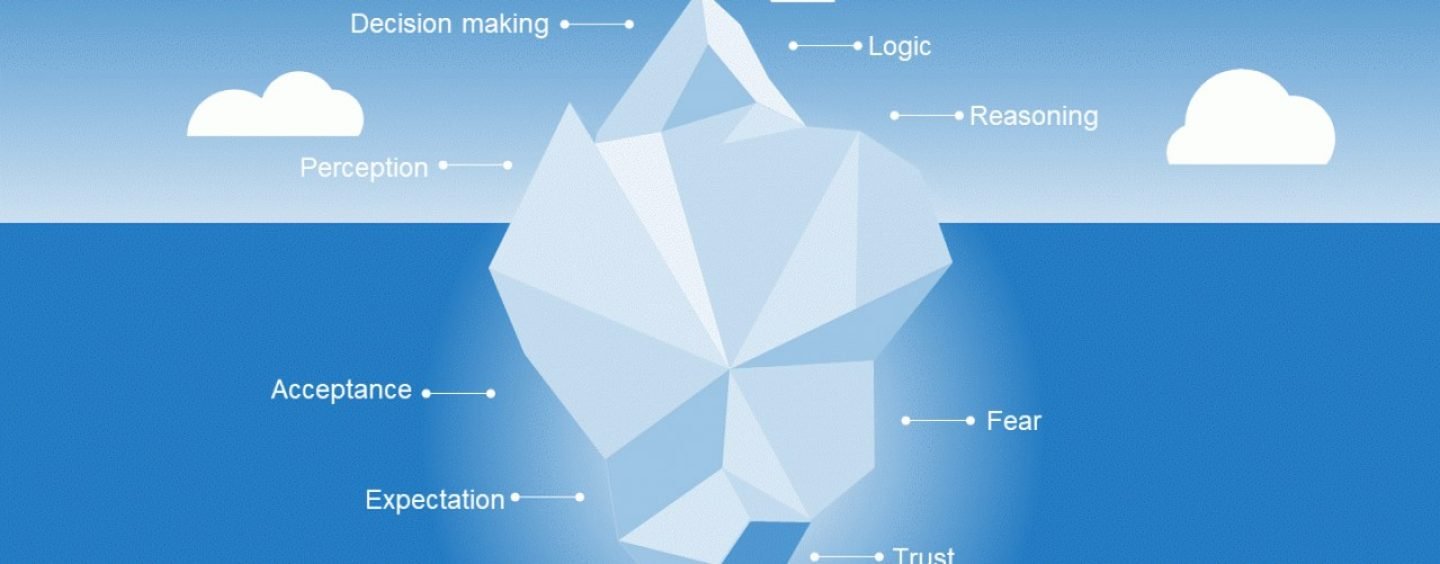
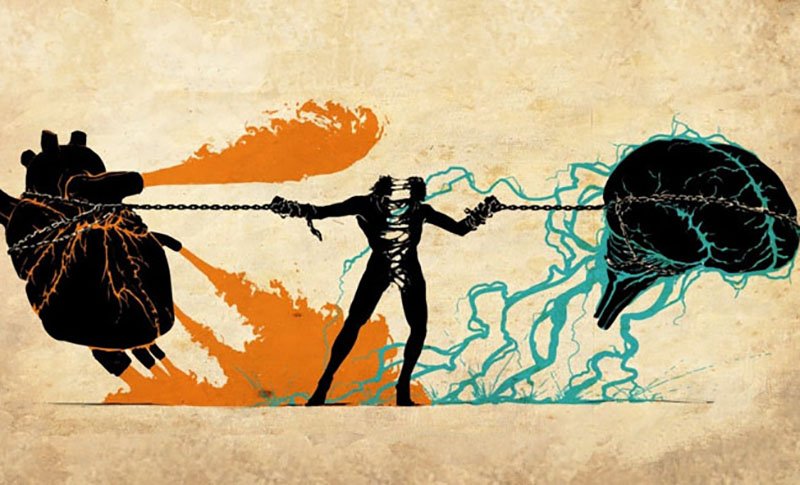
Fear is natural and I think it’s central to the human experience and these fears often come in disguise, for example, a fear that you’re not enough. The fear of not being good enough can surface as anxiety that you can’t explain or rationalise. Over the years of coaching and mentoring conversations, I’ve found that tapping into the imagination is the most powerful complement to traditional memory. The imagination gives us the ability to tell stories and form images about what is going on for us.

The best use of imagination is creativity. The worst use of imagination is anxiety.
— Deepak Chopra

We listen to reply

I think, well the vast majority of the global population thinks the biggest communication problem is we don't listen to understand. We listen to reply. We all have to develop our interpersonal skills, connecting with people we are just meeting for most people is pretty difficult. Human beings are hard wired not do it; our subconscious mind sees anybody that we don’t know as a possible threat. The idea of what we normalise in a culture is so important. For example: there was a time when being overtly racist was normal. We have moved forward from those days when such behaviour was normal. What do you think about that?

You never really understand a person until you consider things from his point of view... Until you climb inside of his skin and walk around in it.
— Harper Lee

Confidence is important

I think confidence builds competence and it helps us to continue to improve and move from “I know how” to “I’ll try” to “I am doing it.” A lack of confidence can hold people back from reaching their full potential. Without confidence we won’t overcome discouragement, disappointment and challenges, and we likely won’t practice. And if things don't work out at first, confidence helps us try again and directly contributes to a more positive attitude and expectancy which are contagious and can help those around us grow too.

An artist is not paid for his labour but for his vision.
— Burrellism

We reap what we sow

Intelligence is the ability to change your mind when presented with accurate information that contradicts your belief.

Closed mindset         
Talking              
Argumentative          
Taking                         
Arrogant                     
Defensive                   
Blaming                      
Rigid                            

Open mindset
Listening
Empathetic
Giving
Humble
Collaborative
Educating
Adaptive