

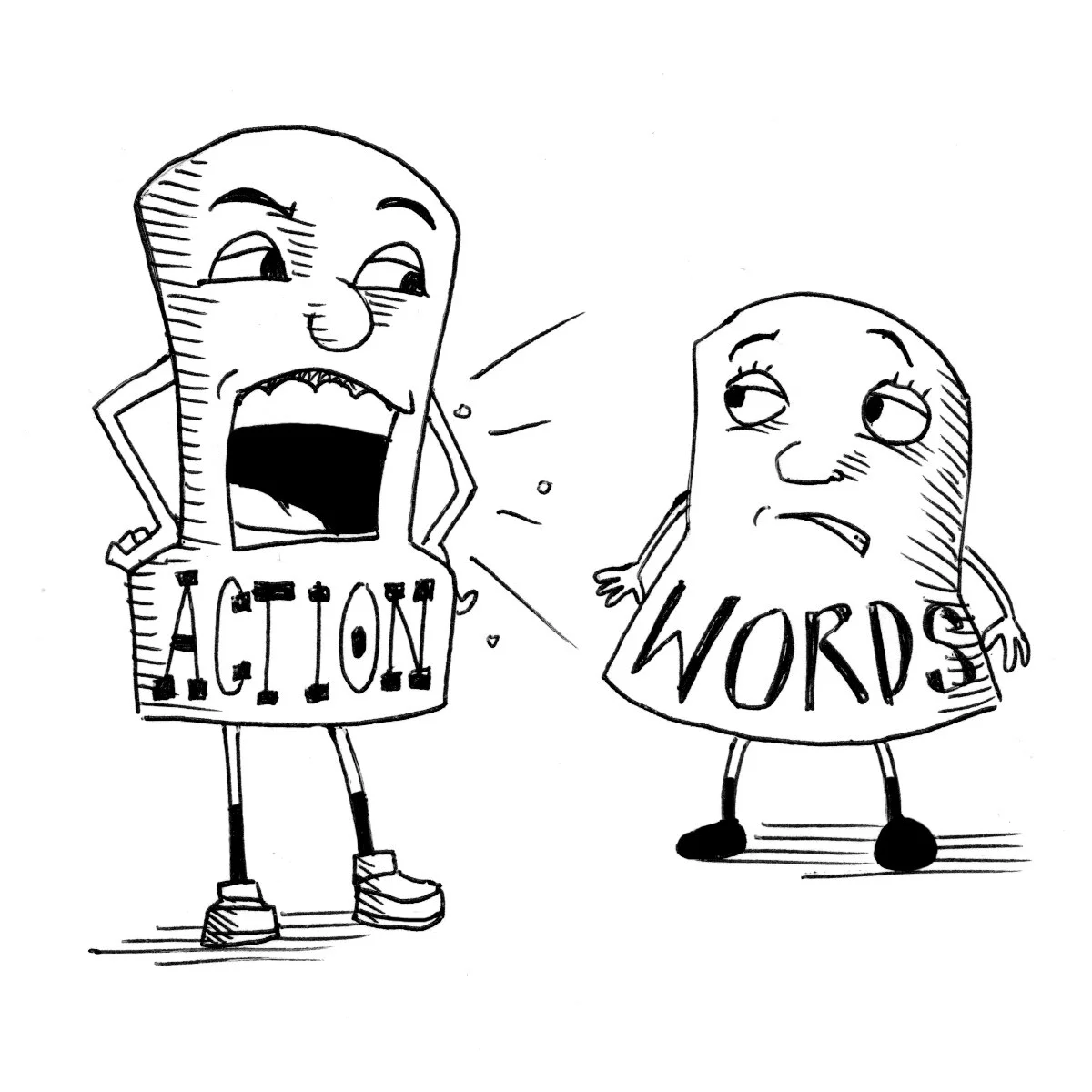
It doesn’t matter what you do in this modern world, you have to know how to use words. If you want to inspire your employees, negotiations, interviews or even inviting your friends for dinner, words are the key. Nowadays, face-to-face meetings are no longer normal, therefore, relationship building happens remotely, and this makes our style of speaking is even more important. Especially when selling over the phone, as you don’t have the benefit of body language to help you construct a convincing sales pitch. In reality, when speaking over the phone almost your entire message is communicated via your tone and inflection.
The classic and still widely-accepted rule about effective communication was developed by Professor Albert Mehrabian. He found the percentages relating to relative impact of words, tone of voice, and body language when speaking. Just 7% of meaning is gained from the actual words that are spoken. 38% of meaning is derived from the way the words are spoken and 55% of meaning comes from facial expression. And Robert Alberti , an expert in assertiveness and with over 40 years experience of teaching, consulting, writing about, and researching healthy elements of assertive expression, said ”I’ve learned that it’s really not so much what you say as how you say it.”
I think that if I tell you that “you really look great today,” and say it while making eye contact and smiling and speaking in a friendly tone, you’ll likely take it as a compliment. If I say the same words while rolling my eyes, shaking my head, scowling, and speaking with derisive inflections, you’ll know I’m being sarcastic and critical. Contact me via e-mail for workshops and communication guidance.
The most powerful person in the world is the storyteller

““The storyteller sets the vision, values and agenda of an entire generation that is to come.” - Steve Jobs”
Wear the change you want to see
“The bitterness of poor quality remains long after the sweetness of low price is forgotten.
”
The big picture

I won the dream and aspiration lottery a long time ago. Would you like to be someone who is lucky enough to do almost everything you want to do? I think if I was in that position this is what I want to do:
- I want to be a teacher
- I want to be of service
- I want to be a person that “turns on the lights” and helps people - not everybody - see things
I really want to live in this positive cycle as I think this is what makes culture matter.
Have a super Easter Sunday and use this opportunity to really think about the kind of life you want to lead and the impact you want to make in this world.
Looking back to the past

The late, great Steve Jobs said, “You can’t connect the dots looking forward; you can only connect them looking backwards. So you have to trust that the dots will somehow connect in your future. You have to trust in something—your gut, destiny, life, karma, whatever. This approach has never let me down, and it has made all the difference in my life.”
I think in the future when we look back at our careers the leaders that we remember will be the ones who:
1. Provided us a safe space to grow
2. Opened career doors
3. Defended us when we needed it
4. Recognised and rewarded us
5. Developed us as leaders
6. Inspired us to stretch higher
7. Led by example
8. Told us our work mattered
9. Forgave us when we made mistakes
10. Contact me via e-mail to arrange a meeting.
Walk and talk

Our “Amarminoen” tour began at 10.10am this morning outside DR Byen metro station on a 24 km hiking trail through beautiful forests, marshlands, beaches. We had sunshine and wind, it’s an amazing adventure ending with beers in Dragør (a picturesque seaside town). I’m so grateful to the Flanuer guys for welcoming me into their group and that I live in Copenhagen.
Above and beyond

It’s important to look at the system, as too often people who would like to make change forget to look at the system. I have been observing systems throughout my life without realising what I have been seeing. How are we going to create a new system that is going to put the right energy into education so over time we will have more people looking like me in the system?
If you are frustrated at how your marketing is currently working, it’s probably because you are using the wrong system. It’s really hard to change the system by just changing the elements within it. I think it’s far more powerful to change your purpose.
Patterns of behaviour

Over the past 20 years or so, the thinking within our culture is that the richer you are, the smarter you are. Therefore, when you want to make a comfortable living, you think that I you need to make more and more money. Let’s change the system, lets try to change the reason why people think this way - educate people, train them to understand that finance is just one parameter of happiness.
Systems thinking is a holistic approach to analysis that focuses on the way that a system's constituent parts interrelate and how systems work over time and within the context of larger systems. It’s important to remember that the term “systems thinking” can mean different things to different people. The discipline of systems thinking is more than just a collection of tools and methods – it’s also an underlying philosophy. Contact me via e-mail as I would really like to look at your:
a) PURPOSE - Why do these systems exist?
b) ELEMENTS - the interconnection between the different elements, and
c) FLOW - how things going out of your system.
Gone are the days of one size fits all

I think that all the stories we tell ourselves about others are only partially true. What do you think? We use negative stories about others to justify self-serving behaviours and people judge you by the stories they tell themselves about your motives and actions. Remember, people may hate you for being different and not living by society's standards, but deep down, they wish they had the courage to do the same.
Generosity is scarce and generosity scales! Generous does not mean that you gave it away for free, it means that you showed up with emotional labour to make things better. Everyone wants is to feel seen, they want products and brands to serve their needs, and they choose brands and products with transparency. The purpose of marketing is to serve people and help them solve their problems. Contact me via e-mail for a deeper dive.
Walk a mile in my shoes

““We are very good lawyers for our own mistakes, and very good judges for the mistakes of others.” - Paulo Coelho”
The golden circle
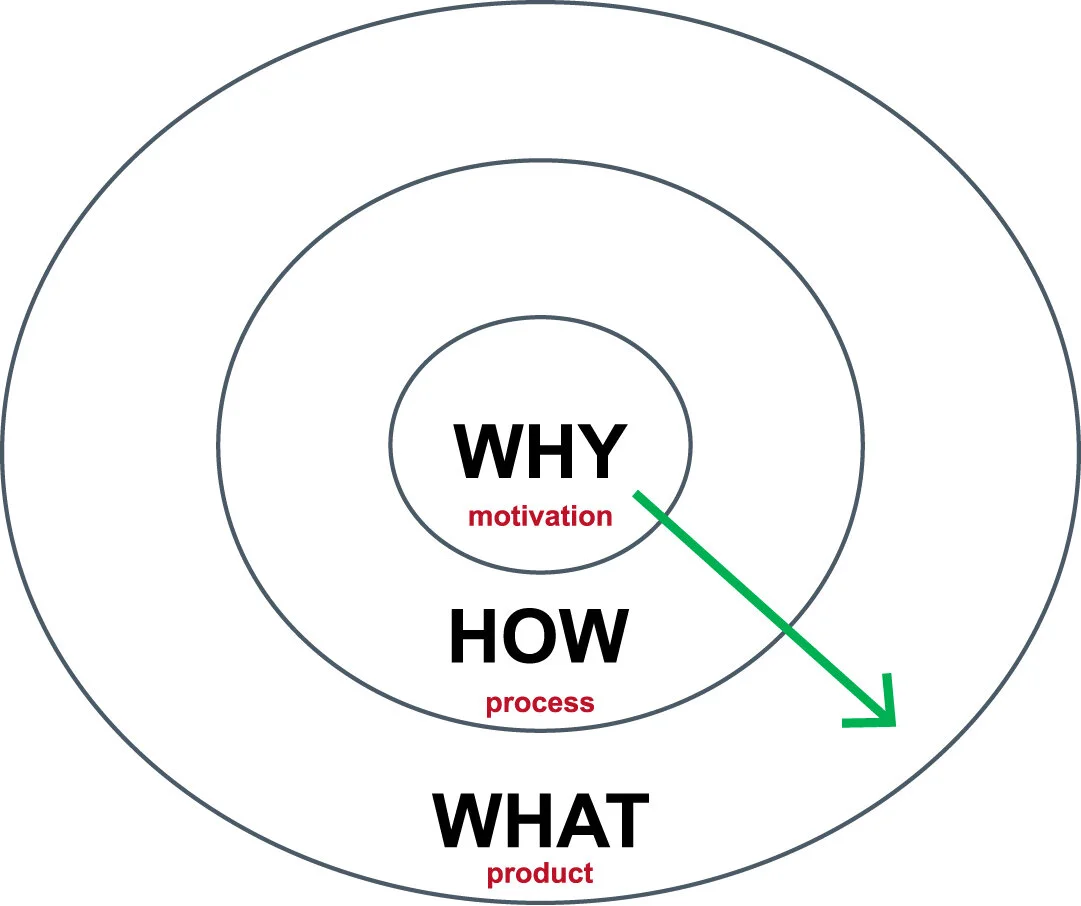
My favourite phase of a consultancy project is the discovery phase, I love it as it's a privilege to really dig into how a company does what it does and how it makes decisions. Sometimes it feels daunting at the beginning with a lot of stuff coming at you but it’s always fascinating. People will always do what is in their own self interest first, and do you know why we can’t see it? It’s because we do it too.
Discovering that big important WHY. The “why” is that thing that gives you the reason to wake up every morning with enthusiasm. It’s the reason why you want to succeed and why you want to win. It’s the “why” that tells your subconscious mind which direction you should take when you want to evolve and grow.
Hiring the right people is probably the most important thing that you can do. Contact me via e-mail when you are ready to look into your golden circle.
Turns on the lights

Consumer behaviour considers the many reasons why people shop for products those reasons could be personal, psychological, situational or even social. Knowing and understanding customer needs is at the centre of every successful business, whether it sells B2C or B2B. You can't persuade anyone that they want or need to buy what you are offering unless you clearly understand what it is your customers really want. As marketers we need to know what makes our consumers take action and why they buy.
I don’t think that your consumers buy from you because they care about you, they buy from you because they care about themselves. Ask yourself if you would drink that brand of coffee if George Clooney wasn’t endorsing it or if you would take that advice if it wasn’t coming from Oprah. It’s for you that you are doing it, and yes it has something to do with the celebrity, but it’s not because of the celebrity. It’s because of your own narrative - how it makes you feel in the eyes of your friends, family and colleagues.
Authentic leaders don’t see helping people as a pain, they see it as their purpose. Don’t be shy, contact me via e-mail.
Sense of personal growth

The Oxford English Dictionary’s definition of purpose - “the reason for which something is done or created or for which something exists”. When we speak about the sense of purpose in work environments, I usually think from a leadership perspective. Therefore, I think our sole purpose as leaders is to bring a fundamental change to how human potential is led and realised. And if we are to truly realise more of the human potential amongst our colleagues and employees, we need to understand the most important thing is to install a great sense of meaning to the work that they are doing for our organisation. I think that this is because a person who has a deep sense of meaning in their work are significantly more productive, effective and innovative. Also, in my experience the person will feel a much higher degree of life quality.
In other words, if you are truly interested in taking your organisation to the next level of performance, you will need to ensure that you have a high degree of meaning in your organisation. Contact me via e-mail for guidance, mentorship or coaching.
Throwback Thursday

Today, everyone knows that plant based fibres have a much smaller ecological footprint than cotton. The Swiss brand, FREITAG made a sustainable, functional clothing range from a durable fabric mix of flax, hemp and modal. The raw materials were sourced in France, the fabric was weaved in Italy and the garments were manufacturing in Poland. “Made in Europe” and completely biodegradable, what’s not to like? This short video from 2014 can be seen here and I think FREITAG’s storytelling is amazing.
Time for change
When you need information that you don’t have, you are usually not aware that you need it. If you only have partial information, you will make the best story possible with the information you have - and your confidence will be determined by the coherence of that story.
Marketing is what we do when we want things to be different, for example, to change the culture or to change the behaviour of our target audience. When you are comparing brands with each other, you may have generated external preferences by association or memory, not only because of what you see in the given moment. What you see in the moment may make you think of the other brand, therefore, you be aware that the influence of context is really powerful and extremely easy to exaggerate.
I think marketing is the work of telling a story that is true to someone specific. And this story will help them to see the world differently and/or take a different action. This is because the only purpose of marketing is to make a change. Nowadays marketing should be a generous act of leading people towards the change you want to make. Contact me via e-mail for specific guidance on:-
a) Who’s it for?
b) What are the changes you seek to make?
Pattern recognition

I grew up in South London and in order to survive, I had to use mental shortcuts to solve problems, evaluate situations and quickly make judgments. The psychologist, B. F. Skinner said, “Man is the sum of his learned experiences.” What I did’t realise until later in life was I was using heuristics. Heuristics are rule-of-thumb strategies to shorten decision-making time and allow people to function without constantly stopping to think about their next course of action. When we use heuristics, we risk ignoring important information and overvaluing less relevant information. Are you aware about your decision-making process?
Anyone working in advertising, branding or marketing should have a working understanding of heuristics because consumers often rely on heuristics when making decisions about purchases. This requires more mental resources and usually leads to more rational choices. Both “limited quantity” and “limited time” advertisements influence consumers’ intentions to purchase, but “limited quantity” messages are more effective, for example, this explains why people get so excited over the “one-day-only” Black Friday sales. Stereotypes are an example of how heuristics can go wrong as these broad generalisations do not always apply, and their continued use can have serious consequences.
I have been victim of stereotyping, both personally and professionally. My positive life philosophy has given me confidence to accept, respect and appreciate the experiences that are unfolding in front of me. l tend to favour an inclusive workplace, usually by virtue of my age and temperament people have always found it comfortable confiding in me. This is because I am generous in my praise and measured in my criticism. Don’t be shy, contact me via e-mail for a calm appraisal and collective guidance.
Can we learn to make better decisions?

I attended a dinner party last Friday and one of the topics of discussion was Daniel Kahneman’s book, “Thinking Fast and Slow”. For us people in marketing, we don’t need a perfect understanding of psychology all we need is a way of thinking about the way people think. One of the things that makes it really useful for us marketeers is that the book gives a very intelligent and perceptive way of doing it.
In general, people are really good at seeing the mistakes that other people make and are not so good at seeing the mistakes they are making. I am not a self-help guru but Kahneman highlights that educated gossip is a very good thing because people anticipate gossip when they make decisions. And I think if people anticipate intelligent gossip they would make better decisions than if they anticipate unintelligent gossip.
I think that during these hard times “Thinking Fast and Slow” is more relevant than ever. Over the last decade, there has never been a greater need to deepen our understanding and create new models of human behaviour. Having a better understanding of people will help us create products and services for what people want and find easy to use. Forgive me if this sounds too idealistic but I’m optimistic and want to make the world a better place for us all. Contact me via e-mail and let me know how this thinking makes you feel.
Follow my leader

© Rawpixel Ltd
““A person who wants to lead an orchestra must turn their back to the crowd.” - James Crook”
This quote offers a humble perspective of leadership. Leadership is not a popularity contest, I think a a good leader doesn’t do his (or her) job for praise or recognition. The best leaders are the ones who do their job silently and enable their employees. The leaders whom I most respect are humble, honest and dependable. They listen and learn and take in new information, because they care enough to understand the perspectives of others and strong enough to stand alone when the crowd is not with them. What values are looking for in your leader? Contact me via e-mail for a meeting (in confidence).
Patterns of behaviour

Demographics are the statistical data of a population, e.g. age, income, education, ethnicity, gender, employment status, etc. I think that this is old school, and it can be seen as a very useful insight into the culture of the people or a certain population that exists in a certain region. Back in the “pre-internet” days you could buy all this information from a mail order company to create marketing strategy as well as a marketing plan for your business. Psychographics focuses on collecting and analyzing the characteristics of an audience that are slightly more intangible, for example, values, habits, attitudes, interests, emotions, personality, lifestyle, opinions and preferences.
When data collection is being done properly, people are happy to have it done, for example, Netflix, Spotify and YouTube recommendations. This is because it is being done for them, not to them. With Facebook algorithms and Google analytics we can say: “This is for people who like that and this is for people who believe this.” It doesn’t matter about your skin colour or income, it’s all about what is your inner narrative. In every postal area there are people from almost every psycho-graphical perception and what we have to do as a brand marketer is say: “This is for you and it’s not for you.” Contact me via e-mail for an evaluation of your brand marketing strategy.
Don't blame the machine

I was very young when I heard the proverb - a bad workman always blames his tools - for the first time. The meaning of this proverb is our success does not depend on what kind of tools we have but how we use them. In other words, a person may have the best equipment in the world but if he does not know how to use them, he can never complete a job successfully.
I am not a medical professional, but I do think that it’s our beliefs and not our DNA that affects our biology. Throughout my life I have heard “sob stories” from people who believe that they are victims of their heredity. After reading masses of literature on the subject, modern research shows that genes do not control anything. We are the masters of our genetic fate because we can change our beliefs, environment and minds, and these are the things that control our biology.
Genes are only responsible for less than 1% of the diseases on earth, so 99% of illnesses are not because of a physical breakdown. It’s what Bruce Lipton metaphorically calls “driver error”. For many years scientists believed that our genes were controlling us, our genes were the “driver of our lives”. Nowadays we acknowledge that the mind is the real controller, and with good programming for example, how to take care of our health, our biology and the environment in which we live, then we will realise that we are the masters of our genetic fate.
Our thoughts, beliefs and how we interact with the world are affecting our genetic expression - mind and body. Our body responds to the chemistry of our thoughts, this can be easily demonstrated by a simple example: compare the feeling of being in love and the feeling of being scared. The chemicals released into our body when we are in love are completely different to the emotions felt when the brain is in fear mode.