systems

You can reframe everything

Many organisations have been conditioned to look for sameness: the "ideal" employee, the "right" way to think, or the "best fit." History repeatedly reminds us that progress rarely comes from people who think exactly like everyone else. Some historians and psychologists have suggested that figures such as Isaac Newton displayed characteristics that today might be associated with neurodivergence. Others point to Adam Smith, whose lifestyle and habits did not always conform to the social expectations of his time. Whether these interpretations are accurate is almost beside the point. The common thread is this: many of the people who have disproportionately shaped our world were anything but conventional.

Nassim Nicholas Taleb makes a related observation throughout his work, particularly in his book, The Black Swan. Systems that optimise for the average often become less resilient and less innovative than those that embrace variation, adaptability, and different ways of thinking. I think one of the most powerful leadership skills is the ability to reframe what we see.

“Human diversity is not a flaw in the system. It is one of the reasons the system evolves.”
— Burrellism

Ideas shape systems

Many of the concepts that end in “-ism” have two dimensions. They are both a way of understanding the world and, in many cases, a way of organising society.

An ideology provides a framework for interpreting what we see as it shapes our beliefs, our assumptions, and how we define problems. A system, on the other hand, determines how those beliefs are translated into policies, practices, institutions, and everyday behaviours. This distinction is important because organisations often focus on changing systems without addressing the underlying beliefs that sustain them, or they focus on changing beliefs without examining whether their structures reinforce the very behaviours they hope to change. I think sustainable change requires attention to both.

If we want to create more inclusive organisations, improve leadership, or transform culture, it is not enough to rewrite policies or introduce new initiatives. We also need to examine the assumptions that influence how decisions are made, how talent is recognised, and how opportunities are distributed. Ideas shape behaviour and behaviour shapes systems, and over time, systems reinforce ideas. Understanding that relationship is often the first step towards meaningful and lasting change.


Goals vs. Systems

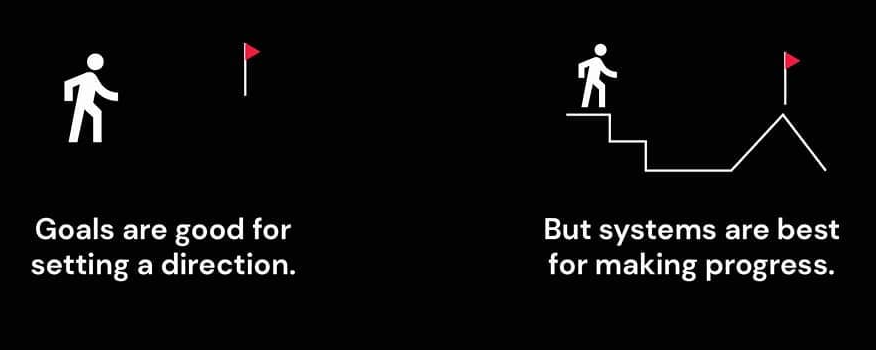
c/o “Atomic Habits” by James Clear

Goals describe the results you want to reach. Systems describe the processes, habits, structures, and conditions that create those results. A goal can set direction, but progress depends on the strength and consistency of the system that supports it. Improved results come from improving how you work, decide, behave, and organise, rather than from setting new targets. I think you do not rise to the level of your goals; you fall to the level of your systems.

Systems determine who succeeds, who is overlooked, and who becomes excluded. Well-designed systems distribute opportunity; poorly designed systems concentrate power. A system often protects the powerful long before it protects the marginalised, which is why systems must be examined, tested, and intentionally reshaped.


Building systems

A few weeks ago when I was in London, I heard this statement: “You don’t rise to the level of your goals; you fall to the level of your systems.” I thought it was time to take a deeper dive.

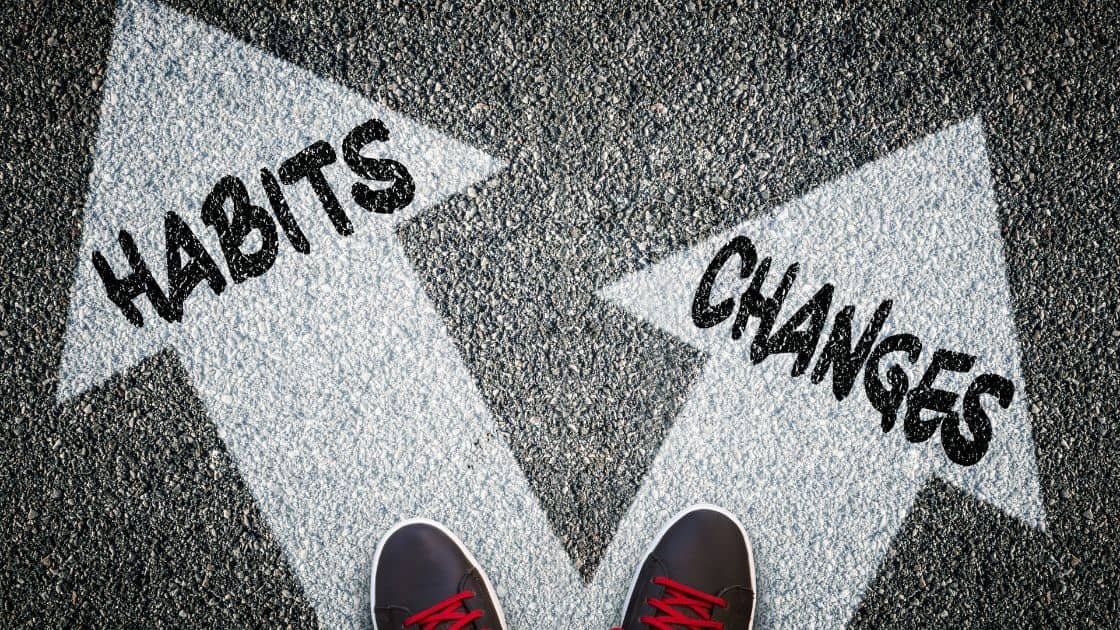
If you’re struggling to improve a situation, the issue isn’t you, it’s your system. Change doesn’t fail because we lack the desire to change; it fails because we’re working with the wrong system. We are often told to be more ambitious, set bigger goals, or think bigger. While thinking big has its place, setting a goal is actually the easy part. The hard part is building a system of behaviours that consistently move you toward that goal. A goal is simply a desired outcome, a target, and on the other hand, your system is the collection of daily habits you follow. I think if there’s ever a gap between your goal and your system, your daily habits will always win. By definition, your current habits are perfectly designed to deliver your current results.


The keys to the world

Some businesses have low barriers to entry and are easy to enter and scale-up in where it doesn’t require infrastructure investment or decades of building up. Other businesses take much longer to build up, where going from start-up to maturity takes decades. When I have my business consultant hat on, I go into companies and explore their existing culture. My speciality is looking into work-flow systems and processes to see whether companies are optimising their economic potential. In my experience, it doesn’t matter what top line metric an organisation uses; the crucial fact is that they have a system they follow consistency. Contact me via e-mail if you would like some strategic guidance. Please note that there’s no specific thing that I can tell you that will make your customers or employees trust you.


All sales teams need professional training

customer-objections.png

Even when you are a subject matter expert, neither the sales or buying process is linear. I saw the light in 2010 when I stopped working for Aquascutum and took a step back and asked myself, “If I was on the other end of that communication, what would I think?” - Would I click on subscribe? Would it annoy me? Does it make any sense at all? And if the answers are “No”, then why am I doing this, why am I saying it, why am I presenting it? It was at this point of self reflection and trying to see things from the other side of the table that I realised that I was a teacher and had the skills to verbalise and guide based on real life experiences and storytelling.

I have the structure, discipline and intelligence to seek out the knowledge required to ask great questions. I have sales experience and a good track record, I also know how to come in and make a good presentation, role play, assess the situation and ask for the sale. As if you don’t know how to overcome objections, sales is going to be extremely challenging. Contact me via e-mail for your sales training and workshops.


Bad news doesn't get better with age

Clock.jpg

Whenever any comes to me with a problem I always have an answer for them, I always look for solutions and if I don’t have them personally, then I will leverage my network. Personal ownership is part of my leadership style as I think that it’s all about the team. Nowadays, I have to constantly remind people that you cannot get all the answers from YouTube.


The subjective side is where you involve individual motivation and culture is just as important as having great systems. You can have the greatest systems in the world but if your culture stinks then you won’t have alignment within your organisation. If the culture of helping and supporting each other is not present within your organisation, then there will not be a level of teamwork required to take on the external challenges. Some level of teamwork and personal responsibility is always required when setting the direction of where of you want your organisations to head. Contact me via e-mail for a meeting to discuss an introspection into your “true worth” principles.


Above and beyond

IMG_9333.jpeg

It’s important to look at the system, as too often people who would like to make change forget to look at the system. I have been observing systems throughout my life without realising what I have been seeing. How are we going to create a new system that is going to put the right energy into education so over time we will have more people looking like me in the system?


If you are frustrated at how your marketing is currently working, it’s probably because you are using the wrong system. It’s really hard to change the system by just changing the elements within it. I think it’s far more powerful to change your purpose.