


“Only as a warrior can one withstand the path of knowledge. A warrior cannot complain or regret anything. His life is an endless challenge, and challenges cannot possibly be good or bad. Challenges are simply challenges. ”
The feedback loop

The world is changing to compensate for our lack of focus and SoMe deliver endless feeds of bite-sized content, bombarding our brains with dopamine. Are you actively seeking out and welcoming customer feedback? Do you have systems in place to incorporate feedback? Are you familiar with the term “Feedback Loop”? It’s a system that helps organisations gather information about their products, services, and performance from people outside of their organisation. What feedback loop approach works best for your organisation depends on your structure and culture.
There are two components of a feedback loop: an action and a reaction. What makes it a “loop” is when the results of the reaction feed back into the process. The ways in which organisations design feedback loops makes a difference in whether or not responses actually get incorporated. Every business has to find their protocol. The challenge is to make sure you empower employees to make and embrace change.
I think there are 3 Feedback Loop approaches:
1. Role Based Feedback
2. Direct Outreach
3. Social Listening
Following are three that can apply to any organisation of any size.
Contact me via e-mail for a deeper dive into your organisations feedback loop.
Listen to your buyers

It’s a good idea to slow down at the beginning of the BTB sales process in order to speed up at the end. Instead of pitching and persuading, start with the problem the buyer has that they may be fully or only partially aware of and solve it. And you should do this by exploring 2 major topics:
What are the problems you are trying to solve?
Are the problems big enough for the buyer’s to want to solve them?
Sales managers train their teams to come in and pitch and that’s the wrong way around. From the salespersons perspective the 1st phase is listening to find out what’s most important to the buyer. And the 2nd phase is all about how you help them get that. It’s not specifically about products or services. How can you pitch when you don’t even know what the problem is? Unfortunately, most sales managers are teaching their team to lead with persuasion and let the customers try to figure out the benefits. I think that's like asking the customer to do your heavy lifting for them.
Change your perception

I am a father, co-worker, boss, friend, partner, etc. and I’m sure that you also have a whole host of different roles in your lives. We invest in different roles at different times, and we put our focused, authentic selves into most of them. When we do it, it’s a better experience for everyone. It’s important to remember that communication starts inside of you, but it’s not always about you.
“A monk decides to meditate alone. Away from his monastery, he takes a boat and goes to the middle of the lake, closes his eyes and begins to meditate. After a few hours of unperturbed silence, he suddenly feels the blow of another boat hitting his. With his eyes still closed, he feels his anger rising and, when he opens his eyes, he is ready to shout at the boatman who dared to disturb his meditation. But when he opened his eyes, saw that it was an empty boat, not tied up, floating in the middle of the lake. At that moment, the monk achieves self-realisation and understands that anger is within him; it simply needs to hit an external object to provoke it. After that, whenever he meets someone who irritates or provokes his anger, he remembers, ‘the other person is just an empty boat; anger is inside me.’”
Gone but never forgotten

It’s a little over 6 month since my mother passed onto the other side. Today is her 83rd birthday, so in her memory, I will quote Haruki Murakami. Have a super Sunday.
“Once the storm is over, you won’t remember how you made it through, how you managed to survive. You won’t even be sure, whether the storm is really over. But one thing is certain. When you come out of the storm, you won’t be the same person who walked in.”
The outsider’s perspective

I think that before you begin to communicate with anyone you have to know who you are communicating with and what’s important to them - always start with the other person in mind. As it’s the season of goodwill, here’s a few questions to consider in terms of communication:
- Who is this for?
- What’s in it for them?
- How much do you know about them?
- Can you meet them where they are?
Being an effective communicator is an invaluable leadership skill that goes far beyond having an even temper or providing concise directives. It relies on a thoughtful combination of empathy, accessibility, approachability and a genuine level of care and compassion for your team. Take your team on a short journey and land them in a better place than where they started. In essence, a strong communicator is a conscious communicator, and a conscious communicator is well on their way to becoming an incredible leader.
Fuel vs. Friction

It often takes more than a good idea to make things a success. All around us there are hidden forces which are making it difficult for us to reach our goals, close a sale or convince others to adopt new ideas. There’s a lot of human behaviour that we can explain in terms of two simple forces: friction and fuel. When organisations meet resistance, all too often they focus on adding fuel, for example, building better products, selling harder or marketing better. There is nothing inherently wrong with that, but there is something many organisations fail to do, they don’t subtract friction. Perhaps they could remove the obstacles to allow their audiences, customers, and clients to fully engage with them.
I think changes in behaviour can occur through changes in fuel and friction, where friction slows you down, and fuel pushes you forward. The job of fuel is to elevate and enhance the appeal of an idea using incentives, using an emotional appeal, giving data or evidence. All of this is designed to demonstrate the values the new idea or initiative. Friction on the other hand is the psychological force or set of forces that resist change. Frictions take different forms; we often don’t see them or talk about them. In essence frictions act and drag on innovations and change. When there are no changes in friction or fuel, you tend to stick to the status quo.
The value trinity
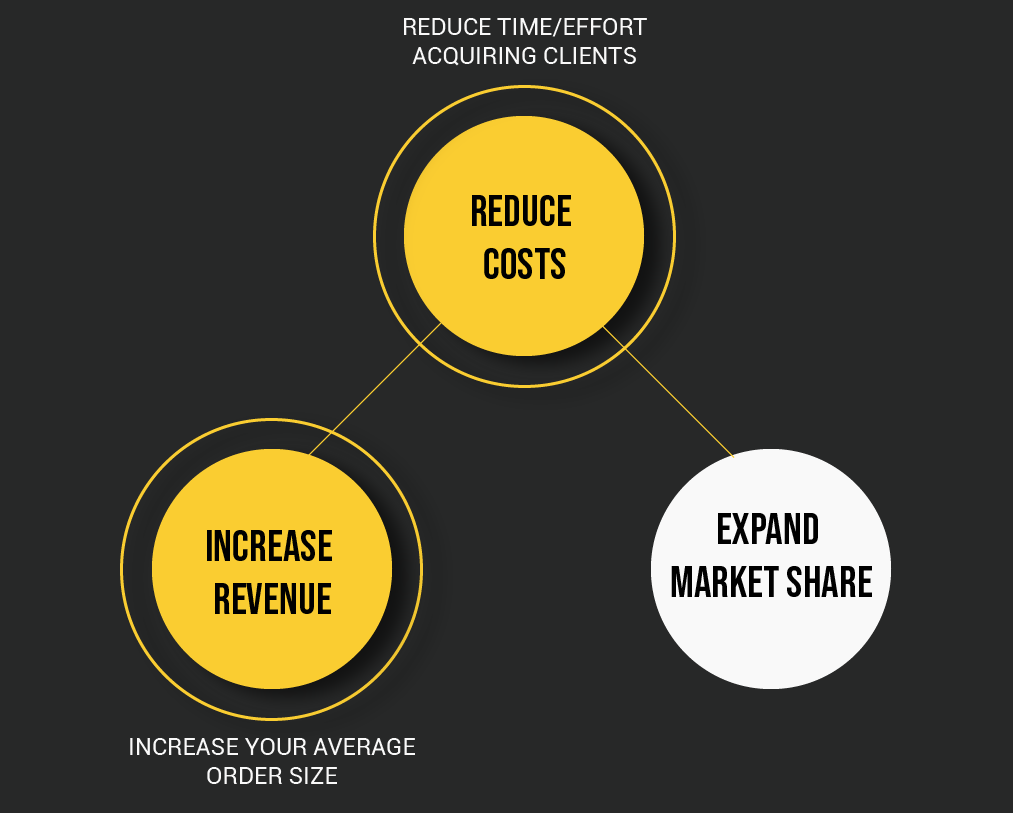
In my experience CEO’s only care about three things:
- How can you help them increase their revenue?
- How can you help them reduce their costs?
- How can you help them expand their market share?
You can sell the features and you can sell the benefits; you can sell the advantages and you can sell the gain, that’s exactly what everyone else is doing. But if you can’t align your features, benefits, advantages or gain to increasing revenue, reducing costs, or expanding market share people will shut down.
Selling to do good

When I think about all the salespersons that I have trained over the years, they tend to forget the listening part really quickly. After they have done enough sales presentations and they know what’s facing them and can predict where the conversation is going, they “fall asleep at the wheel.” They forget that it is for their benefit, find the buyer’s needs and fulfill them. I think the greatest benefit of listening is the impact it has on the buyer.
Great selling really starts with great listening and understanding what the clients need really truly are. It’s essential to listen and make the buyer feel that you hear them and understand their problem. If the buyer feels understood, then they will be open to building a trust relationship with you and this will put you in a position to influence their choices and decisions. I think when you really listen to the buyer, you will discover their problem at a much deeper and profound level and that’s where the magic happens.
Understanding the source

Selling is not hard when you know what you are doing. Sales is a skill and you really need to know how to do it because it’s a skill that will be with you throughout your life. I recently worked with a sales team on 3 key areas:
Attitude - How do you maintain a positive, possible attitude? Taking full responsibility for what you are doing, keeping an expectant attitude in place. How do you manage your attitude when things take a dip and go wrong?
Competence – This is all about selling and understanding the methodology. How do you get buyers to really listen and learn about what the problem really is so you can go about a decision evidence model?
Execution - Doing the things at the right time with the right people.
These things in combination are what drives the results you are going to get. The “old school” pitch, persuade and close the deal is the wrong starting point for the modern salespersons. Commit to helping the buyer make the best possible decision that benefits them, and tell yourself, “I’m at my best when I sell in this way.” I think you should always give buyers the room they need in order for them to really understand what they need, want and why from you.
Strengthening your muscles

What motivates you?
What fires you up?
What gets you going when the going gets tough?
The answer to these questions is different for everyone, just because it works for one person it doesn’t mean it will work for another. Humans are emotional creatures, and we seek patterns, and we are adept at finding them whether they exist or not. Nowadays, we are always hearing about passion, purpose and finding your “why”, and the brain needs that, as we need something to fall back on. Today, our number one problem is “Why now?” as it is far safer to wait, but as sales professionals we must learn how to sell around that.
So much of sales is not about what you know, it’s about how well you do it - in other words, it’s all about the performance. You must be able to get yourself to do things when you don’t feel like it. The people who only follow their feelings are misunderstanding what’s going on in our brains, as our subconscious doesn’t really care about tomorrow. It cares about right here, right now - it wants food, it wants rest, it wants to have fun – and it will take over and hijack our prefrontal cortex. Good salespersons have learned how to get motivated without getting upset, they have learned how to take feedback without taking it personally or as an attack on their identity. Would you like to learn how to regulate their emotions? Contact me via e-mail and let’s schedule an online meeting.
Each buyer is unique

Success in sales depends largely on the salesperson’s ability to adapt his or her skills and pitch when selling to different personality types. With just a little bit of communication, observation, and research, you can use your knowledge of these decision-making styles to build better and longer lasting customer relationships and increase your close rate.
What are those personality types?
The four types of buyers whom I have met the most during my sales career are as follows: management, user, technical and economic buyers. I use the acronym M.U.T.E
- The management buyer is all about seeing the actual solution being implemented and how your solutions can be used.
- The user buyer is the person who is concerned with the overall customer experience and the impact of the buying experience and ease of purchase.
- The technical buyer relies heavily on measurable and quantifiable data before engaging in a purchase and wants proof that your product or service performs as stated.
- The economic buyer is focused on the ROI and stay within or under budget, this type of buyer takes into consideration examples of work done for past and current clients and seeks case studies that prove the ROI of a solution.
By identifying your buyer’s personality type and what motivates them, you can tailor your sales presentation to meets their needs. I can teach you how to put all of these four types of buyers on a grid and figure why they would buy, and more importantly document the reasons why they are holding back from buying. Contact me via e-mail and I’ll guide you through the process of addressing those reasons for not buying and fine tuning your sales presentation.
Be of service
It’s only through understanding people’s holistic experiences that we can ever hope to design something that works within the parameters of what matters to them and the best way to understand what really matters to people is to speak to them. Speaking with your clients is the principal way to understand the rich, messy nuances of their multi-layered experiences. It is through a deep engagement with customers’ experiences that we can begin the process of designing meaningful solutions, for example, a digital e-commerce platform. With this in mind, anthropological expertise becomes especially helpful, because it brings together academic rigour and cultural understanding in order to build a detailed picture of customers’ experiences. This is achieved through discussions with customers that strike a balance between natural and honest, while still remaining focused and insightful. In practice, this usually means asking people about their lives, listening carefully to how they make sense of the situations they experience, and then seamlessly steering conversation topics toward your key areas of focus.
This idea may initially feel obscure and vague, and it may seem more foundational than actionable. I am just trying to serve with what I have been given and I am coming from the place of good intentions. I think it’s essential to build a coherent understanding around the different ways customers experience your organisation. Interested? Contact me via e-mail and let’s schedule a meeting about your customer experience.
Facts on Friday
The real difference between us and chimpanzees is the mysterious glue that enables millions of humans to cooperate effectively. This mysterious glue is made of stories, not genes. We cooperate effectively with strangers because we believe in things like gods, nations, money, and human rights. Yet none of these things exists outside the stories that people invent and tell one another. There are no gods in the universe, no nations, no money, and no human rights – except in the common imagination of human beings. You can never convince a chimpanzee to give you a banana by promising him that after he dies, he will get limitless bananas in chimpanzee heaven. Only Sapiens can believe such stories. This is why we rule the world, and chimpanzees are locked up in zoos and research laboratories.
From “Sapiens: A Brief History of Humankind” by Yuval Noah Harari

Awareness can travel

c/o Getty Images
In psychology, a heuristic is a mental shortcut that allows people to make decisions quickly and efficiently. It is the way you feel (your affect) toward a particular stimulus that influences the decisions you make. No one likes to be outwitted or to be tricked, I wrote a little about “affect heuristics” on Tuesday because advertisers are perpetually after our attention and politicians after our votes, both of them employing as much inducement and enticement as they can muster. With heuristics, the brain can make faster and more efficient decisions, albeit at the cost of accuracy. Do people in your organisation exhibit curious, predictable biases?
In 1974, behavioural economics researchers Amos Tversky and Daniel Kahneman identified a specific mental process used to simplify decision-making. They showed that humans rely on a limited set of heuristics when making decisions with information about which they are uncertain. The three key heuristics are as follows:
1. Representativeness - allows people to judge the likelihood that an object belongs in a general category or class based on how similar the object is to members of that category.
2. Anchoring - allows people to estimate a number by starting at an initial value (the “anchor”) and adjusting that value up or down.
3. Adjustment and availability - allows people to assess how often an event occurs or how likely it will occur, based on how easily that event can be brought to mind.
Understanding your biases

A cognitive bias is a subconscious error in thinking that leads you to misinterpret information from the world around you, and affects the rationality and accuracy of decisions and judgments. Biases are unconscious, they are automatic processes designed to make decision-making quicker and more efficient. Cognitive biases can be caused by a number of different things, for example, heuristics (mental shortcuts), individual motivations and social pressures. Everyone exhibits cognitive bias, and it might be easier to spot in others, but it is important to know that it is something that also affects your thinking.
Here are some typical signs that you are influenced by some type of cognitive biases:
- Only paying attention to news stories that confirm your opinions.
- Blaming outside factors when things don't go your way.
- Attributing other people's success to luck but taking personal credit for your own accomplishments.
- Assuming that everyone else shares your opinions or beliefs.
- Learning a little about a topic and then assuming you know all there is to know about it.
When you are making judgments and decisions about the world around you, you like to think that you are objective, logical, and capable of taking in and evaluating all the information that is available to you. Unfortunately, these biases sometimes trip us up, leading to poor decisions and bad judgments.
You decide for yourself

c/o Harvard Business Review
How do we balance the need to be rational, cautious, and sceptical with the benefits of being curious and open minded to new ideas?
I think our emotions influence all types of decisions, both big and small. By nature, we are wired to pay attention to our emotions whereas we only listen to our thoughts, so when we feel something, it engages so much of our body. We are emotional creatures by nature, we are not the rational thinking animals we like to think we are. Marketing gurus know how to communicate and appeal to the animal in us, as people buy things based on emotions and not based on rational decisions. Consider how advertising can sometimes make unhealthy activities such as smoking or eating unhealthy foods seem both positive and appealing. These ads can sometimes influence the emotions of consumers, which can lead to poor health decisions and risky behaviours that can have serious, long-term consequences.
What can you do to prevent emotions from contributing to poor decision making?
Heuristics are efficient mental processes that help humans solve problems and learn new concepts and these processes make problems less complex by ignoring some of the information that’s coming into the brain, either consciously or unconsciously. The affect heuristic is a type of mental shortcut in which people make decisions that are heavily influenced by their current emotions, in other words, your emotional response plays a critical role in the choices and decisions you make. I think the next time you need to decide during an emotional moment, take a moment to talk silently to yourself using the third person. It might help you stay calm, collected, and level-headed, a strategy that may prevent bad decisions made in the heat of the moment.
Unlocking growth

The job of a salesperson is straightforward, their job is to listen to understand what’s the most important thing for their buyer and then help them get that. Unfortunately, most technology today is not built to provide your buyers with the experience they want and need, just image if your sales team could unlock their performance and become top sales professionals and deliver essential insights to their buyers in those critical moments. This may be the difference between winning and losing because if you don’t partner with buyers and guide them through their journey, you will lose deals to competitors.
We will be selling in digital, virtual, and online spaces more often in the future, and these spaces are noisier and more polluted than ever. This digital pollution costs both you and your sales team time, attention, and productivity, also it affects your ability to reach and engage with the decision makers who matter most to your sales success. How do you fight through it and reach the right people? How can you grow relationships, reputations and revenues? For answers contact me via e-mail and let’s have a meeting.
“The architect of the universe did not build a staircase leading to nowhere!”
Asking for help

When people choose between talking about the past and talking about the future, the pragmatic person will always opt for the future and forget the past. It is always best to speak pragmatically to a pragmatic person, and at the end of the day, most people are pragmatic and will rarely act against their own self-interests.
You will always find yourself in the position of asking for help from those who are more powerful than you. There is an art to asking for help and all depends on your ability to understand the person you are dealing with, and not to confuse your interests with theirs. Most people never succeed at this because they are completely trapped in their own wants and desires. They start from the assumption that the people they are appealing to have a selfless interest in helping them, they talk as though their needs matter to those people – who, couldn’t care less.
Even the most powerful person is locked in the needs of their own. Self-interest is the lever that will move people, once you make them see how you can in some way meet their needs or advance their cause, their resistance to your requests for help will magically disappear. To see the other persons needs and interests, to get rid of the screen of your own feelings that obscure the truth.
We ask to get to know

The quality of your life is directly influenced by your ability to communicate with confidence and clarity. Part of being a good communicator requires that you become an active listener, and active listening requires you ask questions. Questions have benefits for both the questioner and the people responding. I think one of those benefits is proving the other person the opportunity to show more of their authentic selves. I have found that good questions really help in the discovery phase and when you ask better questions your clients will open.
Asking questions is only half the process, the other half of it is being mindful about how you respond to people. Questioning helps us do more than gathering information, like data, facts, and details. It can also help us to learn about what people are thinking, feeling and in some cases what they want. I define a better question as one that demonstrates genuine curiosity but without being too intrusive, and when we can strike that balance that’s when we can shatter the perceptions that we have of other people and what people have of us.