Let's talk about it

Which one do you think is best?
I do not give you these answers, my technique is all about self-discovery and taking a deeper dive into the decision-making process by asking alternative questions, for example:
a) Why do you think they did that?
b) How could you have prevented that?
c) What do you think is going to happen next?


My procedures revolve around the 4 D’s (Discover, Define, Develop and Deliver). I systematically investigate, analyse, and optimise the points of contact between the customer and the organisation throughout the relationship. It’s not just about knowing the skills; it’s about applying them. Do you have a systematic way of getting better every day?

Without doubt, there are lots of ways to measure the pulse of a business. But if you have employee engagement, customer satisfaction, and cash flow right, you can be sure your company is healthy and on the way to winning.
— Jack Welch

Always be learning

Are you leading an organisations where there are islands of activity? Where finger pointing at who’s doing it wrong in sales, marketing, production or R&D is a common occurrence. It takes strong mental strength to step back and say what is the best thing that I can do as a team to build trust. Are you really spending enough time trying to understand what your team needs are or are you just feeding them information and data?


I think confidence is believing you are able, and competence is knowing you are able. Steve Jobs surrounded himself with A+ players, people who were smarter than himself because he wanted to learn, evolve, and grow. He put his faith in his people, not in technology, which for him was just tools that either worked or didn’t. He believed that people were basically good and smart, and if you give them tools, they’ll do wonderful things with them. What are you doing to move the needle forward?


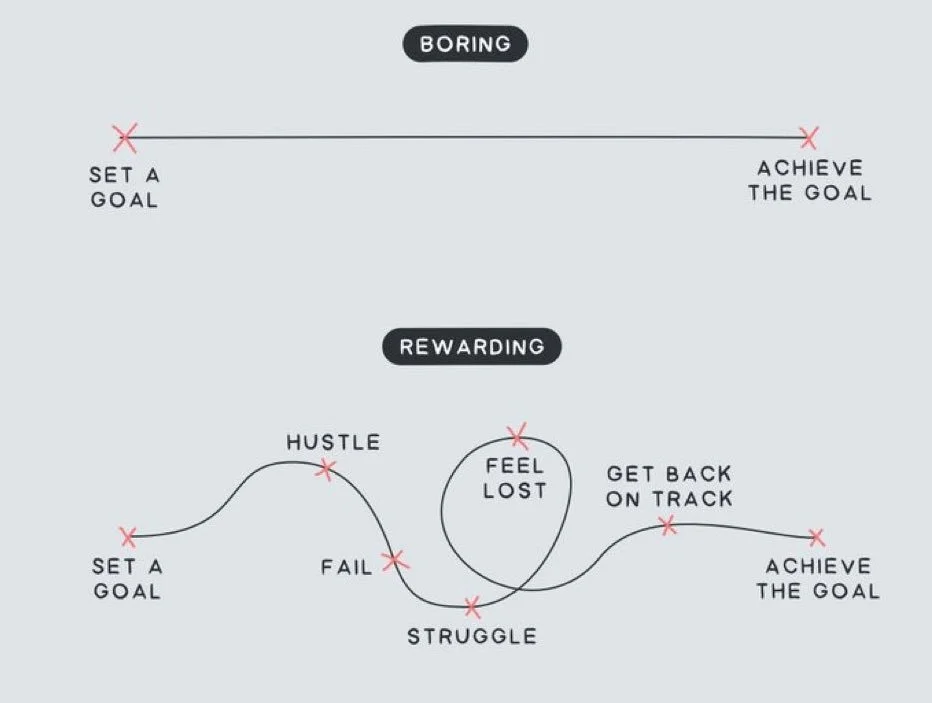
Set a goal

I was recently asked whether I was problem conscious, or solution orientated?

My goal is to help as many people as I can, and I think that there is no substitute for strategy and careful planning when you have goals. You will work hard and get things done in the pursuit of achieving or accomplishing goals. Activity creates excitement and you will need to be excited if you are to achieve and accomplish your objectives. Never confuse activity with accomplishment…


When you have a dream, make a list with the following framework:

1. Identify the goal
2. Identify the benefits from reaching the goal
3. List the major obstacles stopping you from reaching the goal
4. Identify the skills or knowledge required to reach the goal
5. Identify the individuals, groups, and organisations to work with on the goal
6. Develop an action plan
7. Set a completion date


This list may help you to reach your goals, as motivation without instruction and education is ultimately frustrating. When you have a target list, you will focus on the goal and what is essential to achieve your objectives. Contact me via e-mail for a goal setting workshop.

Logic will not change an emotion but action will.
— Burrellism

An outstanding achievement

My sister works for a local authority in London and she has been rewarded for her work with a Member of the Order of the British Empire (MBE). My sister has been helping disadvantaged children re-enter the education system. Leading her team on a day-to-day basis and meetings with head teachers, social workers and the police, it’s a tough job.


Marcus Rashford also received his MBE, he has been recognised for his drive to ensure no child in need went hungry during the pandemic. The ceremony took place yesterday at Windsor Castle and I am extremely proud of both my big sister and Marcus Rashford.
Well done and keep up the good work.

The Duke of Cambridge was pleased to be back doing investitures in person, celebrating people across the UK who have gone above and beyond for their country and community.
— Prince William

Don’t be selfish

Everyone understands the need for change in the abstract, but on the day-to-day level people are creatures of habit. Human psychology contains many dualities, one of them being that even while people understand the need for change, they are also irritated and upset by changes that affect them personally. A change that upsets core habits and routines are deeply disturbing to them. To soothe the anxieties of those who dread change, one should create a new set of values and rituals to replace the old ones.


Every value in life must be paid for and those that pay are the ones that get it. Do you need some good ideas to change your life for the future? If you want good ideas then you have to go to the workshops and training courses where good ideas are being taught. Be well prepared, so when opportunity comes along it will pass by the person or organisations who are not prepared. Contact me via e-mail for workshops and training based around about mastering the science of achievement and the art of fulfilment.


This level of mindfulness

My heroes have always had a "growth mindset”, believing they can learn, grow, and change throughout their entire lives. It’s incredibly refreshing to be the designer of what happens next and not being a pawn in the system. First you have to take responsibility, then you need to find an interesting problem, then you take your customer on the journey to solve their problem. Never use fear, shame, and anger to get people to do what you want you want them to do.

We all remember the saying, “failure is not an option!” and if this is the case, then neither is success. Therefore, what we need is a process that you can do over and over again. And the fuel you need for that is possibility, because if we can see it in our heads that it’s possible then it’s easier to own it. This is possible and once it’s possible then you can be responsible, and once you can be responsible, then you can build a process. Don’t seek perfection, seek possibilities.

Learn from yesterday, live for today, hope for tomorrow. The important thing is not to stop questioning.
— Albert Einstein

Simple is hard

I have done some corporate case studies over the years as I didn’t really know what made change stick and why corporate change was so hard. What I found through some of these case studies was that:

  1. Change happens not from the top-down but from middle-out. Change must be proposed by the people in the trenches and respected by the leadership, and at the same time admired by those below who are the rising stars of the future.

  2. Change is not a process; change is a tool kit. I think that if change and innovation was a process then everyone could do it, as people are smart and can easily follow rules. I think employees need on-demand tools that they can draw on when different things come at them.

  3. Change must be presented in small chunks. Managers and leaders must lead by example to affect change on an everyday level, for example, in meetings, e-mails, reports and procedures. Small incremental ways to get the employees on board so they want to make the big change.


Employees want a fire lit from underneath them by people within them. I think that organisations will have to put more training into managers if they really want to make the changes stick.


Heroes have a growth mindset

Leadership is not about being the best, leadership is about making everyone else better, and you can’t learn leadership from a textbook or by gaining a certain title or number of years of experience. Leadership and the ability to influence others are a result of understanding people and if we take the time to develop this, it is much easier to influence other people, because you will be able to speak to their purposes and motivations. 


As a leader, you cannot do everything yourself in a fast-changing business world. You need a team that takes ownership, that coaches and helps each other to cross the finish line together, that maintains each other’s energy. If you have this kind of culture, where people are also rewarded for these behaviours, then everyone can have the ability to influence change for good, and they will want to do so. I think the Prime Minister of Barbados, Mia Mottley made an excellent speech at the COP26 UN Climate Change Conference in Glasgow, see “When will leaders lead?”.


Stay alert

c/o Coutts.com

How often do you rush to judge, and does this judgement serve you well or is it a hindrance when trying to reach your goals? 
This question struck me both intellectually and emotionally and I started to consider why our minds are meaning-making machines, constantly making assumptions, judgements, and looking for patterns. This is not bad trait as it has kept humans safe as we evolved for a very long time. However, these internal narratives can be filled with bias, they can be self-destructive, or can also result in hurting someone else. At the end of the day, our judgments can be the lens through which we understand the world and that lens is foggy.

Be curious, not judgmental.
— Walt Whitman

What can stand in the way of spotting opportunities?
I think curiosity is what really unlocks the ability to spot opportunities and it is available to every single one of us. All we have to do is ask questions and continue to believe that we can discover and probe and learn more and more every single day. The Achilles heel for many business people is that you believe you are an expert, so anyone who is already believing that they have a certain expertise in any variety of business or any part of life, stops asking questions and that’s a dangerous thing. If you want to spot opportunity and create something new or just keep up to date in a rapidly changing world then curiosity is your friend. Curiosity genuinely doesn’t know, it wants to find out more, whilst judgement already knows enough. Curiosity is a tool and goes by names like listening, appreciation and connection. Stay alert…


Small things matter

You don't have to be in a position of authority to be a good leader and we can show that through our communication. To paraphrase Simon Sinek, “Leadership is irrespective of what level we are at.“ When you start a business there is a method and there are things you need to do in order to build it up. In business you have to set certain goals that you want to achieve and then act towards achieving those goals. Once you have defined your goals and begin to pursue them with your team you will find that obstacles continuously arise as you go towards it. 


Whenever you create something new, it’s rarely a smooth progression, you will have to overcome obstacles along the way in the form of people or situations that go wrong. I think that when an obstacle arises, immediately face the obstacle which can come in the form of a situation, for example, something is not working or something is going wrong or perhaps somebody is trying to sabotage you. What is your relationship to difficulties and obstacles that arise as you travel towards your goal?
 Contact me via e-mail as it's very helpful to share our stories with others as doing so will help you process your emotions.


In the making

Human beings are unique in their ability to experience pleasure from remembering past happiness. You cannot always predict the major events that will shape your life, nor can you change the genetic factors that influence your basic happiness set point. You can't control what other people do or say, all you can control is how you react to it. Remember some skills improve communication, like emotional intelligence (EQ), as it enables people to better understand their own emotions as well as the emotions of those around them. Book recommendation: “Emotional Intelligence: Why it can matter more than IQ” by Daniel Goleman


The hedonic treadmill is a metaphor for the human tendency to pursue one pleasure after another. People talk about the hedonic treadmill that we have, where it’s like you are constantly striving for new and exciting things. That's because the surge of happiness that's felt after a positive event is likely to return to a steady personal baseline over time, you actually become less happy because it makes you more aware of all the things that you are missing out on. I think freedom is where you are not on the hedonic treadmill and pleasure which comes from selfless acts will tend to outlast physical pleasures.


Balancing the act of indecision

As human beings we have learned to associate certain feelings to certain situations. As sales professionals we have to discover the buyer’s beliefs and values, and then associate not buying with missing out on something. I’m not advocating that you become a salesperson who is pushy, one who doesn’t really care and tries to manipulate buyers. I’m trying to clarify that buying equals pleasure and not buying equals’ pain.


Persuasion is the process of getting your customer to clearly associate their desired feelings or stakes to your products and services. In other words, if we want someone to buy our products and services, we have to get them to link their feelings towards what they want most, and we have to make it compelling and very real for them. And we have to associate not buying with pain - “I’m going to miss out on this opportunity!” - leaving them with the feeling that someone else is going to have something that they don’t have.


Think of something that you recently purchased and be honest, was it something you really needed or was it something you wanted, and then you began to justify it as a need? Here’s another scenario: When was the last time you really wanted something, but you didn’t follow through with the purchase? You had an emotional reason to buy, but you could not justify it logically. Would you like to learn how to give buyers enough reasons to buy? I mean their reasons and not yours. Contact me via e-mail for workshops and sales training.


The secret to living is giving

One of the most important words for leadership and success is the word “How?” Whenever you have a goal, the only question you’ll ask is how can I achieve this goal? Whenever you have a problem, you ask; How can I solve this problem? Whenever you have an obstacle, you ask; How can I overcome this obstacle? Leaders think about what they want and how to get it most of the time and as a result, they are thinking about their goals and the actions required to achieve them. They are thinking about the actions every single minute of every single day to move faster towards achieving that goal.

Happiness is the progressive step-by-step realisation of a worthy ideal or goal.
— Earle Nightingale

When you feel yourself moving step-by-step towards achieving something that is important to you, you’ll feel positive and happy most of the time. Unsuccessful people think about what they don’t want, they think about the things that make them angry and sad, usually past events that they can’t change, and they think about who’s to blame for all of their problems. So, whenever you see people talking and complaining about things that they can’t change, things that are their responsibility and blaming others, then you know that you are dealing with a negative unhappy person with a very limited future and with a very unhappy present. I think the way you take control of you mind by grabbing the wheel of a vehicle is to start thinking about what you want and how to get it all day long and you’ll automatically become positive and start to think that you are in control of your life.


I have a coaching client who wanted to change her habitual internal dialogue, so I proposed that she used my five alarms technique for 30 days. The goal is to change towards more productive thoughts or feelings 5 times a day. The five alarms technique is when you set an alarm 5 times a day, and every time the alarm sounds, you should ask herself 3 questions: What am I playing over in my mind? What am I thinking about now? What am I feeling? It works, try it for yourselves and you can thank me in 30 days.


Learning new things

Happiness is not simply the absence of despair; it’s an affirmative state in which our lives have both meaning and pleasure. Most people know what is good for them and they know what will make them feel better. Most people don’t avoid meaningful life habits because of ignorance of their value, but because they are no longer “motivated” to do them. They are waiting until they feel better and frequently this is an extremely long wait. 


HAPPY PEOPLE:
·      Express gratitude
·      Cultivate optimism
·      Avoid over thinking
·      Practice kindness
·      Nurture relationships
·      Learn to forgive 


Many experiences in life that bring happiness are in your control. The more choices you are able to exercise, and control, the happier you are likely to be. You are responsible for your own life experiences, whether you are seeking a meaningful life or a happy life. I think that virtually all the happiness-producing processes in our lives take time, usually a long time, for example, changing old behaviours, building new relationships, raising children, etc. This is why patience and determination are among life’s primary virtues. Contact me via e-mail when you ready to install acceptance, gratitude and accomplishment into yourself or organisation.


Barriers to risk

I see organisations today trying to reduce expenses by hiring inexperienced people to pound the phones, e-mails to arrange meetings and rush the sales process without looking into how companies buy. I think that it’s a good idea to look at the company culture and determine how much risk they are willing to take. Are they really involved in innovation or it’s more of a lip service?


The following questions will give you a feeling of what their culture really is like:
1. Do their executives lead by example?
2. How much experimentation is allowed?
3. How much resources (time and money) do they put into new ventures
4. What metrics are they measuring? 
5. And are those metrics connected to new things, for example, new to the market type of products?


Over the past few years, I have studied corporate cultures and change, and what fascinates me is when we speak about change is that we think in terms of “Good vs. Bad.” I don’t think it’s as simple as that, I think corporate complacency is the worst kind of culture. I think the world has become so complexed that we keep more and more ridiculous processes in place. And this results in employees becoming complacent and no longer think that they can affect change, they just give up and hide behind the mentality of “things are just fine!” Contact me via e-mail when you willing to make incremental change in your organisation.


Habits change behaviours

We are all creatures of our own habits and beliefs, but we can change those habits and beliefs at any time we want. What might we achieve for ourselves if we are not at the mercy of habits, and instead we were the masters of our habits? I think small daily habits are unparalleled predictors of long-term objectives and this is true for both individuals and organisations. 


We go in the direction we face, and we go in the direction we design. Direction determines our destination, we cannot change our destination overnight, but we can change our direction. It’s fascinating what a small change of direction will do. A few decisions in learning, discipline, behaviours, and habits can very quickly make all the difference to our direction.
Here are 8 habits of lucky people:

1. Work hard
2. Complain less
3. Teach others
4. Share credit
5. Be on time
6. Be kind
7. Be teachable
8. Show gratitude


New ways of working demands for new habits. Life is too short to wait for a great day to invest in better life experiences. Contact me via e-mail for a framework guidance meeting. 


Express your gifts

What happens when you stand in front of a fireplace and say give me some heat? The answer is nothing! Unless you put some wood into the fireplace add some fire starters and then light them, then you will not get any heat from the fireplace. If you replace the fireplace with a salesperson and replace heat with money. If you replace wood with knowledge and fire starters with the ability to reach out to clients. This is an analogy of a salesman who is consistently asked to sell products and services on a commission basis with no income until the client pays. I think this shows a distinct lack of understanding about what it takes to make sales - first you have to put something in before you can get something out.


How to make your brand interesting for potential buyers at home or abroad? Here are a few areas where we could collaborate:

Strategy - Interactive interview with yourselves to dig deeper into the brand’s foundation, values, and purpose.

Brand Analysis - Comparative analysis of brand and industry with a view to where the brand should be positioned.

Concept Development - Development of brand design direction and messages.

Communication Strategy - One strategy to unite all activities and channels to simply the brand communication.

Strategic Planning - Activity planning and brand development.

Implementation - Strategic activation plan for the brand with defined channels, goals, and “go-to-market” activities.

Sometimes the shortest distance between two points is not always a straight line. The shortest path will be some kind of line, but its nature depends on the space and how you choose to look at it. Contact me via e-mail and let’s have a meeting.


Invite input from others

How can teams communicate more effectively?
To maintain the team spirit is probably the most challenging issue for managers and leaders in organisations today, putting the “we” before the “me”. I think that it’s not about individuals, it’s all about the collective and team members should be encouraged to share relevant information and ask clarifying questions. Emotional intelligence (EQ) is the ability to understand, use, and manage your own emotions in positive ways to relieve stress, communicate effectively, empathise with others, overcome challenges, and defuse conflict. This is a skill that improves communication and with practice most people can learn to become better communicators.

How can you create a non-negotiable passion within your team?
I think in order to maximise teamwork, it's important that all teammates share the same goals and are committed to an overall vision. Communication is essential to ensure that a team runs optimally, and ineffective communication can derail an entire project. Bruce Tuckman stated that teams go through four stages of development - forming, storming, norming and performing - this is a useful framework for looking at your own team. In my experience, diverse teams with are more effective than less emotionally savvy teams and EQ skills can help teams navigate conflict, evenly divide work, and develop long-term trust.


What happens when teams interact virtually? 
Individual members of any team can help the team do better whether virtually or in person. Managers and leaders should encourage team members to communicate with one other and ensure that every team member participates in the discussion. In an ideal scenario, every team member would be encouraged to share their ideas and updates on progress - even if the news is bad - and other members would do their best to listen, evaluate without judgment, and offer a thoughtful response. 


Do you have the necessary time, focus, and energy for training and workshops? If so, contact me via e-mail.

The essential elements

Dover Street Market, London

How we think and feel about people we don’t particularly know is perhaps the best guide to the workings of the average human imagination. I may be naïve, but I think that if you take care of somebody, they’ll open doors that you could never open yourself. They’ll take you by the hand and share you with people that you never thought you could reach. I believe that when you provide good service for your customers they will recommend you and this will lead to multiple sales.


No matter how well we are doing, we can all use another idea! Just a couple of other things that link together with the things we already know could give us a whole new burst of productivity and energy. Sometimes it’s difficult to bring yourself within the framework of activity required to concentrate and focus on doing your best. For an extraordinary lifestyle, we will have to do some tough listening.


My simple 3 step sales formula is:
1.    Talk to lots of people every day and you are bound to get better.
2.    Be really nice, a big part of presentation is attitude and personality.
3.    Be of extraordinary service, do all the things most people don’t do.


What’s in it for me?

When asking for help appeal to people’s self-interest as subconsciously, they are asking themselves: What does one stand to gain from this action, activity or situation? According to the Oxford English Dictionary, “self-interest” means a concern for one's own advantage, interest, and well-being. I have found that when you discover something that will benefit the other person, usually they will respond more enthusiastically to your request. A key step is to understand the other person’s psychology. Once you make them see how you can in some way meet their needs or advance their cause, their resistance to your requests for help will magically fall away. You must train yourself to think your way inside the other person’s mind, to see their needs and interests and get rid of your own feelings that obscure the truth.

Most men are so thoroughly subjective that nothing really interests them but themselves.
— Arthur Schopenhauer

I would like to think that this cynical truth is not the way I behave or act, but the personal gratification of sharing, helping, or sacrificing can never be truly altruistic as I gain an intrinsic reward. According to my mentor, the validity of this argument depends on whetherintrinsic rewards qualify as "benefits". Unfortunately, the harsh reality is that everyone acts out of self-interest as humans are always motivated by self-interest and selfishness.