
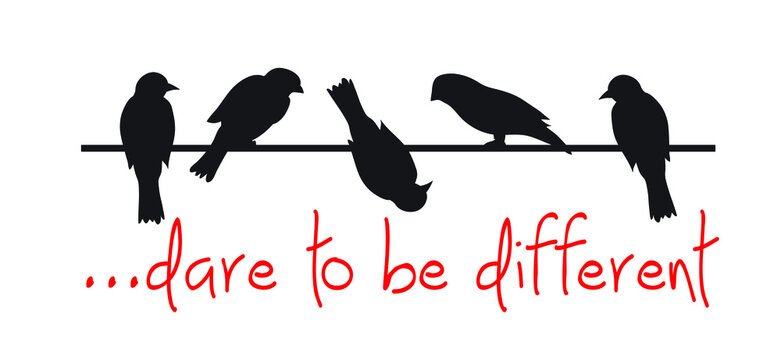
Our infatuation with violence has given rise to a culture that should not be a source of pride. This is due to the fact that violence sells, we are all familiar with the saying, "If it bleeds, it leads," but this approach does not contribute to the development of a culture worth celebrating. Instead, I think we should adopt the mindset of not caring about the number of followers we have and refrain from pressing the boost button, as our primary goal should not be to appease platforms like Facebook, Instagram, or Twitter. Our true objective is to create a body of work that brings us a sense of pride, focusing on cultivating a modest but dedicated audience that can provide support, be it 10, 100, 1,000, or 10,000 individuals. Once we become comfortable with having enough in a world of endless possibilities, the amount of noise we generate becomes inconsequential.
What's the alternative?

c/o New York Times
Is there a correlation between expensive solutions and big effects?
I think the short answer is not necessarily.
While some expensive solutions may have a big impact, there are also instances where small, low-cost solutions can lead to significant outcomes. The relationship between cost and impact is not always straightforward, and it depends on the specific context and problem being addressed. In some cases, a simple and inexpensive solution may be the most effective, while in other cases, a complex and costly solution may be required to achieve the desired results. Ultimately, the effectiveness of a solution should be evaluated based on its ability to address the problem at hand, rather than its cost.
It sounds like

One of the reasons why people resist change is because they focus on what they must give up instead of what they have to gain. In business, money is money, and time and services are also money. When people get more value, they will do more, pay more and give more in return. I think that it is possible to change the world, but to change the world, you have to change yourself first.
We deserve your money

The majority of management is about rational planning of things that are entirely in their control. The obsession with planning, quantification and rationalisation arguments means that we are automatically constrained to doing those things which makes sense in advance. It’s not safe to assume that the incentives and interests of individual employees are necessarily well aligned with the interests of the organisation. I think in reality, what your business depends on are citizens whose behaviour can only be influenced obliquely, they can’t be controlled - in other words you can’t tell your customers what to buy.
Change Management Triangle

What is the Triangle of Change?
The “Triangle of Change” is a framework that is often used to help understand and manage change in organisations or individuals and consists of three interconnected elements:
1. Leadership or Strategy:
This element involves the vision, mission, and direction of the change. It requires effective leadership, planning, and communication to ensure that the change is properly understood and supported by all stakeholders.
2. People or Culture:
This element involves the attitudes, behaviors, and skills of the people who are involved in the change. It requires a focus on engaging and empowering employees, building trust and collaboration, and addressing any resistance or challenges that may arise.
3. Processes or Systems:
This element involves the tools, methods, and procedures that are used to implement the change. It requires a focus on improving efficiency, effectiveness, and quality, while also ensuring that the change is sustainable and scalable over time.
The Triangle of Change is also known as the "Change Management Triangle" or the "McKinsey's Three Horizons of Growth". It recognises that all three elements are interconnected and that any change in one area will have an impact on the others. Therefore, successful change management requires a holistic and integrated approach that takes into account all three elements.
Solid foundations

We all strive for success in our businesses, this becomes easier when we have a clear and well communicated vision, core values, and strategy that everyone in the organisation understands. Effective execution requires processes and procedures which are centred around the critical drivers of your business’ success. I think that focusing intently on these steps will significantly improve the internal accountability by measuring and being transparent about the key performance indicators that drive success. It’s a good idea to praise those who hold themselves accountable and deliver on their promises as this will accelerate the positive results for your business.
A reduction in price

Human beings in general are allergic to change, regardless of whether it’s in their best interests. Strategic optimisation is more important than ever, especially in these turbulent times. The word, optimise is derived from the Latin word “optimus”, which simply means 'best.' Optimisation doesn't mean doing more for the sake of doing more, it means doing less, so what you do is full of care and attention. Strategies are designs based on the operating model, so when the operating model is outdated because of internal or external factors, execution will fail and not yield the desired results. Therefore, optimisation isn't the problem, we are. Two of my children have their birthday’s this week, so I am giving you or your organisation a gift. Contact me via e-mail for a free one-hour discovery session, use the discount code: “birthday”.
Sharing experiences

What is essential to you, and who are the persons who have helped you become the person you are?
We just don’t get to be competent human beings without a lot of different investments from others, people who have loved you, encouraged you, and wanted what was best in life for you. I know that you have had at least one person who has believed in you. As human beings we are all intimately related, so it will never be the honours, prizes or fancy outfits which will nourish our souls. It’s the knowing that we can be trusted and that we never have to fear the truth. This is the bedrock of our lives from where we make our choices, deep down we all know that what really matters in life is more than winning for ourselves. What really matters is helping others win too, even if it means slowing down and changing direction now and then. I think you don’t make change for others; you make change for yourself.
““It is only with the heart that one can see rightly; what is essential is invisible to the eyes.” ”
Smooth paths are seldom seen
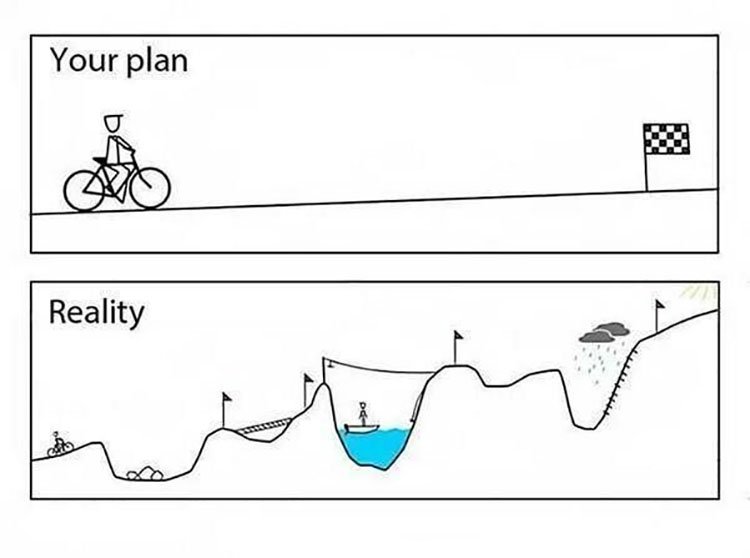
The key to success is to get clear on what you want, create a pragmatic plan to get it, and then execute daily on that plan without getting distracted. Goal setting and planning gives you the ability to put your blinders on, not look at what others are doing, stay in your lane, and keep executing towards your goals. Contact me via e-mail and let’s build an action plan to meet your goals together as the path between strategy and execution is seldom without challenges.
Athletes of the business world

In the future we will need people who can connect and communicate. And we will need people to transfer confidence, emotion, and a positive view of the world. We don’t need people to send e-mails as anyone including robots can send e-mails to promote products and services. I think salespersons are the athletes of the business world as they intrinsically enjoy competition. Successful salespeople are goal-oriented and self-motivated and these are also defining qualities of high-performing athletes.
Utopia doesn't exist

“With great power comes great responsibility” has a simple meaning; if you have the ability to do something, make sure that you do it for the good of others. As a consultant we earn our keep one hour at a time, therefore, one has to adjust your process and style to how your customers need to be communicated with. Most organisations today think in quarterly and annual forecasts, therefore, when you sign a consultancy contract, the launch may not necessarily be immediate.
“What I hear, I forget;
What I see, I remember; and
What I do, I understand.
”
Providing performance solutions

Performance management is rooted in building an empowered and skilled workforce. When framing a performance issue, try asking yourself the following questions:
1. Is it a skill problem? (aptitude; training)
2. Is it a hill problem? (altitude; difficult task)
3. Is it a will problem? (attitude; motivation)
Get back to basics

c/o Harvard Business Review
This well-known Ancient Greek tale "The North Wind and the Sun” is my favourite Aesop’s fable.
“Long ago, the Wind and the Sun quarrelled over who was stronger. Upon seeing a traveller coming down the road, the Sun said: “Now we can end our dispute. Whomever of us can make that traveller take off his cloak shall be regarded as the victor. You begin.”
The Sun retired behind a cloud while the Wind blew, blustered, and raged upon the travelling man. But the harsher he blew, the tighter the man wrapped his coat. At last, exhausted, the Wind gave up in despair.
The Sun came out and shone in all her glory upon the traveller. Soon the man tipped his face up to the warmth. He removed his coat and basked in the Sun’s rays.”
There are many interpretations as to the meaning of the fable, I think Aesop’s fable basically says that if you want a man to take off his coat, you don’t blow it off. You make him feel warm, and he’ll take it off on his own. A metaphor is often used in framing a dispute or situation and you can use this fable as a metaphor for negotiation technique.
Figuring out a way

Sometimes you have to take things out of your head and put it on paper. In order to come up with the solutions we really have to know what the problem is, and you cannot come up with good answers unless you know the whole problem. I think that if you ask the following questions you will be able to solve almost any problem:
What could I do?
What could I read?
Who could I ask?
Perspective is everything

No one person can decide in big companies, there will always be a variety of stakeholders and different groups that must be involved. Our job as a consultant is to present inputs for them to build a business case and then highlight how we add value. I think one of the cornerstones of our success will be the ability to structure our business development process in a way that suits our customers needs. Where we are selling the pain that we are solving for them and then presenting it with numbers and results.
“Imagination is more important than knowledge. For knowledge is limited to all we now know and understand, while imagination embraces the entire world, and all there ever will be to know and understand.”
There is a price to pay
Competence is a function of experience, knowledge and intelligence. The Peter Principle is the satirical theory that employees are generally promoted to their level of incompetence. The reason incompetent is often rewarded is that it's easier than challenging it. In 1974, the author of the Peter a principle, Dr. Laurence J. Peter, explained how he first got the idea and what can be done about it. See video below
Pursuing purpose

Purpose gives you an overriding reason to do and act in certain ways, then using agile practices to respond to changes in the environment, I think you will be able to align quickly to the direction that you set. The commitment to the framework goals that you are trying to pursue, and the purpose driven approach helps you to do that as well. Agile is very people centred, it’s about giving people autonomy so that they can pursue the initiatives that you are trying to put in place. Agile is the ideal approach to execute change because it tends to make more committed employees and give them more of a reason to want to engage and develop the change programmes you are trying to pursue.
Taking the correct path

A dream written down with date for completion becomes a goal.
A goal broken down into steps becomes a plan.
A plan backed by action becomes reality.
“Any idea that is held in the mind, that is emphasised, that is either feared or revered, will begin at once to cloth itself in the most convenient and appropriate form available.”
Words have consequences

When you are a young company, your story will define your valuation and as a founder the words you use to describe your business can be the difference between finding an investment partner or not. With mature companies, it’s your numbers that will drive your valuation as the older a company the more the numbers drive the valuation. Start-up companies need “Steve the visionary” as CEO. As they become a young growth company they will need, “Bob the builder” because they have to start building a business. When they become a mature company, they will need “Don the defender” as CEO and when they are in decline, they will need “Larry the liquidator”.
The keys to the world

Some businesses have low barriers to entry and are easy to enter and scale-up in where it doesn’t require infrastructure investment or decades of building up. Other businesses take much longer to build up, where going from start-up to maturity takes decades. When I have my business consultant hat on, I go into companies and explore their existing culture. My speciality is looking into work-flow systems and processes to see whether companies are optimising their economic potential. In my experience, it doesn’t matter what top line metric an organisation uses; the crucial fact is that they have a system they follow consistency. Contact me via e-mail if you would like some strategic guidance. Please note that there’s no specific thing that I can tell you that will make your customers or employees trust you.