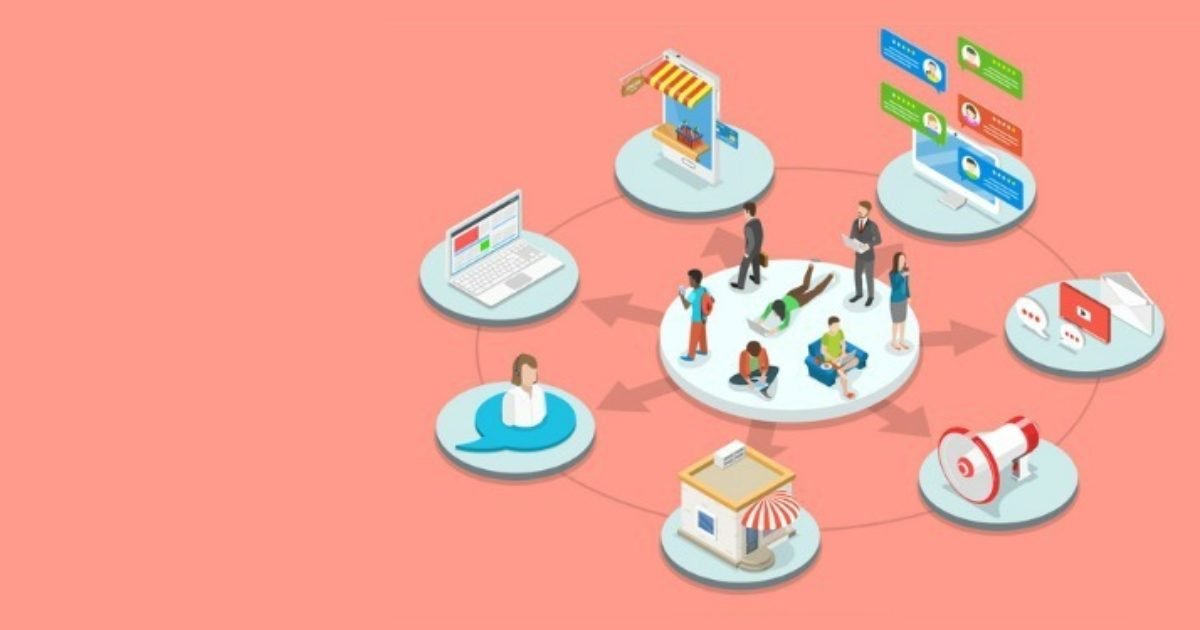
Unlocking growth

The job of a salesperson is straightforward, their job is to listen to understand what’s the most important thing for their buyer and then help them get that. Unfortunately, most technology today is not built to provide your buyers with the experience they want and need, just image if your sales team could unlock their performance and become top sales professionals and deliver essential insights to their buyers in those critical moments. This may be the difference between winning and losing because if you don’t partner with buyers and guide them through their journey, you will lose deals to competitors. 


We will be selling in digital, virtual, and online spaces more often in the future, and these spaces are noisier and more polluted than ever. This digital pollution costs both you and your sales team time, attention, and productivity, also it affects your ability to reach and engage with the decision makers who matter most to your sales success. How do you fight through it and reach the right people? How can you grow relationships, reputations and revenues? For answers contact me via e-mail and let’s have a meeting.

The architect of the universe did not build a staircase leading to nowhere!
— Burrellism

Asking for help

When people choose between talking about the past and talking about the future, the pragmatic person will always opt for the future and forget the past. It is always best to speak pragmatically to a pragmatic person, and at the end of the day, most people are pragmatic and will rarely act against their own self-interests.


You will always find yourself in the position of asking for help from those who are more powerful than you. There is an art to asking for help and all depends on your ability to understand the person you are dealing with, and not to confuse your interests with theirs. Most people never succeed at this because they are completely trapped in their own wants and desires. They start from the assumption that the people they are appealing to have a selfless interest in helping them, they talk as though their needs matter to those people – who, couldn’t care less. 


Even the most powerful person is locked in the needs of their own. Self-interest is the lever that will move people, once you make them see how you can in some way meet their needs or advance their cause, their resistance to your requests for help will magically disappear. To see the other persons needs and interests, to get rid of the screen of your own feelings that obscure the truth.


We ask to get to know

The quality of your life is directly influenced by your ability to communicate with confidence and clarity. Part of being a good communicator requires that you become an active listener, and active listening requires you ask questions. Questions have benefits for both the questioner and the people responding. I think one of those benefits is proving the other person the opportunity to show more of their authentic selves. I have found that good questions really help in the discovery phase and when you ask better questions your clients will open.


Asking questions is only half the process, the other half of it is being mindful about how you respond to people. Questioning helps us do more than gathering information, like data, facts, and details. It can also help us to learn about what people are thinking, feeling and in some cases what they want. I define a better question as one that demonstrates genuine curiosity but without being too intrusive, and when we can strike that balance that’s when we can shatter the perceptions that we have of other people and what people have of us.


Opportunity identification

Customer experience (CX) is the overarching feeling or opinion that customers have about your business based on their history of interactions with your company throughout their customer journey. Customer experience is not made up of a single interaction, but rather a series of interactions that include researching your business, buying and using your products or services, getting support, and providing feedback. CX design is the process design teams follow to optimise customer experiences at all touchpoints before, during and after conversion. They leverage customer-centred strategies to delight customers at each step of the conversion journey and nurture strong customer-brand relationships.

You’ve got to start with the customer experience and work back toward the technology, not the other way around
— Steve Jobs

One customer’s CX can be influenced by multiple communication channels, several different departments and agents, separate brick-and-mortar locations, and their experience with multiple products or services your business offers. Every interaction is an opportunity to delight your customer and grow your business, together with you, I’ll design, build and deliver valuable and meaningful end-to-end experiences for your organisation.


Focal point

I am focused on working with entrepreneurs, leaders, and team's - helping them to focus on their company’s performance and culture by integrating commercial excellence into the heart of their business. So that they can become more strategic, productive, agile, and commercially successful. In most areas of life, I think it’s more hard work and dedication than natural ability and talent that leads to excellence and great success. You begin your journey to excellence by asking the question: “What additional skills, knowledge and information will I need to lead my field in the months and years ahead?”


What one skill if you developed and did it in an excellent fashion would have the greatest positive impact on your career? The answer to this question is essential if you are to achieve excellence in your field. When you find out the answer, then focus all of your energy on improving performance in this one particular area. In my experience, if your principles are right and aligned with your purpose, and your leadership has a clear vision, focus and authenticity then your business will be in profit in so many ways.

Everybody has talent, but ability takes hard work.
— Michael Jordan

Going against the grain

The idea that we are trying to optimise something is fundamentally mistaken, we are using the wrong maths and the wrong mindset in making marketing decisions if we assume only that our job is to be the best at something. If we define ourselves by our competitors, we’ll be even worse because we are trying to be better at something that a lot of people are already very good at. What’s the point of doing that?


My purpose is not to be a great competitor, my purpose is to create a mental monopoly in the space. Essentially, so that I have a monopoly (price and power) and can operate like a business - innovate and take long term decisions. The second I try to be competitive; the future health of my business is already in doubt because I’ll be driven by short-term thinking and the whims of the market. What about your organisation?


Accessible and pleasant

It’s a no-brainer, all organisations would like to increase revenues, reduce costs and improve culture. Customer Experience (CX) is an investment, an ongoing improvement project as organisations have a moral obligation to create value. The pandemic has hopefully taught us that we don’t need more stuff and what we want are meaningful experiences with our colleagues, friends, and family.


First, you must get customers to trust you. Once they trust you, then you need to communicate that you care about them and value them. Then, after all of this, when you make them happy, it is the kind of happiness that drives customer loyalty and, perhaps more importantly, customer-driven growth. Take 60 seconds and watch Steve Jobs explain why Apple always put the CX first.


Strategic insights into audiences

Many organisations are awash with data but do not know what to do with it. I hear from many business leaders that leading consultancies are guilty of not giving clear, concise advice for some reason. The business leaders bring in consultants and they will give a really good blueprint, but what they need is clear actionable advice that they can use immediately.


I take a more holistic view of research, after studying the Law of Large Numbers, I know the algorithms work. The ability to take huge amounts of data from people who think that they are acting independently but actually you can start to predict what they want by using the Law of Large Numbers, for example, Spotify predicts quite accurately your music and Amazon are excellent at predicting products that you also need. The more information you give to AI the better it will get.

A good example of a company who looks outside of the data for their competitive advantage is Patagonia. Patagonia have a genuine interest in their customers and what their customers want, what inspires them and what's affecting their lives. These things are becoming more and more of a competitive advantage, and I love Patagonia’s value-based business model and the fact they say “No!” to Black Friday. 

Driving transformation

One of the first steps in business transformation is communicating purpose, everyone should very clearly understand that “Why?” In uncertain economic times, having a clear north-star objective is what can keep organisations on the right path. It’s what guides leadership decisions, from cost-cutting to entering new markets and creating new products. The North Star in this case means every single person in an organisation should have a very clear sense of understanding the reasons why the organisation does what it does and why the organisation exists.

Nowadays, you've got to listen to the employees you have today, because they are more qualified than anyone else to know what your clients want.
- How are the consumer needs changing? 
- What are the consumers demanding?
This kind of insight into how consumer behaviour is changing will allow organisations to remain relevant and retain their competitive edge in a post-pandemic reality. 


Awareness and trust

I recently spoke to an audience of designers and brand owners about the fact that when the world is not happening the way you want it to happen then you have a problem not your customers. I started with a bold statement: “I know that you already make stuff that people want to engage with but are you clear about the fact that consumers will only buy from you for two reasons; they know you exist, and they trust you.”


Here are some examples of the questions I posed and answered:  

  • What change are you trying to make?

  • How are you going to spend your time and resources?

  • Would you like to learn how speak up and tell a story that spreads?


Nurture and give

Why are brands with clear and consistent messages far more likely to close the sale than the ones who pursue a matrixed approach?
Brands with one major promise are far more likely to be successful because they focus their efforts on discovering the most important thing that the buyer is concerned about. And I think the odds of winning the sale are far higher if you focus on that one thing. Framing your message takes discipline and it’s important to take a courageous strategy. You don’t necessarily have to give people more information, just help them to solve their emotional needs.


What is the right approach to account-based marketing?
The job of a salesperson is straightforward. The job is to listen to understand what is the most important thing that the buyer wants and then help them achieve it. Values will get you through the door; risk mitigation will get you the deal.


Never give up

Most salespersons are looking for the success strategy, but because of their psychology, for example, fears, worries, views about the economic situation, etc., are keeping them from maximising their capabilities. Usually when you think that you’re not good enough, in reality what’s holding you back is 80% psychology and 20% mechanics. Top salespersons think mostly about their goals and their priorities and how to achieve them. Top salespersons think about their actions and activities each day, they think about the number people they need to call, the number people they need to send proposals to each day, the number things they need to read and study, etc., etc. Always thinking about what they want!

When you think about what you want it makes you happy and positive, it makes you think that you are in control of your whole life. I think success comes from planning! If you truly want success, then do what top salespersons do – engage with an executive coach and develop a plan. Contact me via e-mail for 1-on-1 executive coaching.


Wisdom on Wednesday

Nowadays we have very few guidelines and an awful lot of options, and all these options are giving us quite a bit of uncertainty and self-doubt. We need leaders that can create big promises to customers, and help their organisations deliver on those promises. Leaders who master both strategy and execution start by building a bold but executable strategy. Next, they ensure that the company is investing behind the change. And last, they make sure the entire organisation is motivated to go the journey.


There are 4 parts of emotional intelligence (EQ):

1.         Self-awareness
2.         Self-management
3.         Empathising
4.         Social skills

Within each and every one of these domains are there specific learned and learnable abilities that will make sales executives outstanding performers. Within the self-management cluster there’s not only better managing of negative emotions, there’s also adaptability. Maintaining a positive outlook, no matter what happens in your life, keeping an eye on that long-term goal despite setbacks, obstacles, and distractions. Mindfulness doesn’t help you directly with any of these but if you want to look at all the EQ attributes and competencies then I’ll be willing to guide you through the process of additional learning. Contact me via e-mail for 1-on-1 executive coaching.


Pay attention

In this current climate, attention is not only a rare commodity and also a precious one. As humans we are getting better and better at staying focussed and keeping the attention on ourselves, as when I pay attention to you, I don’t have it anymore and in that moment is gone forever. We all have the capacity to improve our attention as it’s like building a muscle. The thing about awareness is that they are not making any more of it.  If you choose to focus your awareness and energy on things and people that bring you pleasure and satisfaction, you have a very good chance of being happy in a world full of unhappiness, uncertainty, and fear.

Have you ever noticed that when you need something, you start seeing this item anywhere you go? For example, a friend who asked you to buy yellow roses for an event and all of the sudden yellow roses are everywhere- in the supermarket, gardens, etc. It is the same thing with goals. Your attention is a limited thing, you only notice what you need. So, the trick is to position your goals in your head like it is something you truly need. We must apply this knowledge as it’s too important not to.


We are very distracted

We are living in environments with all kinds of competing information and we often work and live-in places that are also overloaded with information. The ability to selectively focus on certain things and ignore other things is part of our capacity as humans. There are distractions everywhere and this is the first time in human history where almost every on the planet has a mobile device. These devices have all kinds of attractions, amusements, and diversions, so we are constantly being pulled away from that one thing we need to do, and I think mindfulness can help.  

What is mindfulness?
Mindfulness is where you use your strength of concentration to become a witness to your own thoughts and feelings. I think mindfulness is a mental work out, every time you bring your mind back into focus you are strengthening your concentration. Instead of being fused by our experience, we can step back and still participate in the experience fully and have more control over our thoughts, feelings, and actions.


Your ability as a salesperson to fix your attention on what matters and ignore distractions is a valid predictor of positive financial outcomes. Mindfulness is a method of training your attention in bringing it where you want and keeping where you want it to be. Contact me via e-mail for 1:1 coaching cognitive control sessions.


Courage is a choice

Courage is the willingness to act in the face of fear, doubt or uncertainty. It’s a choice to move forward, knowing that come what may, you will do whatever it takes to deal with it. Alternatively, you can retreat and do what has always been done, what you know and keep receiving what you’ve always gotten. Remember courage will bring us to new places, into new relationships and help generate new results.


Here’s a few action points that will allow you to connect with anyone immediately:
·      Smile
·      Make eye contact
·      Use their name
·      Ask questions
·      Listen with interest
·      Pay attention
·      Be present

Trusting your gut means having the courage to not simply go with the majority. A study group asked a group of Californian entrepreneurs, “How do you make your decisions?” These are entrepreneurs who have built businesses from nothing to over $100 million, and they more or less said the same thing - “I am a voracious gatherer of information, I want to see the numbers but if it doesn’t feel right I won’t go ahead with the deal.” The part of the brain that thinks in words has a very rich connection to the gastrointestinal tract to the gut, so this is why we get a gut feeling.
When you are making decisions, do you trust your gut feeling?


Risk versus yield

When leaders choose a strategy they are guiding your attention towards specific actions. An organisation’s strategy represents the desired pattern of organisational attention, in other words, what every business department should focus on, each in its particular way. A given strategy makes choices about what to ignore and what matters, for example, which metric should you focus on, market share or profit?

Leaders need three kinds of focus to be effective, self (inner), people (other), and system (outer) awareness. Inner focus attunes you to your emotions and intuitions, guiding values and better decisions. Other focus smoothes your connections to the people in your lives, and lets you navigate the larger world. I think the key is finding the balance and knowing when to use the right kind of focus at the right time. Contact me via e-mail for training and workshops.


Inner, outer and other

Every leader today needs a strong ethical rudder and I think inner focus is essential. This inner sense is an ethical rudder and answers the questions  - Is what I am about to do in keeping with my sense of meaning, values, right and ethics? This is not a question we answer in words, we answer it first with what feels right and what doesn’t feel right, then we put it into words.


Then there’s other focus, which is being able to read people, being able to tune into a person. There are three kinds of empathy:
1) Cognitive Empathy means I understand how you think about things, your mental model of how you see the world. This means I’m able to communicate with you in terms you really understand and resonate with. Leaders and managers who can talk to other people with good cognitive empathy are able to get better than expected performance from their people because they will know what really matters.
2) Emotional Empathy is an immediate felt sense of what’s going on in the other person and this is also absolutely essential. If you only have cognitive empathy and you don’t have emotional empathy, then you’ll miss the mark.
3) Empathic Concern is the third kind of focus in other words empathic empathy is outer focus. Not only do I know how you think and feel but if there’s something you need and I can help, my DNA means I am predisposed to help.


The leaders and managers who have the most loyal employees in their team, have all three kinds of empathy. Contact me via e-mail for workshops on empathy.


The mind is a rollercoaster

How do you become good at concentrating?
I think that you can’t focus or concentrate on something that you don’t understand, therefore, one should start by understanding the mind. To be concentrated is to be able to keep your awareness on one thing for an extended period of time. The mind is the most powerful tool in the world and one of the first things I learned when I moved to Copenhagen was the workings of the mind. This was because once you know how the mind works you can control it, and once you can control it - you can focus it. The best way to practice concentrating is by doing one thing at a time throughout the day.

What’s the best way to develop concentration?
I think the best way to develop concentration is to bring that practice into our everyday lives. Whenever you feel that your mind is drifting away, bring it back and focus your with your undivided attention on the person, event or activity. When you can concentrate then you’re able to focus all your energy into a single given point. Life is a manifestation of where your energy is flowing. And if you can’t concentrate your energy, the things that you want to manifest in your life will become very challenging. Keep bringing awareness back and keep focused, learn to concentrate by doing one thing at a time. Make this practise an essential  part of your day. 


You have a choice

The Law of Thermodynamics states that you cannot create or destroy energy, but you can transfer it from one thing to another or transform it from one thing to another. I always tell entrepreneurs  to look at energy the same way they look at money. Energy is a finite resource that needs to be wisely managed, wisely reallocated, and wisely invested. Practice being present with whatever you are doing because wherever your attention goes, your energy flows.

The Law of Practice says that we become good at whatever it is we practice, it doesn’t matter whether it’s positive or negative. If you practice something repeatedly, you’ll become good at it. Now is this why people are so good at distraction? Every day I hear people say that their smart phones are a distraction, the technology is not a bad thing, it’s beautiful so long as we oversee it. On the other hand, if every time your iPhone makes a noise, you turn to it and say – “Yes, master! How can I serve you now?” Then you live in the world of distraction, your iPhone has trained you to be distracted just like Pavlov’s dogs. Let all communication systems serve you but don’t let the little devices intrude you.