
Race is often one of the first visible differences the human brain notices when people encounter one another. While many individuals have personal relationships across gender differences, not everyone has had meaningful relationships across racial or cultural differences. As a result, perceptions and assumptions about race are often shaped indirectly through media, institutions, history, and social conditioning rather than lived experience. I think over time, people internalise messages about both their own group and others.
Research using the Implicit Association Test (IAT) has shown that many individuals, regardless of racial background, can unconsciously absorb and reproduce societal stereotypes. For example, studies have found that many White participants more readily associate positive attributes with whiteness, while some Black participants may also internalise negative stereotypes about Blackness due to prolonged exposure to the same cultural narratives. This is why conversations about unconscious bias require both personal reflection and structural awareness. Bias is not simply about individual prejudice; it is also shaped by the environments, systems, and messages that influence how people see themselves and others.
Human decision making
Bias is both an individual and a structural issue as it is embedded in how organisations define talent, make hiring decisions, assess performance, manage promotions, design succession planning, and distribute opportunities. Focusing solely on individual intentions risks oversimplifying a far more complex organisational challenge. I think the most effective solutions come from redesigning decision-making processes, increasing transparency, and building systems that reduce the opportunity for bias to influence outcomes. Sustainable change happens when organisations move beyond awareness and begin embedding equity and accountability into the structures that shape everyday leadership and organisational behaviour.
It's been one of those days

Even after 24 years of living in Copenhagen and being fluent, both oral and written. I am still surprised when confronted with the fact, that they will be always be biased towards a native Dane. “Birds of a feather flock together!”
How can each of you be so certain you are right?

The Blind Men and the Elephant - A poem by John G. Saxe
A group of blind men heard that a strange animal, called an elephant, had been brought to the town, but none of them were aware of its shape and form. Out of curiosity, they said: "We must inspect and know it by touch, of which we are capable". So, they sought it out, and when they found it they groped about it.
The first blind man reached out and touched the side of the huge animal. "An elephant is smooth and solid like a wall!" he declared. "It must be very powerful." The second blind man put his hand on the elephant's limber trunk. "An elephant is like a giant snake," he announced. The third blind man felt the elephant's pointed tusk. "I was right," he decided. "This creature is as sharp and deadly as a spear." The fourth blind man touched one of the elephant's four legs. "What we have here," he said, "is an extremely large cow." The fifth blind man felt the elephant's giant ear. "I believe an elephant is like a huge fan or maybe a magic carpet that can fly over mountains and treetops," he said. The sixth blind man gave a tug on the elephant's coarse tail. "Why, this is nothing more than a piece of old rope. Dangerous, indeed," he scoffed.
There are quite a few lessons learned from the story of the blind men and the elephant. The elephant is a very large animal and each man touched only one part, it’s only when you put the parts together that you will see the truth. The “elephant” represents many different things in life that we can’t see, so if we don’t remember these limitations, we can get into trouble with ourselves and others. The parable is about a range of truths and mistakes. It’s also about the need for communication and the need for respect for different perspectives and shows the effects of observation and bias. I think we should embrace the diversity of the individual as part of the unity of the collective.
Our perception is our reality
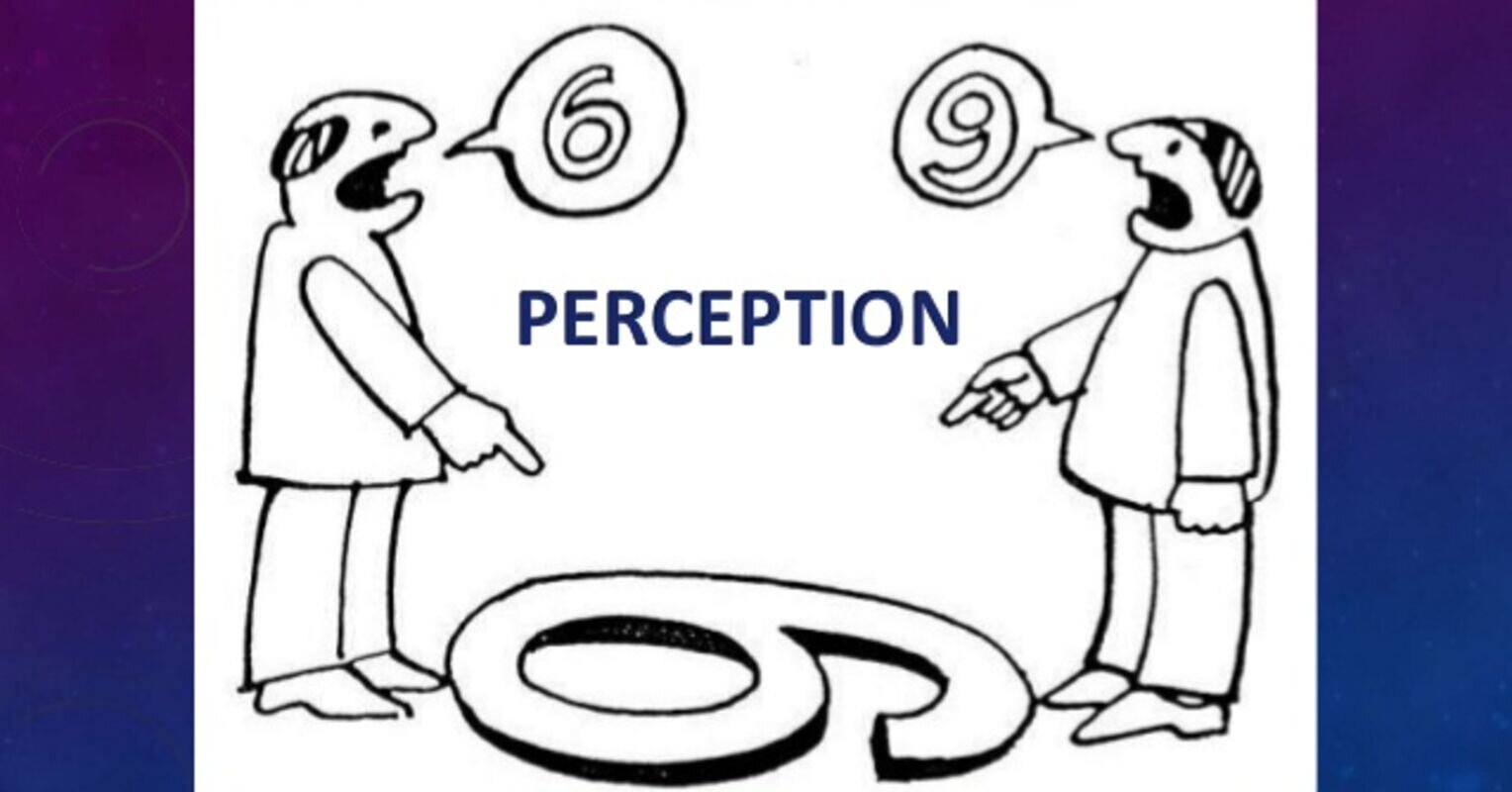
Far too often we look at a group or team of people that are not succeeding and conclude that they are not capable of success. Saying the problems they face are too powerful, too irate and too ingrained to do anything about. We can make a profound difference in how well people turn out if we choose to pay attention to the constraints imposed by poverty, stupidity and attitude.
If our perception is much worse than the reality, why are we trying to change the reality? What we need to do is improve our storytelling and tell people about the reality. Sometimes our perception is faulty and we cannot really tell the difference between the quality and the environmental reasoning. I think that when we change our frame of reference and perceived value, the actual value will be completely transformed.