Business as usual

Business-as-usual.jpg

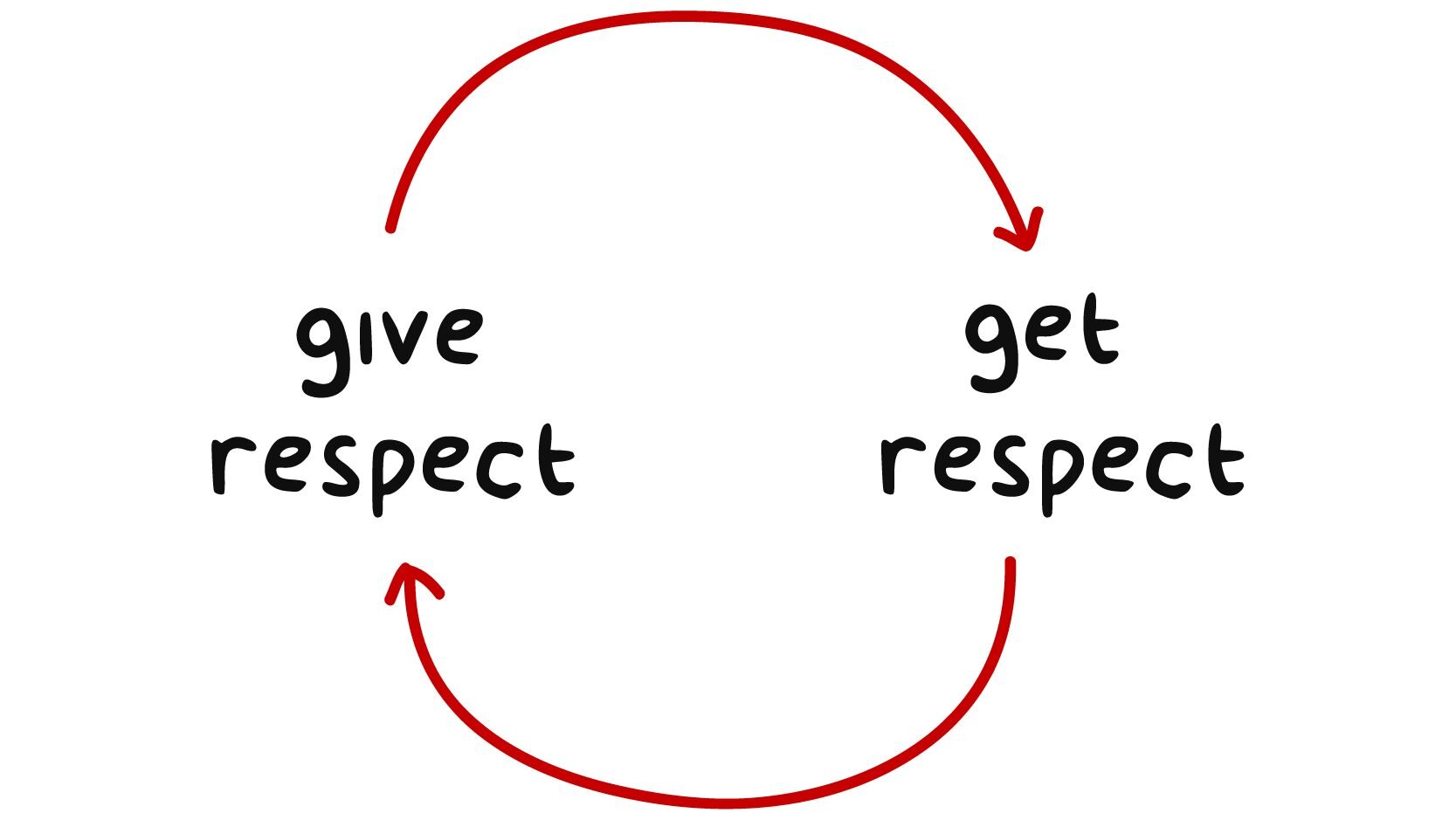
Today marks the end of Copenhagen Fashion Week and I think that part of being an artist is about bringing more personality into the work we do. Let’s be clear here, I don’t need to know anything about your sexuality or where you live, all I need to know is how you open yourself up and put an emotion on the table. A good example is Apple, they don’t make cheap and replaceable products - Apple comes out with products that welcome personal criticism and when I say personal, I mean I made this and for someone else to say I hate that. Nowadays, we are too focussed on how to avoid criticism and not focussed enough on how I make a difference.


After visiting the trade fairs on Wednesday, I came home out with the feeling that safety was paramount this season. There were many beautiful collections, polished with no edge, it almost felt as though they had been designed by a committee. And the designers were saying, “It’s not my fault”, there’s no vulnerability there, I really missed the collections which said metaphorically, I can stand up against the system and I show vulnerability. This made me think about Brené Brown’s wonderful Ted Talk, “The Power of Vulnerability” which has now been viewed almost 55 million times. I also think that vulnerability means putting something into the world and being willing to let the world respond or react. Do you dare to be different? Contact me via e-mail for a deeper dive into how you can make a difference, but only if you dare.

The discovery phase

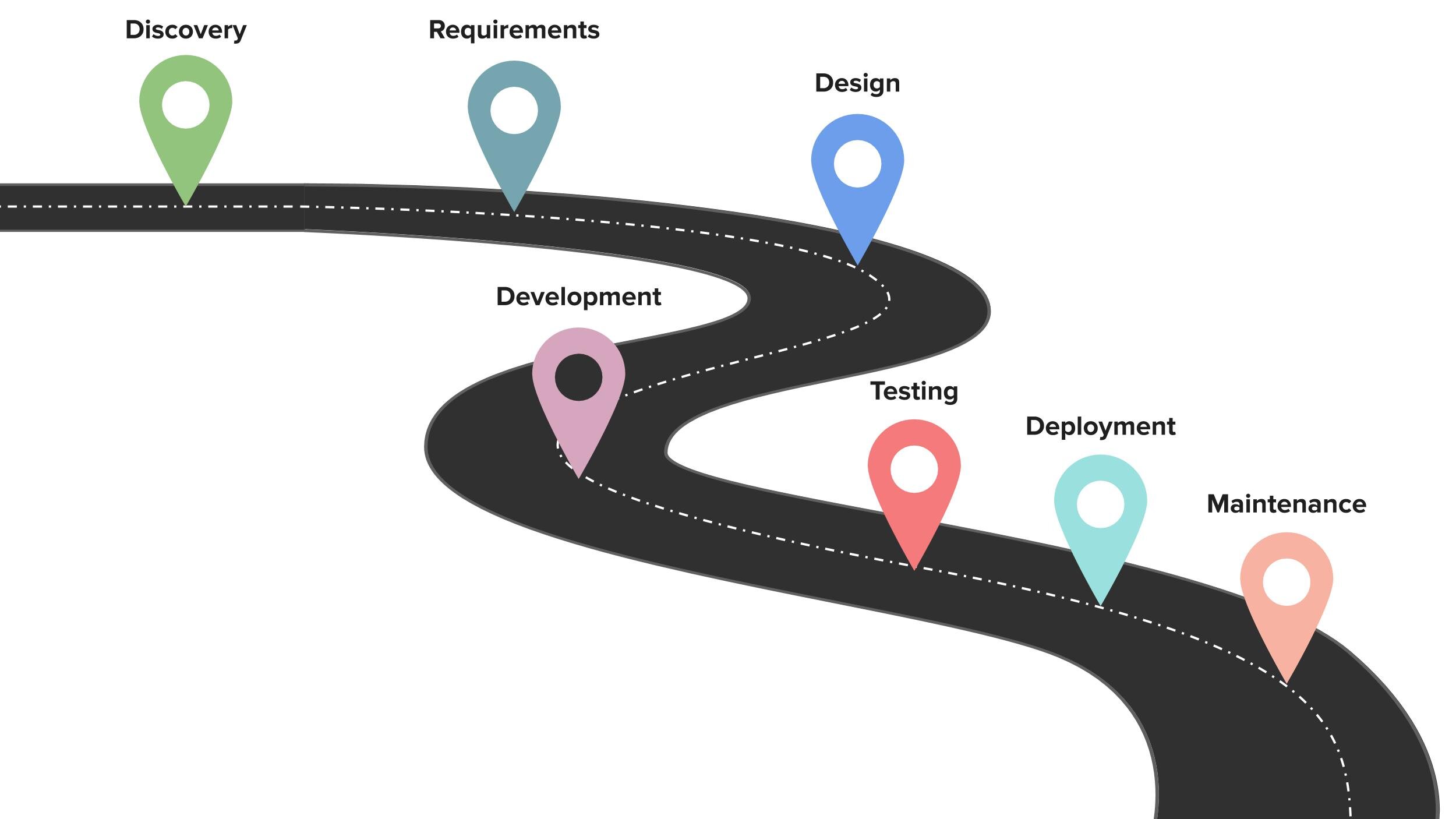
Most salespersons start their presentation by stating the features and benefits of their products and services. Perhaps they should think about looking at business from a different perspective. How do you identify the needs and objectives of a potential customer as they progress from knowing nothing about your brand? Why do they need your expertise for promoting their business?


  1. Awareness - You can help the customer discover the source of their problem by supplying short, easy-to-consume pieces of content that will educate and inform them.

  2. Consideration - To understand and meet this need, you will want to provide the customer with content that educates them on different methods of solving their problem and compares different solutions that you and your competitors offer.

  3. Decision - The buyer at this stage knows what they need and why, they will be more likely to listen when you provide expertise and support their decisions. At this stage, they will be able to see that your greatest concern is providing insight on the best fitting solution for their needs.


Understanding the initial needs of the buyer, along with their preferences and tendencies, will have a huge impact on what you market to them and how you make it visible to them. Contact me via e-mail for your sales training and workshops.


Copenhagen Fashion Week 2021

Copenhagen-Fashion-Week.png
Quality is never an accident; it is always the result of high intention, sincere effort, intelligent direction and skillful execution; it represents the wise choice of many alternatives, the cumulative experience of many masters of craftsmanship. Quality also marks the search for an ideal after necessity has been satisfied and mere usefulness achieved.
— William A. Foster

If not for you, then who?

A few weeks ago my father said to me that I am much smarter than my bank balance indicates. My first question was why isn’t it bigger?
And he said, “You don’t have enough reasons, you have enough intelligence but you don’t have enough reasons.”
This made me stand up and go for a walk, and during my walk I realised that reasons can change your life - reasons come first and answers come second. You don’t get the answers to do well until you get the reasons. My father explained that reasons altered his whole life and sometimes it’s those little reasons that will alter your life.


Life has a mysterious way of hanging onto all the reasons and only gives them up to the people who are inspired by reasons. So, in other words reasons makes a difference as to how your life works out. What are some of the reasons for doing well? Personal, recognition, family, respect and the way it makes you feel. I love the feeling of being a winner and now I understand is all you need is a reason! Would you like to get yourself a list of reasons so that you never lack inspiration? You may not get all the answers straight away, but you will get the answers if you can get the reasons. I have some mentoring openings available from September, contact me via e-mail for an appointment.


Sales tips on Sunday

clarity-confidence-courage.jpeg

Sales persons need to always show up in the moment and when I say moment, I mean showing up in a positive and curious state of mind for the sales performance. Sales is the transference of emotion that the solutions you are selling makes sense for the buyer and in order to do this, you must arrive with clarity, confidence and courage. Here are a few sales tips below, please contact me via e-mail for real world strategies, sales training and workshops opportunities.

1. Learn how to sell yourself

2. Know your products and services

3. Show empathy for your customers situation

4. Believe what you are saying

5. Be open to feedback

6. Learn from master sales persons

7. Learn the psychology of sales


All sales teams need professional training

customer-objections.png

Even when you are a subject matter expert, neither the sales or buying process is linear. I saw the light in 2010 when I stopped working for Aquascutum and took a step back and asked myself, “If I was on the other end of that communication, what would I think?” - Would I click on subscribe? Would it annoy me? Does it make any sense at all? And if the answers are “No”, then why am I doing this, why am I saying it, why am I presenting it? It was at this point of self reflection and trying to see things from the other side of the table that I realised that I was a teacher and had the skills to verbalise and guide based on real life experiences and storytelling.

I have the structure, discipline and intelligence to seek out the knowledge required to ask great questions. I have sales experience and a good track record, I also know how to come in and make a good presentation, role play, assess the situation and ask for the sale. As if you don’t know how to overcome objections, sales is going to be extremely challenging. Contact me via e-mail for your sales training and workshops.


That's not my problem

As sales persons our job is to get the deal and when I say deal, I mean reduce costs, increase revenue or add commercial value. What I have learned over the years is that people mostly care about themselves. I’m quite meticulous around preparation and tend to go into sales meetings with right team and technical knowledge, as I don’t want to be the guy who turns up and is the idiot in the room. The penny dropped for me about sales training in 2010 after I stopped working for Aquascutum. I realised that sales is a performance and to perform well you have to practice, you have to analyse what you do - both the good and the bad - and you have to perform on the day and that takes a lot of effort and thinking and preparation. And this is the fundamental thing I take with me in everything - “Practice makes perfect”.


When you first get into sales you are taught about how to do the pitch (think about yourself), how great the product is and all that good stuff. It doesn’t really wash because everybody cares about themselves the most. The key to interpersonal skills is to try to be interested in the person that you are dealing with, and if you can build upon that and be authentically interested in the industry and domain that you are working in and this will ensure that you always will have great questions to ask. Buyers who are commercially astute and intelligent are formidable opponents when going into discussions or negotiations with them. Contact me via e-mail for your sales training and workshops.


Culture is currency

c/o Lene Mønster

c/o Lene Mønster

The best part of the journey is the surprise and wonder along the way
— Burrellism

The western culture teaches us from a very young age to be attached to the outcome. There is this belief that the effort and practice don’t matter if you think the outcome is not going to be great. I think the only way you’ll ever get great outcomes is practice and practice in order to get better. As a sales professional the practice involves a whole host of things and practice makes perfect. Contact me via e-mail for your sales training and workshops.


Thinking Correctly Under Pressure

Sir-Clive-Woodward.jpg

Sir Clive Woodward guided England to Rugby World Cup victory in Australia in 2003. Woodward outlined his formula for creating "champion individuals" and a successful culture, first of all, he says, great teams are made up of great individuals. Woodward realised that you need to coach your team individually as well as part of a team and get them to focus on being the best in their own role. Woodward uses the acronym TCUP: Thinking Correctly Under Pressure. It's the job of the leader to constantly put their teams under pressure. People aren't born to perform under pressure, they need to get used to it, because only the winners perform their best under pressure.

As an “old” sportsman, I agree 100% with Sir Clive Woodward that constant repetition and practise builds up your skills, so when you are in that pressure situation your subconscious takes over and you don’t have to consciously think. You are relaxed and ready to go! Sales, just like sports is a performance game where you get into that flow state, if you’ve done that preparation. I’ve never been over prepared for a sales meeting, and I urge you to never just turn up and try to “wing it”. Practice makes perfect and contact me via e-mail for an evaluation of your sales teams competitive advantage.


A little bit about me

c/o BBC

c/o BBC

My skill set is not industry specific, I have dotted across different industries as a consultant and had a good varied career across the board. I am fortunate to have worked for a mix of large corporations right through to new start-ups, and everything in between. I think the definition of a creative is showing up, doing the work and putting it out there even when you have no idea if it will resonate. What do you think?


I’ve done the start-up thing where you are fumbling around trying to find  the right product-market fit and your not entirely sure what they might be and you are leveraging your network to get some deals done. It’s fun but I think that it’s not necessarily sustainable for me and with my skill set, I prefer to work for organisations that have least have a little bit of product-make fit, and have some established customers so you can build upon. I’ve also worked in some hugeorganisations which are a polar opposite of start-ups, they are great for getting your foot in the door because everybody will see you because you have that brand recognition. In terms of getting anything done internally or creatively, it is a lot more challenging than to sell, due to the corporate politics.


The commitments

Roddy-Doyle.jpeg

After spending a little time in London and reconnecting with some of my old Irish friends. We discussed the books which were made into really good films and “The Commitments” came up. The books author, Roddy Doyle has ten tips to get you writing:

1. Be kind to yourself when you start. Fill pages as quickly as possible. See every filled page as a small achievement.

2. Don’t worry about the quality of what you write until after you’ve filled lots of pages.

3. Don’t be too worried about being worried. It’s part of the job. That’s you wondering if what you’re writing is good enough.

4. Give whatever you’re writing a title, as quickly as possible. You can change it later if you don’t like it.

5. Don’t try to plan everything before you start writing. Writing is a bit like making a friend. You gradually get to know him or her.

6. Make writing an important part of your daily – or weekly – routine. Being too busy isn’t an excuse. Write about being too busy!

7. Trust your own language, your own collection of words. You have thousands of words that you can use.

8. Chances are the words that come into your head will do fine, eg “horse”, “ran”, “said”.

9. Change your mind. Good ideas are often killed by better ones.

10. If you want to, show what you’re writing to other people. But remember: your opinion is much more important than theirs.


What's your story?

Storytelling.jpg

Story is the oldest human technology, it is the way that we communicate an idea to someone else. The story we tell ourselves, it’s the story we tell others about ourselves and we don’t have to tell it in words. It’s a story about oneself, it’s a story about health, sex, commitment. All of those pieces add up to the narrative we have about who we are and how we want other people to see us. Contact me via e-mail and tell me your story.


The science of possibility

If you can’t explain it, it’s not wired in your brain but if you can build the model and explain it, you will be installing the neurological hardware into your brain in preparation for the experience. Therefore, the more you understand what you are doing and why - the how will get easier because you can assign meaning to it.


The people who get their intentions to match their behaviours, their actions equal to their thoughts and then get the mind and body to work together - are going to have a new experience. The experience is not only going to enrich the philosophical circuits in the brain, because experience does that, it will produce an emotion. So then they will begin to feel unlimited, they will  begin to feel free, they will start teaching their body chemically what the mind has always understood. Happy days! Contact me via e-mail for mentoring or coaching.


Why measurement is hard

One of the first steps in solving a problem — data science or otherwise — is determining the right measure to gauge success. When we want to objectively find the best solution, we should recall the concept of Goodhart’s Law and realise that rather than using a single number, the best assessment is usually a set of measurements. By choosing multiple metrics, we can design a solution without the unintended consequences that occur when optimising for a narrow objective. Goodhart’s Law states: “When a measure becomes a target, it ceases to be a good measure.” In other words, when we set one specific goal, people will tend to optimise for that objective regardless of the consequences. This leads to problems when other equally important aspects of a situation are neglected.

When using technology, people tend not to listen to their eyes and ears. Instead, a person is only making a judgement about a person through the distilled information. I have recently completed a digital marketing course and know now how to “game algorithms”. This has now convinced more than ever that in person meetings are a better gauge of a person’s integrity compared to looking at their social media feeds. When meeting face-to-face we can pick on mannerisms, for example, how the person speaks, how they appear, how they engage with their surroundings and a whole host of tangible and intangible behaviours.

Life is a balancing act, and social media has opened the world to the tensions of two forces: the ones measuring and the ones behaving. I think Goodhart’s Law is one of those paradoxes not to be solved but to be balanced. Contact me via e-mail when you are ready for an external perspective on your organisation’s measuring tools.