marketing

The customers are the marketeers

consumers.jpg

Each industry and every company have a different approach to marketing. Here are a few key questions I ask to help my clients to focus on their “new” marketing strategy:

  1. What customer problem do you uniquely solve?

  2. Who is your customer?

  3. Where are those customers?

  4. What makes you relevant to those customers?

  5. How do you communicate your relevance?

  6. How will you continuously measure and adjust?


How do you figure it out?

smalldata.jpg

Tim Cook (CEO, Apple Inc.) understood that the majority of people don’t buy Apple products because they are better, they buy them because it raises their status. People wait in line because owning an Apple product increases their status and they feel good when other people see what’s in their hands. Apple uses the technology ratchet to turn the handle on status and luxury. Tim Cook understood this metrics and all he had to do was to watch and understand what was going on in the Apple stores. This turned Apple into the biggest and most profitable luxury brand in history.


I have spent many hours doing “mystery shopping” - watching what happens when people visit stores. Martin Lindstrom was hired by some of the world's leading brands to find out what makes their customers tick. As consumers do not tell you how they see the world, on the other hand they give it all away by the stories they tell. I would recommend that you read Martin Lindstrom’s book “Small Data” as it has many small clues that may help you uncover the next trend.


A breath of fresh air

breath of copy.jpg

The most common mistake I have seen marketeers make is when each of us walks around with a world view that we are 100% sure is true. Our beliefs about money, our beliefs about strangers, our beliefs about places, etc., etc. We really believe that this is true! In my experience people do not always see the world the same way as we do, they don’t believe what we believe and don’t fear what we fear. I’m sorry! As a marketeer you have to be comfortable with this, and if you are not then you cannot market to them.


To put things in perspective, please oblige me in a thought exercise - Think of every product you’ve purchased over the past two weeks. This might include food, clothing, a car wash, house plants, insurance, medicine, office supplies, toys, books … anything at all. Now, consider this list and determine: How many of these purchases were directly or indirectly influenced by a piece of company content? If you are like me, the answer is zero.


Branded content has no impact on 99.999% of consumer purchasing decisions. We don’t see this company content, and if we see it, we probably don’t believe it - let alone subscribe to any of it.


The mainstream market

crossing-the-chasm.png

The next group are the early majority, they are the key to getting a stable foothold on the market. This group are very loyal customers if you win them over and essential in securing growth and profitability. The next group are the late majority and are characterized by demanding easy to use, value-for-money products before anything else. Finally, the laggards, this group are the last to adopt an innovation. As clients they can be very tough to win and are therefore often ignored by many marketing efforts, yet can provide important feedback regarding the areas where your product could be further improved e.g. made even simpler, cheaper and more convenient to use.

The chasm is the point where the vastly different motivations for using the new product are emphasised. Visionaries seek out dramatic shifts in productivity which can enable them to quickly move forward, even despite resistance from within their own companies, the pragmatists want gradual, steady improvements, making sure no drastic changes occur too fast.


The early market

When trying to explain the Diffusion of Innovations theory to students, I always felt breaking it down to a simple analogy made it more palatable.


The first group are the innovators for whom owning the latest everything is a passion and an end in itself. The innovators proactively seek out new products to try them out, requiring almost no marketing efforts from your part. The next group are early adopters in search of competitive advantages provided by new products and services. The early adopters view technology as a means of achieving breakthroughs and aggressively gaining market edge.


The first two groups (the Innovators and Early Adopters) are visionaries. They want revolutionary change, something that sets them apart qualitatively from their competitors. They are the people who buy brand-new technology, before it’s been perfected or proved or before the price has come down. They usually have small companies and are willing to take enormous personal risks.

crossing-the-chasm.png

You are the one we are looking for

c/o MTV

c/o MTV

Are you a result-driven person with solid experience in marketing and a passion for brand building and luxury brands? Are you curious, positive and willing to run that extra mile to get the job done? If so, send me your CV and I will scan it for key words before I can see whether you are suitable the position.


Simon Sinek said, “Value is not determined by the people who set the price, it is determined by those who choose to pay the price." The same statistic can be presented in very different ways to create very different reactions. And our choices reflect and determine who we are and I think individual awards come as a result of the teams success.


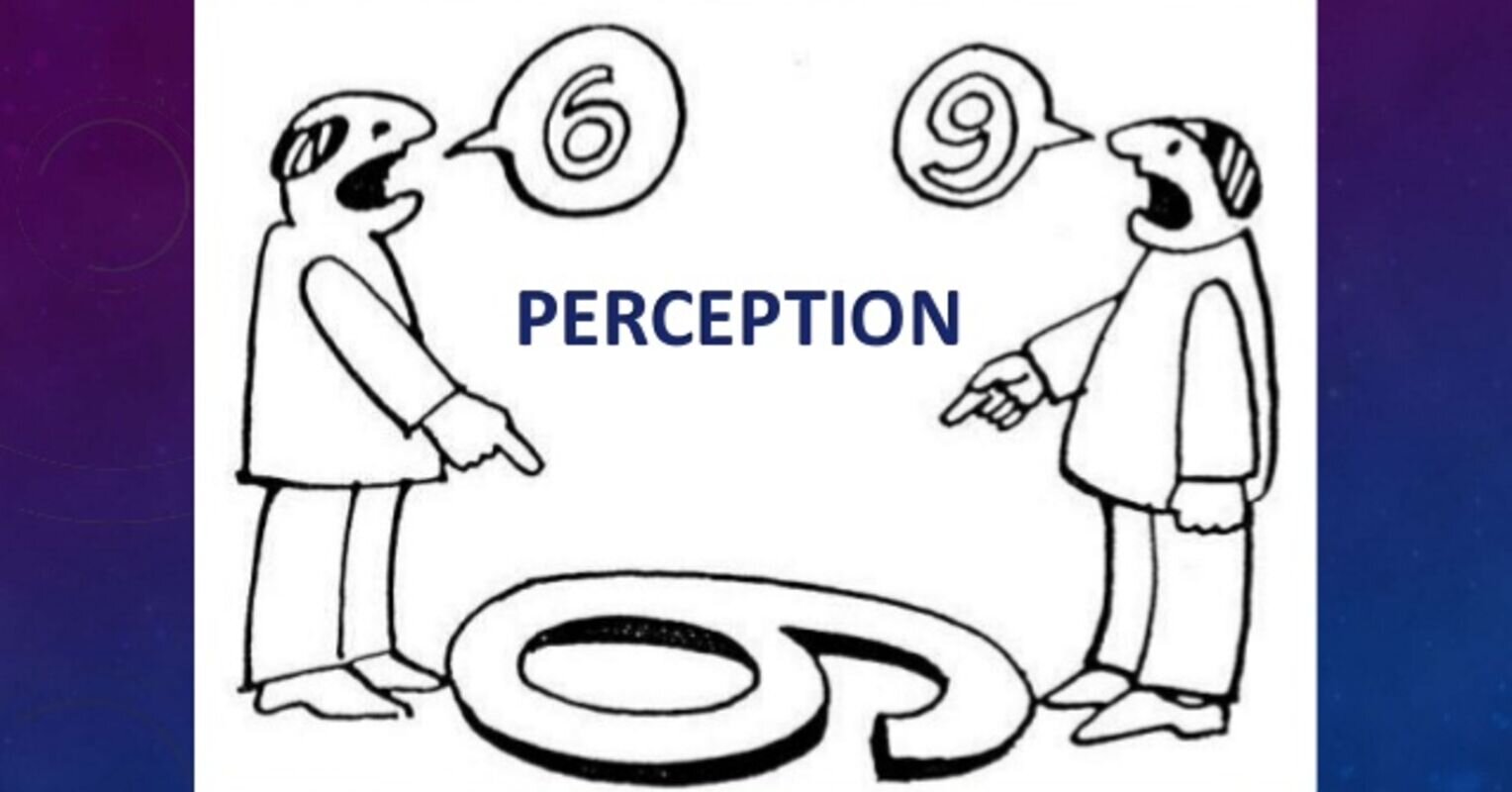
Our perception is our reality

perception.jpg

Far too often we look at a group or team of people that are not succeeding and conclude that they are not capable of success. Saying the problems they face are too powerful, too irate and too ingrained to do anything about. We can make a profound difference in how well people turn out if we choose to pay attention to the constraints imposed by poverty, stupidity and attitude.


If our perception is much worse than the reality, why are we trying to change the reality? What we need to do is improve our storytelling and tell people about the reality. Sometimes our perception is faulty and we cannot really tell the difference between the quality and the environmental reasoning. I think that when we change our frame of reference and perceived value, the actual value will be completely transformed.


Pick your own truth

economic-value.png

I think that there are two ways to create new economical value. You can either find out what people want and work out a clever way of how to deliver it to them. Alternatively, you can work out what you can deliver and find a clever way of how to make people want it. And the economic value created by these two things is just as great either way, even though they may be opposites of the same coin. 


Marketing and advertising are two different things, and a simple way to test it - Would they miss you if you were gone? Most advertising does not pass this test! With marketing we communicate to people in ways they want to be communicated to and this is more valuable than “stuff”. A good example would be Amazon, as Amazon’s value is not based on their inventory, there value is based on the millions of people around the world who want to hear from them.


Marketing is fuelled by adrenaline, it’s fuelled by urgency and emergency, in the majority of cases we are not given the time to do it correctly but we have time to repeat it. We usually overcome our fear by creating an emergency and this endless emergency is caused by the fact that we are not patient in working our way to a place of relevance. I think that patiently building an asset is probably the single most overlooked thing that marketeers fail to do. I don’t think this requires a method, you just need to care.


You need to care

Attention_Sign.png

Sales persons, I have very bad news for you! Buyers only buy from you for two reasons:
1. Awareness - they know you exist, and
2. Trust - they trust you.


The thing about awareness is that they are making anymore of it. Nowadays, we are getting more and more focused on keeping our attention to ourselves and not giving it to whatever shows up, for example, Senate election in Georgia (USA), the most recent pandemic lockdown restrictions in the UK, etc.


Marketeers have a history of just taking attention and just wasting it, going forward I hope that marketeers will begin to treasure, grow and nurture our attention. And these marketeers will perform better than those who just go around creating panic and emergencies. Marketing campaign: “I made this and it was really hard. Look at me and buy it, as you owe me your attention.” There is no humility, there is no generosity and there is no connection. I think that it would make more sense to patiently try to earn the attention of the people we seek to serve.


Why me

Good.jpg

I have been a director, senior leader and commercial executive with experience of running teams, and I have a proven track record of exceeding results in highly demanding environments from start-ups to corporates. Through my varied professional experience, I have gained a deep understanding how effective relationships impact the bottom line.

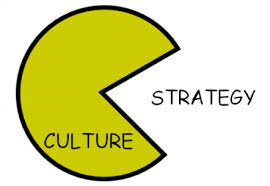
Over the past few years I have used my coaching, active listening and mentoring skills to help organisations to get better feedback from their customers and subsequently improving business results by changing how they deal with customers. As part of this focus, I examine strategy, culture, interaction design, customer service, branding and leadership practices.

I am passionate about spotting emerging best practices and helping companies master them and I also speak about these topics in keynotes and lecturing engagements. Contact me via e-mail and let’s arrange a non-binary virtual meeting to discuss collaboration opportunities.


Advertising works best when it is specific

Image via Kimberly Amici

Image via Kimberly Amici

I am a father, son, little brother, big brother, uncle, friend, leader, manager, mentor, coach and role model. I’m noticing this thing, here’s how I think it works and here’s how I think it may help you make things better. Would you pay me for that advice?


I made a great product, delivered wow and waited for them to tell other people. What I realised is that they will only tell other people if it will helps them, they will not tell other people if it only helps me. In order for other people to share your story, it must help their status, authority or life and then they will be more or likely to do it.


Detroit vs. Pepsi

Detroit in the State of Michigan came into my periphery as it was the home of Motown. Detroit is also known as the motor city - back in the days the Big Three car manufacturers (Chrysler, Ford and General Motors) had their headquarters there. Nowadays, it is the second poorest city in America and famous for D12 and Eminem. Well done to Pepsi for recognising the talent in the city.


Facts on Friday

images.jpeg

The way we change the culture is not by getting a trending headline on social media, I think we change the culture by establishing that people like us do things like this. Culture is driven by media and media is driven by a business model. We all believe that we see the world as it is, in reality we live in a culture and that culture changes what we see.


Even though the world is safer and healthier than it has ever been before, even now during the Covid-19 pandemic, no one believes that is true. What has happened over the past 20 years is that the media business model has dramatically changed, and therefore, the reason that people don’t think that the world is safer and healthier is because the media does not want us to think that this is the truth. The higher powers have decided that society makes the most profit when we are on edge, insecure and feeling insignificant. #justsaying


Question: Why me?

Why-me.jpg

What can I bring of experience and competence that can potentially beat a candidate with industry experience?
The love of winning! Sometimes an “outsider” can see a smarter way of doing it as I would have to learn the procedures and performance routines. And when you are learning a performance, you model yourself after the smartest way, which more often than not is also the best way.


Too many of us think the best people are the people who are metaphorically speaking, screaming “look at me” the loudest, and talking down to the rest of us. They are not the best!
The best people are out in the field - doing it - showing you the distinctions, articulating to you about what has worked for them, so you can benefit from their experiences. I think it’s genius to learn from other peoples mistakes, not in a miraculous way.

Too many of us have to learn from our mistakes several times before we really learn from them. Contact me via e-mail for sparring, mentoring or guidance.


Tips on Thursday

facebook-logo.png

Why do you use Facebook?
Facebook’s brilliant business model is to give you this audience and then charge you if you want to reach them. I think Facebook has become a ”pay to play” platform! I doubt that you will get any form of organic interaction from your Facebook business page nowadays as it’s non-existent.


It makes more sense to take one piece of content and ”slice and dice” it across the various SoMe platforms. Observe how your end-users are consuming that content and then look for opportunities to repeat, as the playing field is continuously changing and we have to be ready for that.


Contact me via e-mail when you are ready to build a community on social media.


This is going to be an interesting journey

Via Getty Images

Via Getty Images

On Tuesday morning, I heard that Supreme had been sold to VF Corp (the parent company of The North Face, Vans, Timberland, Eastpak, Napapijri and Dickies) for $2.1 billion. VF Corp said the acquisition would give Supreme the "opportunities to leverage its global supply chain, international platforms, digital capabilities and consumer understanding." The streetwear market is based on scarcity and scarcity and growth are polar opposites, so I think the Supreme business model will have to change if the brand are going to move the needle on the VF Corps balance sheet.


The streetwear business model is unique, operating with agility across design, development, marketing and merchandising. Supreme are pioneers of scarcity and exclusivity, yet somehow they still maintain an accessibility with frequent curated drops and a limited supply philosophy are key elements to driving continuous brand energy and strong consumer engagement. As Supreme is my 15 year old son’s favourite brand, I have had the honour to visit both their stores in New York, as well as the London, Los Angeles, Paris and Tokyo shops. Not to mention the soft corners in the Dover Street Market stores in New York and Tokyo. For many consumers wearing Supreme was the epitome of cultural credibility and as their products had a high resale value, it was seen as good investment pieces. 

IMG_6512.jpeg

What now, will Supreme become too commercial? 

I think part of Supreme's enduring brand loyalty lays in its early understanding of the power of "social influence" where unlike most luxury and mass consumer brands, expensive celebrity endorsements and glossy advertisements are traded in for the more engaging marketing power of its own community. In the short run, everybody will still want a piece of Supreme. I think the brand will continue to drive "social influence" across every touch point where it interacts with its audience, whether it be via its e-commerce shop, in person, or on its social channels. From a VF Corp’s perspective, they will want to tap into consumer and data analytics to help the brand gain a deeper understanding of their community, and obviously open more brick-and-mortar stores around the world.


Supreme have been around since 1994 and the brand has evolved into a global cult with its own myths, legends, iconography, and loyal disciples. Where it goes from here is really down to the brand and for sure it’s going to be an interesting journey.


We can always do it better

Via Getty Images

Via Getty Images

Stephen Covey said, ”We should always start with the end in mind”.  And getting really clear about not only the vital priorities that organisations are trying to pursue in gaining clarity around that but also what are the vital metrics that they use (KPIs). Essentially, what are the data points that are used to determine if they are on track? 


Now if we have these and know what the performance metrics are, in other words when it's green and when it's red - then focus on how we can do more green stuff. And what are the things we need to do to fit into that? Will it become a predictive and repeatable model (best practice)? This does not mean it works perfectly or that some of the predictions are inaccurate because life changes and business is not static. I think being able to go into a marketing campaign or thought leadership campaign with the end in mind will certainly increases our chances of being successful by a factor of 10. And this is because of having that thoughtful planning from the outset.


Are you looking for a team who you can trust and have your best interests at heart? A team who really want to help your business navigate around the thought leadership process? A team who can help you generate revenue from that content, so you can do a better job in front of your customers? 


I am at your service

Mads-Else-me.jpeg

What do I do?
I have built up a rather unique combination of skills, knowledge and experience. I have been an owner, director, senior leader and commercial executive, with experience of running teams and have a proven track record of exceeding results in highly demanding environments from start-ups to corporates.

Why do I do it?
I have been fortunate to have worked with some outstanding professionals which has enabled me to understand organisational dynamics through people, process and technology. These skills have been proven to be invaluable as I engage stakeholders, explore ideas and opportunities in line with your business priorities. If you want to experience significance and success, I am now in the position to share this valuable knowledge of how to become extraordinary in what you do.

How do I do it?
I currently help organisations, teams, leaders, and front-line employees identify and remove barriers to success. I specialise in addressing issues involving people, processes, and technology - especially where consumers are affected. As part of this focus I examine strategy, culture, interaction design, customer service, branding and leadership practices. I am passionate about spotting emerging best practices and guiding companies to master them. I also speak about these topics in keynotes and lecturing engagements.

What do we make?

megaphone.png

According to my guru, Seth Godin marketing is simply “making work that matters for people who care”. As a marketing expert, we make change! We are trying to make a change happen and often we think that we just have to make it better. The problem with better is that it has no real definition. Let us assume we are trying to make it better for the customer and the enemy in the search for better, is average. And average is what everything we do is measured against.


You do not want to yell at strangers about your average products for average people. You have to make a brave promise to yourself that you are going to make something better for a very tiny group of people who are risk averse. And who also want to demonstrate to their community that they understand what it means to fit in with better quality products and services. I think there something about this change that we are making that is contagious. So contagious that people are proud of engaging with your products or services that they want spread the message.


People with passion can change the world for the better

SteveJobs.jpeg

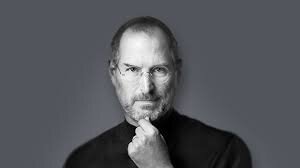
You can go to the best education facilities and spend years trying to learn about marketing or you can spend 7 minutes watching this Steve Jobs presentation from 1997.