marketing

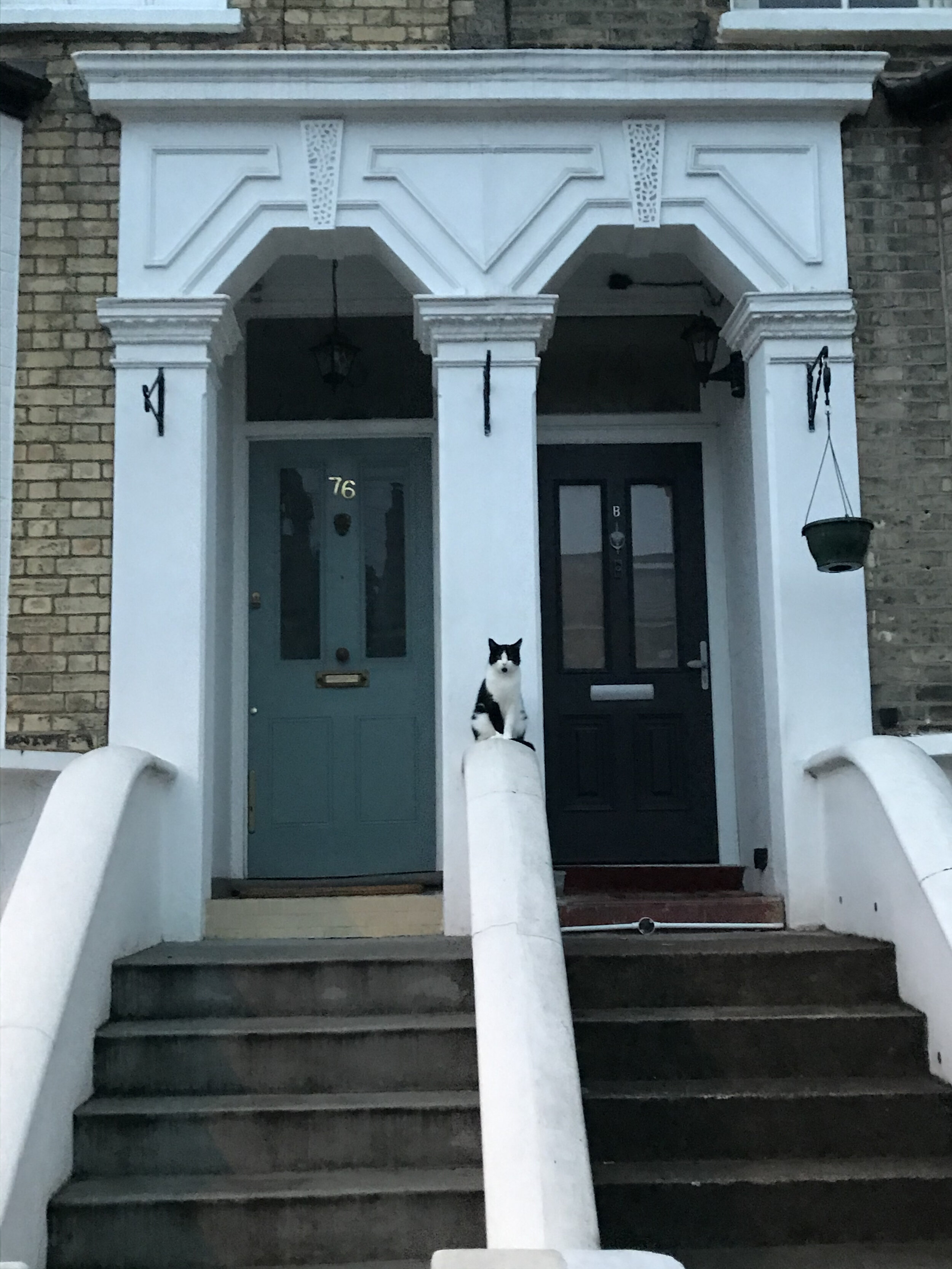
Curiosity Killed The Cat

Cat.jpg

This week, I have observed the most articulate 2 year old, Isiah is his name. His line of questioning revolved around, “Why? Why is it like this? Which invariably led me to ask the question, “Why can’t it be different?”
I think discovery is seeing what everybody has seen and thinking what nobody has thought.

My process revolves around the 4 D’s (discover, define, develop and define) and therefore, always starts with discovery…


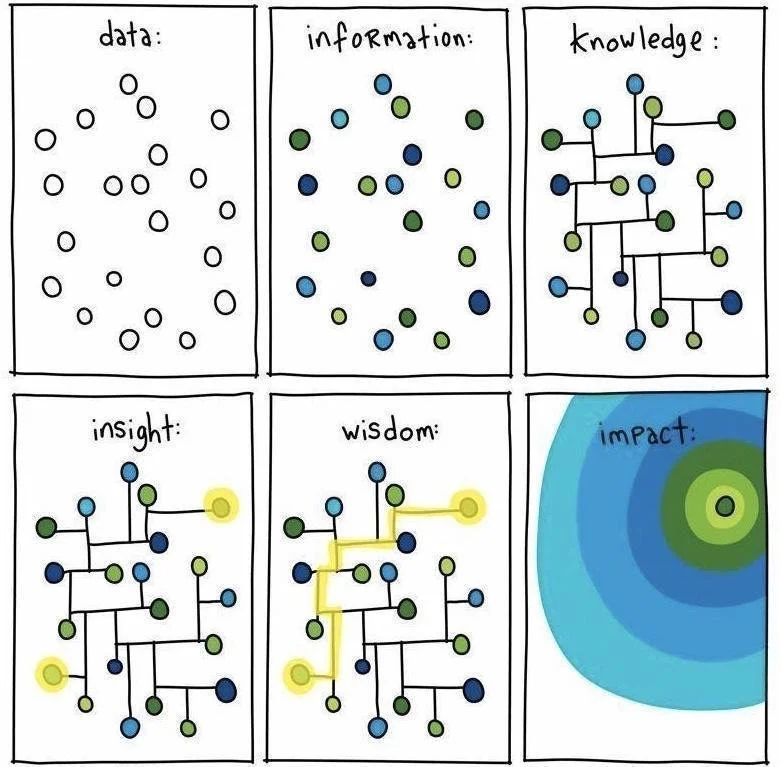
What Problems Are You Fixing?

Don't Forget.png

There has never been more tools, technology or creative thinking around how to connect with the consumer. Today, we are building a vast array of habitats inside a single eco-system that is completely connected by software, promotions, technology, data science and we don’t care where the consumer enters, it can be in any of these habitats on the customer journey. 

“To get to the head you have to go through the heart.”

In other words, you need to make people feel before they think and act on something. We are storytelling animals and we start developing our understanding of stories through fairytales and role play during our childhood. This continues throughout our lives, as we become professionals, whether you study law, medicine, business or engineering. Regardless of what you are selling, I think that we are all in the business of moving hearts and minds.


Simon Nygaard Hoff, co-owner and creative soul at Wonderland Agency

A6CFDB00-A035-4820-A63B-D1A51D8F3D0C.jpg

You and I met each other around 2008 when you had the WAS Gallery in Vesterbro even though we have not seen much of each other over the past couple of years. Last year we bumped into each other at Helle Mardahl’s ’vernissage‘ in Boffi and we both remembered that healthy relationships are nurtured by good conversations. 

Thanks for taking time out of your busy schedule to meet me. As adults we often let the serious things in life suck all the joy out of our lives. We need to engage the younger side of ourselves to remember what it means to have fun. It’s important to let yourself be a juvenile every now and then, not everything needs to be so critical all of the time. During this interview, I will go with the flow and it’s totally unscripted 😊.

Can you tell me a little about your background?

It all began with the Wonderland Magazine in 2005 which kickstarted the Wonderland journey. In the first magazine we had a big article with Tal R and Jonathan Meese. We based the concept around dressing them up as Freud and his mum, as they were both in love with Freud. Tal R and Jonathan Meese said they would like to use the costumes, but we had to come over to Berlin. As we were still students travelling to Berlin was expensive but we managed. Subsequently, Tal R and Meese had a huge exhibition at Statens Museum for Kunst called ”Mor”, SMK had already made promotional material which they scrapped in favour of our images for the official press release, advertising and posters. Crown Prince Frederik and the Minister of Culture, Brian Mikkelsen, opened the exhibition. We were buzzing, this was an ideal start for us and the success was a big deal for us students, over the next couple of years we made 11 issues of the magazine, which were distributed in Denmark and Germany.

What are you up to nowadays?

Product design, furniture design and interior design.

Copyright: Please Wait To Be Seated

Copyright: Please Wait To Be Seated


What made you choose to design the salt and pepper pots?

It was because I made the concept and interior design of a restaurant on the top floor of Illum. I was hired by Carlsberg to design the Bar Jacobsen restaurant/bar - I did the concept and interior design, and then I bought a lot of chairs from a company called, Please Wait To Be Seated (PWTBS). The owner (Thomas) came to the opening and asked if there was something I would improve. Now, as there is always one thing that you are annoyed about and it was the salt and pepper pots. Thomas said that is was really funny as he, wanted to add a salt and pepper design to the PWTBS collection and then I was hired as the designer. I told him that if he gave me 14 days I would come back with some great ideas and the rest is history.

They are made in wood and are being sold in cool shops like Illums Bolighus and Stilleben, but we think they still need a more commercial retailer as it's a royalty agreement.


How did you get into the art world? 

My education is a pretty boring project management degree and I am an autodidactic graphic designer. I slowly moved into the art world when we opened Wonderland Art Space in 2008. Working with the room experience, collaborating with different artists to build and design art bars for festivals. In 2010, I was working on the visual identity for Roskilde Festival, making an art bar for Absolut vodka (Pernod-Ricard) with Helle Mardahl and Andreas Emeniusalso I was making a campaign for Diesel. I was subsequently hired by Roskilde Festival in 2011 to make another art bar, again it was sponsored by Absolut vodka but this time I worked with the artist, Anne Sophie Sandal on the project.


What were you interested in whilst at school?

I grew up in Svogerslev (small town outside Roskilde), I went to high school in Roskilde, but immediately afterwards I moved to Copenhagen as I was so tired of small city life. Even though I really like Roskilde and will probably move back one day...

I was interested in creativity and art whilst I was at school, I wasn’t interested in learning languages or mathematics, I just wanted to play football and learn about creativity. The only thing that I knew was that I had to move to Copenhagen as soon as possible. I attended a 6-month foundation graphics course at Copenhagen Technical School which was extended to one year and I attended film, drawing and graphic courses.

Afterwards, I started a small T-shirt brand called SLRP with Rasmus Blæsbjerg who was one of the first web design teachers at the Design School and was also best friends with Oliver Bjerrehus. I moved to New York for a few months with Rasmus and tried to build up SLRP over there with an American partner, but it did not work out.

Courtesy of W Magazine archives

Courtesy of W Magazine archives

Did you read comics or magazines? Who was your hero?

No, I read magazines and I was really inspired by the American W-Magazine that featured fashion, art, film and culture. I remember receiving some money from my aunt and immediately buying a retrospective book featuring W-Magazine issues from 1990. The book was huge and cost DKK 2.500. Then I knew that I really wanted to make a magazine one day.

I have never been a big fan of comics, Rasmus Blæsbjerg was the man I looked up to for many years, he was a character and very funny. The Wood Wood guys were also quite an inspiration, especially in the beginning when they had the shop on Krystalgade.


What was your first big career decision? 

In the beginning of the 2000s, I started to learn a lot more about visual art and then I became a fan of a lot of artists because for me art is pure creativity where there are no rules. There are just your own rules, there is no client, you don't have to think of a brand, there is no brief. As an artist you can do what you like. The downside of all of this freedom is also the difficult part! I have been advising a lot of young artists about their career, they should know what they want to do, which direction they want to pursue, for example, sound, video, installations, etc. You cannot do it all, if you want to be an art superstar you have to think about your own brand - Tal R is a good example as you never doubt that it is him when you see one of his paintings. The way he combines the colours and figures, he has a childish way of painting with an edge. Tal R is also really good at speaking about his art, his work has a high level of quality, his motives are appealing - it's painting, it's childish, it's funny. He uses beautiful colours and he's really charming and good at networking. Tal’s also made a lot of right choices, e.g. he’s represented by Contemporary Fine Arts in Berlin and I've met the owner, Bruno many times, he's also a lot of fun. There are so many characters within the art industry 😊


Everyone wants a deeper connection with their clients, how do you create an emotional connection with your customers?

We at Wonderland are a commercial agency but we combine our own projects e.g. salt & pepper, with more commercial projects. We have just reopened the gallery, we are making a podcast about the advertising business. We don't ask permission, we just do it! 

It's really important to get your own experiences, for example, trying to make an event because it is really difficult. Getting people to come, creating the marketing and promotion, so if you have that experience then you know how hard it is when you have to do it for a client. Their client’s budgets also have to reflect that if they want to be successful.

It's difficult to get big budget projects, you really have to fight for them and then to have permission to be creative within your own field of expertise and that takes a lot of back and forth, briefs, meetings, etc. Now we are staffing up on the management side, as we know that we have a good reputation and the best creative freelancers want to work with us, where we have struggled in the past to get the big budget jobs.

Courtesy of Wonderland Agency

Courtesy of Wonderland Agency

It appears as though you made a seamless transition from the art world into communication & design. What were the key drivers for you to make the move into the communications world?

The transition has evolved by taking small steps, going more towards a commercial agency and away from the art business. We had a tipping point at the end of 2011, where we had to make the decision whether we wanted to run a creative agency or to run a gallery. At that time the gallery was representing 5 artists and they wanted to be represented at international trade fairs. However, we were not prepared to spend our weekends trying to sell art when we knew that we made all our money from the creative agency. The gallery was more the face; it was definitely not the body.

We started to make small campaigns for Tuborg, we became the Danish advertising agency for Absolut vodka and Diesel, and they both liked the edge that we could bring by gathering the cool creatives. We could not give the artists the representation they deserved, so we decided to close the gallery and move in the city and run our commercial agency there.

In 2103, we landed our biggest job to date for Somersby. We created a sub-brand, ”Somersby Unlimited” specifically targeting young party goers in Denmark. Here we had our commercial breakthrough and a huge budget. We created everything for the concept (strategy, brand name, visual identity, packaging design, etc.). 

Carlsberg sold out of Somersby everywhere during the first two years and this is really something phenomenal when a Carlsberg brand sells out, as they really produce a lot of units. There was so much hype created around the product, simply by adding animal print on the bottles - it was a really simple idea, but the timing was perfect. Fashion is really mainstream and it can move a lot of people, we needed a creative basis for the idea for Somersby to become fashionable. The following year we knew it would be floral prints and we knew that if we integrated that on the bottles it would be a hit and again it sold out. The third-year was really difficult to follow up on the iconic bottles, so, unfortunately, Carlsberg closed down the brand.

Courtesy of www.markedsforing.dk

Courtesy of www.markedsforing.dk

What role has digital taken in your business model?

Yes, it does! We have two sides of the Agency, I am head of design & art and there is not much digital on that side. The other side is SoMe and digital marketing. Here there is a lot of digital, looking at online trends, Facebook algorithms are constantly changing but as we are doing all the SoMe for Fitness World we have to stay on top of the game. And my business partner, Sophie Hardinger is running that side of the Agency, she has become a SoMe nerd. We have 4 people in her department and hire freelancers if we need to work with Adwords etc.


What makes your brand stand out from the crowd? 

I hope that this artistic creative edge we have is the reason why clients want to work with us. Pernod-Ricard recently contacted us again as they want us to integrate their brands in a creative and cool environment. 

I realised that when you develop strong ideas and you invest in the creative process, for example, thinking about the materials, the look, etc. delete. then I am really good at taking a brand and taking it into a physical dimension with a lot of funny creative solutions. I prefer to work on interior designs rather than creating advertising campaigns! The work will last a lot longer than just a quick fix, but of course it's difficult to convince companies to invest money into a long-term solution than a quicker, cheaper one. I have managed, so far, to explain and sell to a supertanker like Carlsberg where the Hall of Carlsberg has been up for 5 years and the Carlsberg VIP Lounge at Parken has been there for 7 years

993236BA-21CF-4DCD-BE2B-20CE6CB6FC6B.jpeg

A Little About The Way I Think

IMG_7189.JPG

1) I spend my time listening and making others feel special rather than telling them how great I am.

2) I understand that relationships are built on trust, and trust takes time to develop.

3) I think that the best way to differentiate is to be honest, caring and hardworking.

4) I usually identify areas of shared interest and create opportunities for everyone to be a winner.

5) I provide encouragement, show concern, listen with interest and instill a strong set of values.

6) I always treat my clients with dignity and respect.


Michael Jackson Forever

Photograph: Victor Boyko/Getty Images

Photograph: Victor Boyko/Getty Images

With R. Kelly being dropped by his record label, RCA (Sony Music) after the “Surrounding R. Kelly” documentary, Virgil Abloh’s Louis Vuitton Men’s Fall-Winter 2019 Fashion Show in Paris was a welcome break from all the controversy surrounding black men.

According to Virgil Abloh, “Michael Jackson was the most important person in innovating men’s wear ever,” therefore, the Louis Vuitton show was presented on a set replicating the Alphabet City backdrop of Michael Jackson’s “Billie Jean” video and MJ was again the inspiration for the collection.

The live performance from Dev Hynes aka Blood Orange was amazing and the clothes were a fitting tribute to menswear, even though I have never understood the wearing of sneakers (trainers) and suits, maybe it’s an age thing? Abloh is acutely aware that his young followers can’t afford the clothes he designs for Vuitton, he wants them to aspire to own them. My 13 year old son preferred the Off White show, what do you think?

Photographed by Acielle / STYLE DU MONDE

Photographed by Acielle / STYLE DU MONDE


Demonstrate Value Before Turning Up The Volume

IMG_6603.JPG

Happy New Year - 2019
It’s that time of the year when everyone is planning for the new year, and the journey can be scary. As you already know, it’s wise to know in advance how to get where you want to go before you embark on any journey.

Challenging The Status Quo With Lasse Have

MrPigsel&I_InspectorPigsel2.png

Tell me a little about your education
I am an autodidact and have 30 years of visual drawing experience beginning with T-shirt designs, posters and flyers in High School and that has evolved into what it is today, which spans from basic illustration, over animation, to complex presentation. At the beginning when faced with the question – “Do you know how to do this?” – My answer was always “Yes”, - even though sometimes I had not tried it before. But I quickly learned the necessary skills and I always delivered a solid and trustworthy product. So, learning by doing, was the basis of my commercial success.


What excites you right now?
Vector graphics has been hot for years now, fortunately for me, I was presented to Vector tools very early, and working with vector graphics is still my favourite. My role is to notice new trends and utilize my experience to identify who is capable of buying these solutions, and able to benefit from them. As the majority of my clients are conservative companies, I am very aware that I have to ensure that my solutions fit into my clients existing framework and style.


What are you looking forward to in 2018?
This is a difficult one! (Pause)
Personally, it’s a rebuilding project in my home – the renovation of our loft room.


What’s the best thing that happened to you in 2017?
In our world we are always looking at the next thing, but sometimes it’s nice to reflect on what has happened. Moving into Republikken in January 2017 gave me a new creative push as I was in downtown Vesterbro on a daily basis. Meeting lots of new people from a variety of ethnic backgrounds with drive and ambition, provided me with a new energy that comes with shared office spaces.

MrPigsel&I_PrincessPigsel.png

Tell me a little about you and your childhood?
I was born and bred in Nyborg in Fyn. My siblings and I were brought up with conservative parents and raised to be self-sufficient and to follow our dreams, which was kind of natural as both of my parents were self-employed themselves. As a young man, I was in a hurry to get out and explore new things. Right after High School I chose to go into the Navy as part of my National Service, where I worked in the Operations Room and was in charge of the ship computers and radars.

When my National Service ended, I went to Paris and lived there for a memorable year before moving to Bordeaux. I lived there for 5 years where I had a lot of crazy experiences and a variety of jobs, and I quickly learnt the language and embraced the French culture. After a few years in France I was able to live full time from my drawings and freelance jobs.


Who was your favourite superhero?
My very own Mr. Pigsel who is the virtual front figure for the company. He has a split personality as he is also Professor Pigsel, Inspector Pigsel, Doctor Pigsel as well as the superhero Captain Pigsel.

MrPigsel&I_CaptainPigsel.png

The whole world is talking about CSR, do you support any charitable causes?
One of my biggest wishes is that we find an alternative to plastic. I recently heard that Lego have announced that its first brick pieces made from plant-based plastic sourced from sugar cane will go on sale later this year. Production has started on the sustainable pieces, which include “botanical elements” like leaves, bushes, and trees. Let’s hope that this is the future for plastic!


What’s the most important thing I should know about you?
I don’t know :).
I enjoy being self-employed and having control of my own destiny, knowing that I have to pay the same insurance as my neighbours’, but being free of the restrictions of employment makes me feel very privileged!

I hate to think of myself as a consumer, even though I know that I am one. I try to avoid shopping centers at all cost. The thought of being a human battery, where “they” drain us of energy and in this case, energy is our attention and money. I guess the worst thing you could say to me is that I am normal.

MrPigsel&I_ProfessorPigsel.png

What would your professional like look like if it was easy?
It is easy, I am living my own dream – yes, I know that sometimes it can be tough, but I guess we all need obstacles to challenge us and to push us into new areas of growth.

I draw, I’m doing what children love to do and sometimes I have to pinch myself to make sure that this is not a dream and I am really living.

Many thanks Lasse. You have been blessed with a natural talent and you have had the courage to make your living from your talent, RESPECT.

If you would you like help with your animations, illustrations or your presentations, please contact Lasse via Pigsel ApS.

MrPigsel&I_DoctorPigsel.png

The Customer Is The Hero And Not The Brand

IMG_5169.JPG

I want to encourage you to pay attention to the stories you tell about your brand, as they are the culture of your organisation and as such both create and limit your potential. Many companies position their marketing around benefits and features of their product or service, but how can they make the customer the hero of their story? And why communicating in this way will demonstrate empathy for the customer and is extremely powerful in the long run.

I think that it’s best to focus on strategic outcomes that your clients need, and not talking about yourself, services or offerings as it loses people because it makes you the star of the story and this, in turn, makes the client not the star of their story! We all wake up self-identifying as heroes in our stories, so if I am the hero and meet you at a dinner party and you tell me about yourself, my subconscious mind begins to process you as a hero as well. Sometimes we subconsciously believe that there is a scarcity of resources, so if you are the hero and I am a hero - who’s the best competition begins. In reality, I should be stepping aside as the client is looking for someone to help with their story. It’s OK that another character comes into the story and their purpose is to help the hero win type day. I don’t want to be the hero in your story, I just want your business to succeed and I want to be the character in your story that exists to help the hero win.

In sales, we always want to be the trusted advisor, and you only need two things to be a trusted advisor are trust and advice! And if you don’t have the advice part, then you are not going to be trusted. Every human being has the need for someone to show them the way. A Harvard Professor once told me that I made a great first impression because I showed trust and respect, I was humbled and replied that I was raised to show empathy and authority. In essence I believe that we are saying exactly the same thing.

via Banksy

via Banksy

We are selling solutions to external problems, but customers are buying solutions to internal problems. The story should always be about how the hero is feeling about their external problem, as customers want us to guide them on an internal journey, and they do not only have an external problem. But this external problem is causing them some frustration, unpleasantness and that is what they are trying to resolve. What makes customers buy your products? It’s always a fulfilment of an internal frustration, much more than an external problem. It’s always an internal problem that motivates a buying decision. The only thing that people want are things that make them survive or thrive.

What the customer has to sense is that we have stepped into their story and we care about their pain. We care about their frustrations that they are experiencing and we care about the problems they are facing. Just caring is not enough, we also have to know how to get them out of it:
"I feel your pain, and I know how to get you out of this!" In other words, show that you care and have the competence to get help solve their problem. When you communicate this, you will earn the heart and respect of the customer.

If you want to grow your business, increase your revenue streams and help more customers solve their problems, then I am the guy for you.


A Blast From The Past - "Fashion Talks 2013"

NIEUWS_FashionTalks.jpg

THE BRIEF

The Fashion Talks is a one-day conference about the fashion industry where we want to touch on the difficulties but also the opportunities in the fashion industry nowadays. Different topics will be brought on stage by a wide variety of national and international speakers.

The main idea of the speeches is that these are 'inspirational pitches' about each speakers' speciality. We want to inspire the audience to be more entrepreneurial, more creative and innovative in the way they do business.  

In a way, it is about sharing your vision on how the industry will evolve in the future with a focus on your speciality domain. Every speech preferably has a practical approach (to make it more lively) stated with examples, images and numbers (wherever possible).

We would like you to touch on how to work with and motivate a fashion team; how the creative department, the sales team, the production team etc… can work together and stay motivated.

Press-Release.png

PRESS RELEASE (English text)

According to you, can a young independent fashion label keep up with the competition of larger, more established fashion companies and international fashion chains? And what would be the 'key to success'? 

In general, it will always be difficult for a young independent fashion label to keep up with the competition of fashion chains and more established fashion companies for an obvious reason - Economy. The economy of small companies means that they struggle to have the resources to pay for the basic things to keep the company afloat, therefore, choices have to make - Catwalk show or trade fair? Silk or crepe de chine? With no marketing budget, it's hard to compete when speaking about paid media.

The key to success for young independent fashion labels is online via social media. As plagiarism is rife in the fashion industry, social media has established a more level playing field, which has given the young independents an opportunity to make a name for themselves before the more established companies have the opportunity to react. 
 

Which fashion week's gain importance worldwide? E.g. in Asia, and the Middle East – these regions are upcoming in fashion…?

The big four (London, Milan, Paris and New York) will always be at the forefront when speaking about the importance of fashion weeks. Why? Traditionally, this is where the big designers show their couture collections and where the media focus the majority of their attention. Tokyo is the gateway into Asia, but I have never seen the media coverage in the West to make me think that Tokyo should be added to the "big 4". 

With regards to the Middle East, they are consumers rather than trendsetters in my opinion. Perhaps, this will change in the future, but for now, it's all about their buying power.
 

Live @ Fashion Talks 2013


What Do You Know About Social Selling? Q&A with Tim Hughes

Image: Alex Low

Image: Alex Low

Marketing guru, Seth Godin once said, “Build it, and they will come only works in the movies. Social Media is a ‘build it, nurture it, engage them, and they may come and stay.’" This week’s Q+A is with Tim Hughes, who is universally recognised as one of the world’s leading pioneers and exponents of Social Selling and he is currently ranked Number 1 as the most influential social selling person in the world. Tim was responsible for a large-scale sales transformation within Oracle which resulted in excess of $100m in sales uplift, and he is currently leading the sales transformation programmes at Avaya, Thomson Reuters and Pitney Bowes and is the co-founder and CEO of Digital Leadership Associates.


1. What are the industry trends affecting your business?

Currently, the internet and social media are the biggest factors in the area where we work. In September 2017, We Are Social and Hootsuite research figures showed that 51%, 3.8 Billion of the world's population are on the internet and 41% of the world's population, 3.1 Billion is on social media. I think for all of us, whenever we want to purchase some goods or services regardless if it’s a small value or a $200 Million outsourcing deal, we start the search online and we do this without help from any supplier. In fact, we do this in salesperson avoidance mode. CEB, now Gartner research shows that in fact, most people are 57% of the way through the buying process before they make contact with a supplier. What we are finding is that most prospective customers are using the people’s online presence to in fact deselect, not select a vendor. This buyers market and dysfunction in the buying process are problems for companies of all size, in all markets.

My business partner, Adam Gray and I spotted this when we started Digital Leadership Associates (DLA) 13 months ago and we have created workshops, programs and a methodology to help companies support a move to use social media internally and externally. This is at a strategic level (Board/C-Level), as well as a departmental level, for example, Sales, Human Resources (HR), Procurement, Supply Chain etc. Our “poster child” for this is our globally acclaimed, social selling program. This enables salespeople (in fact all employees) to understand this buyer dysfunction and the tools and processes to support this.
 

2. What are you doing now that you feel good about? Is there anything that you could be doing better?

I started this journey 5 years ago when I managed a sales transformation project at Oracle Corporation, where we transformed salespeople from “on-premises” sales to one of “SaaS” to meet the change in the market. This involved, teaching salespeople to throw away PowerPoint and use whiteboards, how to story-tell as well how to use social selling. During this project, I started blogging about social selling, then I got a book deal, and my book (On Amazon) “Social Selling - Techniques to Influencer Buyers and Changemakers” went into the Bestseller List during pre-sale. 13 months ago, my business partner and I left Oracle to set up Digital Leadership Associates (DLA) www.social-experts.net and we haven’t looked back. We love the fact that we are making a massive transformational change to our clients, not just in terms of return on investment (ROI) but in the way companies go-to-market and react to the buyer dysfunction made in answer 1.

While we are doing projects in the UK, we have a number of global companies who want to transform using social media, both globally and at a local level. Global consistency, but with localisation. Having created a unique set of intellectual property rights (IP), we are now in the process of signing up global resellers. Our first one is in North America, but we are currently looking for partners in all countries. This is a huge opportunity as all the buyers are on the internet and social media, this fundamentally changes the way every company markets and sells in the global marketplace.

Getty Images

Getty Images

3. When you start a new project, how do you set yourself up to win?

We set ourselves up to win, by providing a change methodology to the client that has a proven track record. We also understand that each company is different, so we research the new client and understand their business and markets, which enables us to fine-tune our methodology to their unique requirements. Built into the methodology are the measures and Governance so we can track “as is”, work out the milestones and set targets for “to be”.


4. We know that feelings and emotions drive human behaviour, but why do you think that storytelling is a powerful tool to build culture?

Storytelling is always powerful as we show our audience a metaphor that they can all relate to, "by putting yourself in the shoes of your client or prospective customer". It is great for taking a complex idea and turning it into something that people can understand.


5. Based on a prism of what’s working and what’s not from the customers’ perspective, how can your organisation realign to meet your customers’ needs?

We have decided to focus totally on social media as an organisation. Unlike the traditional full spectrum marketing agency that does websites, search engine optimisation (SEO), Pay Per Click (PPC) Advertising, PR and are a jack of all trades. While we know about these subjects, it’s not what we focus on, and this is our strength as our methodology allows us to align with our customer's needs and business issues.


6. How does trust relate to the customer experience and customer relationships? And what about its impact on employee engagement? 

Trust is central to the way Marketing and Sales work today. Who do you turn to when you want to buy something? Your friends, your family and your network! The problem is that every supplier says they are the best, so much so that most corporate marketing today is just lost as noise. The fact of the matter is that nobody cares about your company and it’s products. There is an old saying that “people buy people” and they do. Which is why it is critical that you enable your salespeople and your employees to be the “experts” that people turn to when buying. In the past, we often spoke to people who said, “I wished I had spoken to you last week, as we have just purchased something”, social media enables you to build trust so that you increase your chances of that serendipity moment.


7. How do you use customer experience in the battle to win the hearts and minds of your customers?

We talk about the issues we are seeing in the market in the blogs we post http://www.social-experts.net/blog/ we have now posted some 100 blogs. These all take a business issue and then how we can solve it. Focusing on people, process and strategy rather than tools. We hope this creates a vision for our clients that they can see we can make an impact and enable them to get more leads and meetings than with the tools they used in the past, e.g. email marketing, advertising or cold calling.


8. In your experience, are external consultants better suited to engage employees in dialogue when discussing risks and benefits of customer experience management?

We think that external consultants are ideally placed to help a business, but then again we are biased. We often see, well-meaning people, trying to help people with social media, but it not really moving the needle. For example, we often hear about a person that found a Hubspot article on social selling and think that by working through it they become a social seller, or by reading my book is enough to become a social seller. If I get a book on judo and worked through it, I would get a good idea, but if I went into a judo fight I would lose. Here at Digital Leadership Associates (DLA), we help our clients understand buyer dysfunction and help them use social media (LinkedIn, Twitter, etc) as proactive methods to enable them to get leads and meetings. It’s worth saying that as an organisation we make no cold outbound, in fact, all our business comes from inbound. The opportunity to write this article came from inbound, this is what we teach our clients. There are a lot of people out there searching on social media and we help them find you and engage with you and they will only do that if you “appear” on social media as a trustworthy person.


9. Engagement is a challenge, but in your opinion, when you bring the suggestion to hire an external consultant to your bosses, what questions do you expect them to ask? 

You say in your question that engagement is a problem, is it? The world has changed, engagement is a problem because most sales today are started via cold outreach. You are just another supplier and nobody trusts you. The great thing about social media and social selling is that people find you, if they trust you, then they will contact you. It is then about empowering people to buy, closing is dead, it’s all about empowering!


10. If your boss asks – “What extra value will this service bring?” How will you prepare for that from a business justification stand-point?

If a boss asks about “what the value will this bring” we will show the current return on investment (ROI) our clients are getting. We totally understand this question as most consultants work similarly on ERP or CRM projects - let’s take what we have and make it more efficient. This is great and you can, of course, run projects like this, as it assumes you spend to save and what you save is profit. Our social selling and methodology are different, as while we will get you efficiency savings, this is all about creating incremental (new) revenues for our clients.


Thanks Tim for taking time to answer my questionnaire, I am humbled and extremely grateful for your engagement.

Tim Hughes.jpg

Money Talks, Bullsh*t Walks! Q+A with Mie Bilberg

Art by Emily May Rose

Art by Emily May Rose

Continuing the Q+A sessions with industry professionals that may inspire organisations to think and act accordingly. This week we have the former Customer Experience and Marketing Director at Metroxpress, Mie Bilberg.
 

1. What are the industry trends affecting your business?

Well, the marketing industry has been disrupted, just to use a well-known expression. The challenge is that somewhere in between technology and human behaviour we may have lost the clear picture of what is the role of marketing. Everything from creativity, data, insights, technology, media and communication is now under the marketing umbrella. Marketing is expected to be here, there and everywhere and the big problem is that one day, we risk eliminating the marketing role. Right now, the Chief Marketing Officer has the shortest lifespan in the management team, probably because the role is no longer clear.
 

2. What are you doing now that you feel good about? Is there anything that you could be doing better?

There is always something I can do better, I believe in lifelong learning. I am on a mission, spreading the words of why we should listen and involve our customers. I am learning every day myself, but I believe in customer experience as a growth strategy, because I have seen it work and it makes sense in 2017 with the technology, we are lucky enough to have.
 

3. When you start a new project, how do you set yourself up to win?

With a positive approach and evaluating what works and starting from there. We tend to focus on the negative, but I think, there is a lot more to win if we focus on the positive! To win - it takes a clear goal, a specific plan and a team who are willing to learn and navigate from the learnings.
 

4. We know that feelings and emotions drive human behaviour, but why do you think that storytelling is a powerful tool to build culture?

This is because we remember feelings better than words, stories make us feel and relate. Therefore, if you want to tell me, why I should change behaviour or run after a new ambitious goal, you should start telling a story, to make me understand why this makes sense and which scenarios we are operating within.
 

5. Based on a prism of what's working and what's not from the customers perspective, how can your organisation realign to meet your customers' needs?

Well, in a way it´s easy as the customer will not buy if it doesnt make sense to them. The street fashion brand Zara came up with a smart and agile way of testing every time a new collection comes out. They start with a small quantity of each item and then they observe the response of their customers. If it sells well, they push the button and produce more, if not, they take it off the market. In my opinion, this is a smart way to lower the inventory and increase the sales.

ext.jpg

6. How does trust relate to the customer experience and customer relationships? And what about its impact on employee engagement?

Branding is about trust! We pick a brand instead of a no-name because we trust a friend more than a stranger. When the market of private labels is huge is it because we trust the store behind the private label. When speaking about employee engagement, trust is quite basic, e.g. would you feel excited and engaged if you didn´t feel trusted? You should bear in mind that trust is something which must be earned, as an employee, external consultant or brand, you are chosen because people believe they can trust you, but you still must prove that they were right in trusting you.
 

7. How do you use customer experience in the battle to win the hearts and minds of your customers?

Customer Experience is basically about making sense for the customers. If your new app or your new shampoo add value to the customers, then you have nailed it. If not, well then you will just be another one in the line. The best products and strategies in 2017 are developed with the customer in the centre of the decision-making process, and how we do that is the biggest difference from the past. It's not new knowledge that creating great products which your customers consider useful is a good idea. But it is new, that you cannot just speed up your sales or marketing campaigns, and then eventually you will hit the targets. We have way too many options today and we don´t want to waste time on things that dont make sense or add value to our lives. I have worked with customer experience for more than 3 years now and the reason why it´s so hard for the most people is, that it goes against our human nature, as we are born to think of ourselves first. Being customer-centric means that you must think with the mind of your customers, and this means you should spend time with them, listening and learning.

IMG_0123.JPG

8. In your experience, are external consultants better suited to engage employees in dialogue when discussing risks and benefits of customer experience management?

No, but an external consultant brings an extra hand, new eyes and ears and they are not limited by historical internal issues. It can be a very good idea, to have external consultants to bring new perspectives, and they also have experience from a range of other businesses and tasks which brings needed knowledge to the table. I have used external consultants to help me when we were changing from being a brand-centric company to a customer-centric business when I was working in the media business. It was a great help, as they added value, knowledge and they revealed our blind spots. So, it was not only me who had to tell people that we needed to change because no one likes that, but it is sometimes needed. Sometimes, an external consultant can bring an authority to the table which in a way an internal leader cannot.

An external consultant is a trusted advisor, therefore, we selected our consultants very carefully, because a bad consultant is a waste of time, money and leaves you behind looking like a fool!
 

9. Engagement is a challenge, but in your opinion, when you bring the suggestion to hire an external consultant to your bosses, what questions do you expect them to ask?

I think the most important is the experience and speciality which an external consultant brings to the company. What value are they able to create and what is the framework of working, is it valid and realistic? And, also which resources would be required from the company's side? I personally don´t care if they work day and night, all I care about is if they take us to a better place and make it easier for us to deliver results.


10. If your boss asks "What extra value will this service bring?" How will you prepare for that from a business justification stand-point?

It depends :)

Mie Bilbergs blog: www.miebilberg.dk

Q+A with Tina Øvad from Bang & Olufsen

images.png

The reluctance to take risks goes against the inherent nature of entrepreneurism. Over the next few weeks I will engage some industry professionals with a short questionnaire (bold), and this week we have Tina Øvad, Senior UX & Usability Lead at Bang & Olufsen.
 

1. What are the industry trends affecting your business?

Since I am primarily working on a strategic level, the main trends currently are agile UX (User Experience) and scaling agile to suit larger organisations. I can see there is a lot of interest for these fields from many different companies, from a variety of industries.
From a design perspective, we have had positive feedback for our award-winning BeoSound Shape, a bespoke speaker system that can be position on your wall in the same way as a piece of art. And it also helps to improve the room's acoustics, so living with sound is very interesting, as well as voice activated systems.

For more information about BeoSound Shape: - https://www.bang-olufsen.com/en/collection/wireless-speaker-systems/beosound-shape

BeoSound Shape speakers

BeoSound Shape speakers

2. What are you doing now that you feel good about? Is there anything that you could be doing better?

Right now, I am so lucky that I really feel good about the things we are doing and the direction we are heading. I truly believe in the value of working agile with UX and bringing the users closer to our developers. And I am so fortunate that my colleagues at Bang & Olufsen believe in the same.
 

3. When you start a new project, how do you set yourself up to win?

I never win alone, we are a team! With that said, I think it is so important that we allow ourselves to fail from a UX perspective, as for us we never really fail, we either win or we learn! We are working with "Informed Design" and listening to our customers even though we are not implementing everything we get feedback on.
 

4. We know that feelings and emotions drive human behaviour, but why do you think that storytelling is a powerful tool to build culture?

By being a great storyteller you set the scene and create a story which hopefully the customer would like to be a part of and share. The fundaments of Bang & Olufsen are engrained within the Danish culture, both due to our role in the Danish history and, also because we originate from the mould of West Jutland. Furthermore, many people are raised with Bang & Olufsen products, and they are recognised for great design and high quality. Continuing this story, and in fact, spreading this story to our global partners is extremely important for us.
 

5. Based on a prism of what's working and what's not from the customers' perspective, how can your organisation realign to meet your customers' needs?

In the software department, we are working on bringing the users closer to development. This approach is based on Agile UX, UX KPIs, autonomous teams, a UX toolbox, easy access to test participants, use of beta- & VIP testers, and utilise data and information we already have, e.g. Analytics, NPS and CSI.
I am fortunate to be working at Bang & Olufsen where I have been given the freedom to bring the customers closer to us, and these new values are spreading throughout the company.

B&O Play headphones

B&O Play headphones

6. How does trust relate to the customer experience and customer relationships? And what about its impact on employee engagement?

Trust is one of the agile core values and a key factor both when it comes to us working together, but also in relation to making a great user experience. As without a mutual trust between our customers and ourselves, we could not make a great user experience.
 

7. How do you use customer experience in the battle to win the hearts and minds of your customers?

I work with user experience, so from my point of view, it is important to design and develop products that are easy to use. With both customer experience and user experience being the foundation of our cultural heritage. I believe that with good storytelling and excellent products, these products will become products our consumers will be proud to own.
 

8. In your experience, are external consultants better suited to engage employees in dialogue when discussing risks and benefits of customer experience management?

Yes, sometimes senior management tend to listen more to external consultants than to in-house specialists. In these cases, I think it is important to acknowledge whether the in-house specialists have experience in the given project or whether an external consultant would be better suited for the task. Usually, the in-house specialists are the ones who have the knowledge about the feasibility, market, etc., and therefore, they should have the final say, as ultimately, they will be the ones who implement the ideas.

images.png

9. Engagement is a challenge, but in your opinion, when you bring the suggestion to hire an external consultant to your bosses, what questions do you expect them to ask?

I would expect my boss to ask for a full description of the specific task the external consultant would be hired for and why we are not able to cover these tasks ourselves. "Why not in-house?"
 

10. If your boss asks – "What extra value will this service bring?" How will you prepare for that from a business justification stand-point?

I would never hire an external consultant without having a clear idea of how that person would bring value to the company. The preparation would be completely dependent on the specific task.
 

Many thanks to Tina for her time and engagement.
Tina Øvad - https://www.linkedin.com/in/tinaoevad/

Tina-Øvad.jpg


What is the Future for Bricks & Mortar Retailers?

IMG_4826.JPG

New technologies are also vastly transforming consumers' shopping experience. Today's smart consumers are a lot savvier than earlier generations, after being exposed to a multitude of options offline and online and are empowered to make informed decisions via "word-of-mouth" recommendations and online reviews. Traditional models of cultivating customer relationship via physical stores are being disrupted. Retailers must understand that the line between e-commerce and in-store shopping is non-existent in the consumer's mind. Therefore, merging the e-commerce experience with the in-store shopping and vice versa will allow the brand to get to know their customers' behaviour better, whilst also delivering an elevated experience that is not currently offered by your competitors.

Too many consumers still want to touch, feel and try-on before they buy, so in my opinion bricks and mortar stores are not going to disappear. And, besides, there is nothing like shopping and building friendships, passing time and simply indulging in the atmosphere of "what if, even if I can't!" Today's consumers are seeking personalised, data-driven services, as entertaining, memorable buying experiences can never be replaced with online shopping.

Going forward stores will need to build a "community", take more risks, look at their relationships with employees and stakeholders, reinvent training and embrace unexpected partnerships. With the establishment of e-tailing, physical retailers now must realise that they are competing with leisure experience (e.g. trips to the cinema or live sporting events), for a share of the consumer's valuable time. Eventually, stores will change from being a distribution channel to a media channel.

IMG_4822.JPG

Retailers must aim to create an environment in which customers who come into their stores leave feeling a greater connection to the brand, and these connections will be built via the creation of experiences. Retailers should use technology, education and entertainment as the tools that serve as the foundation for the brand. This will enable them to connect with their customers and create lasting impressions that will keep them coming back. The hard work of managing this implementation along with your staff may require some external help.

Omni-channel marketing refers to a significant shift where marketers now need to create a consistent, unified, seamless approach across all communication channels, e.g. direct mail, advertising, events, web, mobile, call centre services, etc. These channels need to be fused into a single approach and each piece of the consumer's experience should be consistent and complementary.

Today, too many sales staff see e-commerce as competition rather than an ally. Perhaps it should be a looked upon as a halfway house, a mix between digital and physical models. Both Amazon and Warby Parker (eyewear) started as online ventures, but now have e-commerce and physical stores where consumers can try merchandise out before going on to place their order online rather than carrying their purchases home with them.

IMG_4825.JPG

Privacy issues are a major concern now, but it is not slowing down the Personal Information Economy (PIE). If a customer thinks that it will benefit them financially or in service terms, they will surrender personal data to credit card companies, Google and their favoured brands and stores. Plus, more and more retailers are offering digital e-receipts – "Can we e-mail you your receipt?" – allowing them to track trending products, buying history and even customer moments.

A future scenario will see a consumers' who are connected to their retailer account when entering a store, beacon technology will be able to provide the sales assistant with their purchasing history, preferred brands and the option to send personalised discounts and promotions to the customer's smartphone. Such technology will also track where shoppers move quickly and where they linger, enabling retailers to make informed decisions about store layout. Staging experiences, embracing omnichannel and mining data are the new credos for physical retailers who want to lead the game.