communication

We are living in interesting times

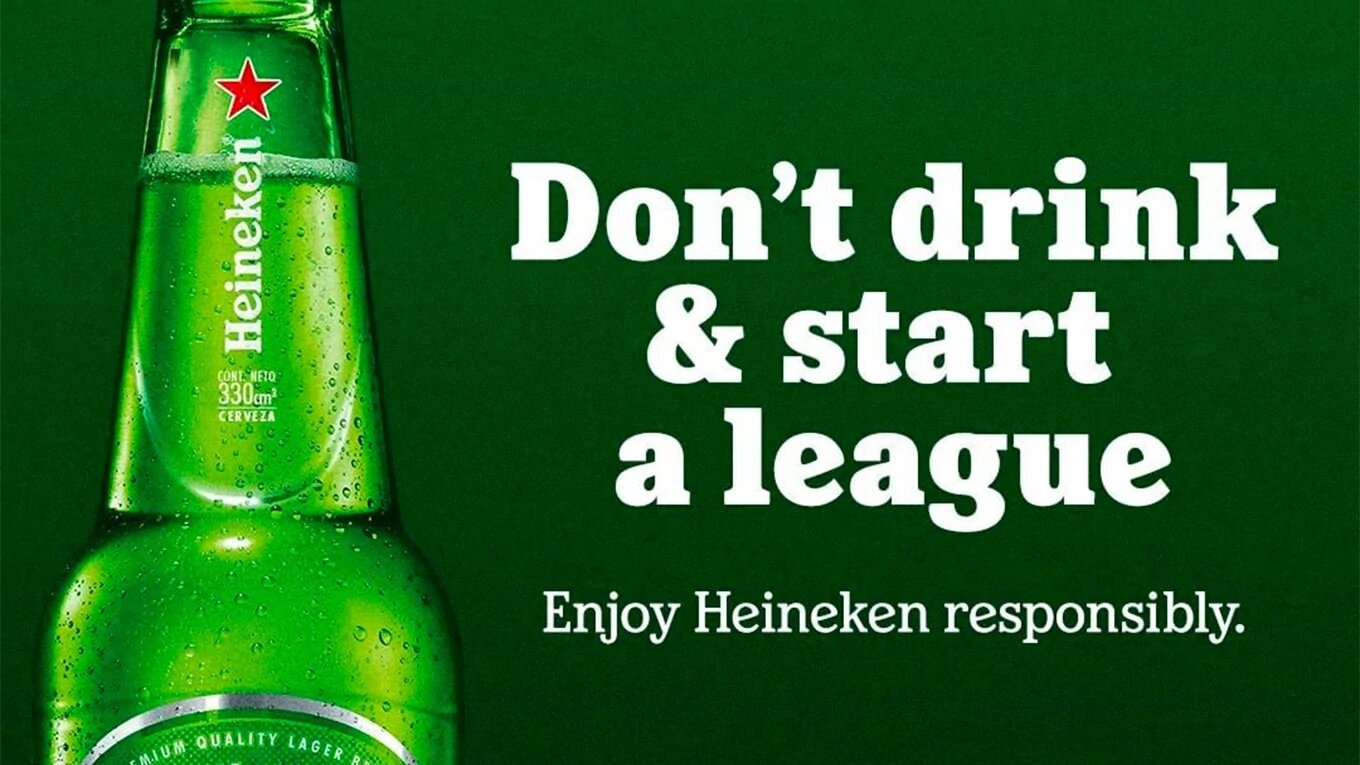
c/o Heineken

c/o Heineken

The European Super League was a proposed annual club football competition to be contested by twenty European football clubs. It was planned as a breakaway competition to replace the UEFA Champions League. The announcement of the Super League received almost universal opposition from fans, players, managers, politicians, as well as footballs governing bodies (FIFA and UEFA). Much of the criticism against the European Super League focused on elitism and lack of competitiveness and the backlash against the announcement of the league's formation led to all six of the English clubs (Arsenal, Chelsea, Liverpool, Manchester City, Manchester United and Tottenham) announcing their intention to withdraw within 3 days after being officially announced. Over the last seven days we have witnessed that some of the wealthiest men in the world are totally out of touch with their end users.


The basic rules of communication says that the art of being an effective communicator is predicated in part by your ability to translate your thoughts into the language that your audience understands. I wonder whether the billionaire owners of Arsenal, Chelsea, Liverpool, Manchester City, Manchester United and Tottenham have the courage to come out of their bubbles and talk to the fans, players and managers. Not showing up as the teachers but to come into the room as humble students. I think that if you want to be a great speaker, you must first learn to become a great listener.


When you lose your ability to hear eventually it will affect your ability to speak, because there is a correlation between what the ear hears and what the mouth articulates. Every great orator is a great listener and I think we have not only lost our ability to speak but also our ability to listen. Nowadays, people are pausing while they formulate their next approach to attack, and that’s not listening. If we actually take the time to listen, most of us all want the same thing - to be loved, to be appreciated, to be accepted as we are and we all want what’s best for our children. Contact me via e-mail to arrange a meeting about your customer experience, communication strategy or if you want to introduce me to the owners of Arsenal, Chelsea, Liverpool, Manchester City, Manchester United or Tottenham.


Lock arms with the right people

© McGill Media

© McGill Media

After watching the football yesterday evening, I had a long discussion with my friends, Sophia and Oscar about the masculine and feminine roles in society. We concluded that biologically women are nurturers and men are providers, like it or not this is programmed within our DNA. Traditionally, women were seen to be soft and men were perceived to be hard, tough individuals. The big question is why is society communicating to men that they should be more feminine, and at the same time telling women to be more masculine?


Throughout my career I have worked with inter personal communication, whether it be sales, marketing or branding. I love the concept of writing to the voice in your audiences head. Broadly speaking, I learned that relieving pain is what we want and maximising pleasure is what we crave. It’s all material and it makes sense to turn over the worst moments in our lives into great lessons, not only for ourselves, but also for the people we seek to guide along their journey.

The second habit Stephen Covey covers in his wonderful book, “The 7 Habits of Highly Effective People” is “Begin With the End in Mind.” According to Covey, before you can live a good, meaningful life, you have to know what that looks like. When you know how you want people to talk about us at the end of our life, you can start taking action now to make that scenario a reality later. As I do not chase people anymore, I have learned that I am here and I am happy, and I am not going to run after people to prove that I matter. So, what do I want you to do after reading this, what is my call to action? I think the the end product isn’t as important as the process, contact me in confidentiality via e-mail to arrange a meeting about your processes.


It’s not what you say, it’s the way that you say it

communications-animation.jpg

It doesn’t matter what you do in this modern world, you have to know how to use words. If you want to inspire your employees, negotiations, interviews or even inviting your friends for dinner, words are the key. Nowadays, face-to-face meetings are no longer normal, therefore, relationship building happens remotely, and this makes our style of speaking is even more important. Especially when selling over the phone, as you don’t have the benefit of body language to help you construct a convincing sales pitch. In reality, when speaking over the phone almost your entire message is communicated via your tone and inflection.


The classic and still widely-accepted rule about effective communication was developed by Professor Albert Mehrabian. He found the percentages relating to relative impact of words, tone of voice, and body language when speaking. Just 7% of meaning is gained from the actual words that are spoken. 38% of meaning is derived from the way the words are spoken and 55% of meaning comes from facial expression. And Robert Alberti , an expert in assertiveness and with over 40 years experience of teaching, consulting, writing about, and researching healthy elements of assertive expression, said ”I’ve learned that it’s really not so much what you say as how you say it.”


I think that if I tell you that “you really look great today,” and say it while making eye contact and smiling and speaking in a friendly tone, you’ll likely take it as a compliment. If I say the same words while rolling my eyes, shaking my head, scowling, and speaking with derisive inflections, you’ll know I’m being sarcastic and critical. Contact me via e-mail for workshops and communication guidance.

Pattern recognition

Effra Parade.jpg

I grew up in South London and in order to survive, I had to use mental shortcuts to solve problems, evaluate situations and quickly make judgments. The psychologist, B. F. Skinner said, “Man is the sum of his learned experiences.” What I did’t realise until later in life was I was using heuristics. Heuristics are rule-of-thumb strategies to shorten decision-making time and allow people to function without constantly stopping to think about their next course of action. When we use heuristics, we risk ignoring important information and overvaluing less relevant information. Are you aware about your decision-making process?


Anyone working in advertising, branding or marketing should have a working understanding of heuristics because consumers often rely on heuristics when making decisions about purchases. This requires more mental resources and usually leads to more rational choices. Both “limited quantity” and “limited time” advertisements influence consumers’ intentions to purchase, but “limited quantity” messages are more effective, for example, this explains why people get so excited over the “one-day-only” Black Friday sales. Stereotypes are an example of how heuristics can go wrong as these broad generalisations do not always apply, and their continued use can have serious consequences. 


I have been victim of stereotyping, both personally and professionally. My positive life philosophy has given me confidence to accept, respect and appreciate the experiences that are unfolding in front of me. l tend to favour an inclusive workplace, usually by virtue of my age and temperament people have always found it comfortable confiding in me. This is because I am generous in my praise and measured in my criticism. Don’t be shy, contact me via e-mail for a calm appraisal and collective guidance.


Can we learn to make better decisions?

Thinking Fast and Slow.jpg

I attended a dinner party last Friday and one of the topics of discussion was Daniel Kahneman’s book, “Thinking Fast and Slow”. For us people in marketing, we don’t need a perfect understanding of psychology all we need is a way of thinking about the way people think. One of the things that makes it really useful for us marketeers is that the book gives a very intelligent and perceptive way of doing it.


In general, people are really good at seeing the mistakes that other people make and are not so good at seeing the mistakes they are making. I am not a self-help guru but Kahneman highlights that educated gossip is a very good thing because people anticipate gossip when they make decisions. And I think if people anticipate intelligent gossip they would make better decisions than if they anticipate unintelligent gossip.


I think that during these hard times “Thinking Fast and Slow” is more relevant than ever. Over the last decade, there has never been a greater need to deepen our understanding and create new models of human behaviour. Having a better understanding of people will help us create products and services for what people want and find easy to use. Forgive me if this sounds too idealistic but I’m optimistic and want to make the world a better place for us all. Contact me via e-mail and let me know how this thinking makes you feel.


The power of reframing things

6 vs. 9.jpeg

Reframing is a technique used to help create a different way of looking at a situation, person or relationship, by changing its meaning. Reframing requires seeing something in a new way, in a context that allows us to recognize and appreciate positive aspects of our situation. Reframing helps us to use whatever life hands us as opportunities to be taken advantage of, rather than problems to be avoided. I think that reality is not a particularly good guide to human happiness as we often forget:
1) Things are not what they are, they are are what we think they are.
2) Things are what we compare them to.

Another way to understand the concept of reframing is to imagine looking through the frame of a camera lens. The picture seen through the lens can be changed to a view that is closer or further away. By slightly changing what is seen in the camera, the picture is both viewed and experienced differently. Contact me via e-mail for guidance, mentorship or coaching.


On a journey

on a journey.jpg

Earlier this week I finished reading Barak Obama’s book, “A Promised Land”. Whenever I read, I am always thinking about what kind of world view would make this language effective. All marketing creates change and if you are not creating change then, you are not in marketing. I think the only chance of succeeding is to be specific in the discovery phase, asking the client about the who are the people they are trying to reach and change.


- What change are you seeking to make and who are you trying to change?
- Are you trying to change lonely people into connected people?
- Are you trying to change powerful people into kinder people?
- Are you trying to change people with one status into people with another status?
Send me an e-mail if you would like to have a fresh approach whilst figuring out your path to action.


Culture eats bureaucracy for lunch

drucker-quote-big.jpg

The legendary management consultant and writer Peter Drucker famously said, “Culture eats strategy for breakfast”. If our well being is directly related to our environment and the work quality we produce, then we really should put more effort into thinking about how to optimise it. 


In his book, “Good to Great”, Jim Collins said, “If you get the right people on the buses everything else will sort itself out.” Perhaps it’s time to look at the coaching style of working together and focus on what empowers. This is an approach which will guide individuals to find their place, their role and their hidden talents, rather than putting restrictions on people and telling them what to do. Is your organisation prepared for feedback that is frank, open and honest?


I think that if you built your organisation around these principles - create the environment, employ the right people and develop the culture - your organisation will thrive. Are you interested in taking a deeper dive into your organisations communication and culture? Contact me via e-mail for coaching, mentoring or workshops.


Stroke of genius

Honest storytelling is compelling and it appeals to our emotions. When I hear a good story I feel myself becoming part of the story. I think that it’s really difficult to tell a good story when you are trying to please everyone. It’s a risk to tell a story that is going to offend some people, it’s not just the facts that you remember, it’s the stories.


Watch the video about Jill Bolte Taylor’s massive stroke, she share an amazing story. Jill is a brain scientist, and watched as her brain functions (motion, speech and self-awareness) shut down one by one and used her experience as a research opportunity.

Change your story, change your life

What's your story.jpeg

There is a voice in your head and it is always telling you what you are good and bad at. The voice tends to focus on your weaknesses and you are subsequently thinking hard about how to let people know all about your strengths. And this tends to lead to “me, me” storytelling, where you mistake the question: “How are you?” as an actual enquiry as to how you really are. What they are really asking is, “How am I?” and that is what they want the answer to.


Have some guts and tell a story! Are you fed up of telling a cleaned up version of someone else’s story? Everyone is walking around telling themselves a story based on their pain points and emotions of what is happening around them. Can you write a story in first person about exactly what the client feels? Written in a language that your client speaks and within this story, explain exactly what they can do better. Detailing exactly what your client get out of the interacting with your brand. Contact me via e-mail if you would like to learn how to tell your own story.


Outcome vs. Ego

Ego-and-its-outcomes.jpg

As a father it has always been important to me to emphasise to my children that I don’t care if they win or lose, all I insisted on was that they do their best. This sounds really “woke” but I think that there is a huge distinction between decisions and outcomes. Pause and take a moment to silently think about any decision that you have taken over the past few months.
Q. Did that decision have a good outcome?
A. My guess is yes! As everyone always picks one that has a good outcome, because that’s how we decide that it’s a good outcome.


I believe that if you made a good decision and it didn’t work out, then it’s still a good decision. On the other hand, if you made a bad decision and got lucky, you haven’t learned anything about good decision making. And yet we criticise people based on the outcome as opposed to criticising them based on what’s in their control, and that’s the decision. The practice is about focussing on the decisions because the outcomes are out of our control. The practice is about what’s in our control and not what the outcomes are.
When this happened what are you going to do about it, is completely different than this happened and screaming oh no, over and over again. I think that things that happen, happen, but they are out of our control except for our response towards them.


Food for thought - Do you value truth over objective reality? Are you willing to be effective or would you prefer to be right? I think if you want to be effective you will be open to feedback that teaches you how the world really works. If you need to be right, then you will isolate yourself from that and in your heart of hearts, you know you’ll never be effective.


Trust your training

Amanda Gorman.JPG

Amanda Gorman delivered her magical poem, “The Hill We Climb” and it tapped into the collective spirit of hope for a better future, presenting a sense of connection that overrides our differences and replaced them with possibility. We live in a male dominated world and Ms. Gorman showed the world the strength of femininity. It was amazing to see how a 22 year old delivered this nurturing poem - this was her opportunity and she took it. Watch the video as I think this presentation will go down in history as one of those moments .


Play your cards right

NorthStar.jpg

Information and data is really important, in reality human beings are moved by emotion. I help people build that emotional connection whether it's in a one to one conversation or if you have to give a presentation in front of many people. By being your true self and conveying your message in a way that is going to connect is easier said than done. What I attempt to do is align everybody, so they are singing from the same hymn sheet, and are working towards the organisation's common mission.

It starts by doing the work within oneself, first question is ‘Who am I?’
Do you know who you want to be as a person? How do you want your life to look? What kind of impact do you want to make on other people? I will guide you in how to look within and understand what experiences have shaped you, and from here, how to present it in a way that is going to affect and elevate others. And ask, ‘Now do I have clarity about my story and why I behave in the way I do?’


Learn how to share a short story that other people in the room can relate to. Demonstrating which parts of your life are relevant to share and when to show your vulnerability are essential ingredients of storytelling.

  • What do you stand for? In other words, what do you believe in so strongly that regardless of the circumstances around you, you will stand up for that principle?

  • When people know that this is what you stand for irrespective of circumstances or your own personal gain they will gravitate towards you, they will trust you more.


My work revolves around growing your influence and building trust with people you work with. Be connected to your story, what shaped you and know what you stand for and believe so strongly that you will bring it naturally every day. Contact me via e-mail for coaching, consulting, workshops or lecturing about storytelling.


Telling yourself stories may have bad side effects

storytelling.jpg

There is not a huge difference between reporting and storytelling. For example, if five people see a bicycle accident, does one person see what actually happened and the other four are wrong, or do all five persons process what they have seen in their own way?

We know that all human beings process incoming information by telling themselves a story about what they saw, a story about what change it will require, a story about how it fits into their existing world. These stories need fertile ground to grow and that comes from our culture. Culture is all around us, culture beats the truth, culture beats any offer you can make. We have to understand the culture, we have to understand the world view, we have to understand the perspective of the people we are talking to.

I think that anyone who wants to make change has to tell a story that resonates with the people who are hearing it. I have guided companies that look good and want to be great. My business is desire and desire is the backbone of storytelling! I cannot help organisations to compete on price, therefore, all my offerings are focused on helping them compete on storytelling. And I do this by changing the narrative and looking at their strategy, culture, customer experience, etc.
Contact me via e-mail to arrange a virtual meeting. 


Self Help

c/o The Telegraph

c/o The Telegraph

Everybody is talking about Matt Haig’s book, “The Midnight Library”. I think that his book “Notes on a Nervous Planet” is a masterpiece as it offers a personal look at how to feel happy and stay human in the twenty-first century.


On New Years Day, Matt posted on his Instagram feed a “Self Help” guide, it’s simple and easy top follow:
1. How to stop time: KISS
2. How to travel in time: READ
3. How to escape in time: MUSIC
4. How to feel time: WRITE
5. How to release time: BREATHE