marketing

That's the reality

“Heuristics” are the mental shortcuts human beings take when processing information and making decisions. Marketing teams are fully aware of how to use heuristics to simplify complex and difficult questions as they are fast and accurate ways to understand and influence behaviours.

Brands use the anchoring and adjustment heuristic to strategically set a product's price point. For example, an electronic retailer in Denmark lists a television at a higher price than its fair value, and the potential buyer will use that price as an indicator that they have received a bargain when purchasing the TV at the “sale” price.


Three wise men

I think there are certain people who are meant to serve and others that are not and it is your job to work as hard as possible to find people who you are meant to serve. And I believe you will find them when you show up fully self-expressed. Most marketing books are tactical, so they focus on quick solution, for example, just do this or do that. This is OK if you are looking for a quick fix, but this does not teach you how to build trust and credibility, or how to price your products or how to have simple sales conversations which is required if you are doing pay per click advertising.


We can be heroes

How can you make the customer the hero of the story?

The short answer is through customer experience, sales, and brand loyalty initiatives. Many organisations position their marketing around benefits and features of their products and services. The customer is the hero, not the brand and I think the focus should always be on the strategic outcomes that the customer needs. In other words, shift the focus from ‘us marketing’ to ‘customer marketing’. We all have the need for someone to show us the way and consumers don’t always buy the best products and services; they usually buy the ones they can understand the fastest. What the customer has to sense is that we have stepped into their story and we care about their pain.


It’s a symptom not a tactic

Many years ago, I heard Seth Godin say, “You should always start with the minimum viable audience, and the minimum viable audience (MVA) is the smallest group of people who we can imagine serving. Once the MVA have been identified, then we can be specific and if we can be specific, we will create something worthwhile and when we create something worthwhile, it’s easy to sell because it’s worthwhile.”


Social media isn’t the way you become popular, it’s after you are doing something important that people talk about you on social media. I’m a big fan of “word of mouth marketing”, I know it’s old school, but nothing beats the process of actively influencing and encouraging organic word of mouth discussion about a brand, organisation, or event. So, I think that if we can change the lives of 50 people then they will tell their friends and family. Imagine being a specific, unique entity that connects with people at a really deep level, just start by being really special and then the word will spread, and you will add more people.


Pleasure is a treasure

I started my presentation with “Generosity is scarce and generosity scales!” I think that generosity does not mean you give away things for free, it means you showed up with emotional labour to make things better and this can be expressed in many ways. For example:

1) Act like a caring person and not like a company. Show up with your version of the truth by being consistent and personal about what you believe.

2) Be generously persistent meaning when there is a way to make things better, continuously show up with it.

3) Earn permission, own the privilege position of being able to communicate with your audience. Don’t give away your power to Facebook and Instagram, own the connection with the people you seek to serve.


The customer always has the last word

As a marketer your job is to tell stories that are true and will change people, this all depends on what brand message you are trying to convey, and how you intend to drive revenue. I think the message is: “We are building a brand that stands for something, and when we think about where this brand is going then it’s about building a brand that is going to drive revenue for a long time and is worth something.”


If you don’t provide an experience, then you won’t have any customers. The question is whether you will choose to matter because that is the path that you really signed up for and if you do that work, everything else will take care of itself.


A gift on Monday

The sole purpose of marketing is to make a change, this is a big statement. Marketing is what we do when we want to change culture and behaviour, when we want things to be different. I think marketing is the work of telling a story that’s true to someone specific to help them see the world differently and take a different action, and if this change doesn’t happen then there is no marketing. Marketing is the generous act of leading people to get them to make things better.

To begin the marketing journey we have to be specific and ask ourselves two questions:

  • Who is it for? (Target audience)

  • What are the changes we seek to make? (How would they like to receive this content?)


The right competencies

I recently advised one of my clients that digital marketing is an excellent way to reach a large audience. And I also told them that using Google Ads - especially if they can use specific keywords - will help reach the right people and it’s easy to budget because you only pay for results.


What about influencers?
An influencer is someone who has a large following on social media and can influence what people buy or where they go. When a brand partners with an influencer, they usually get free products and services from the brand in return for posting about their experiences favourably. I think that linking up with influencers that align with your brand is a relatively simple way of boosting your social media marketing strategy, and it’s a great way to gain exposure on platforms you may not have a huge following on.


Sharing information across your campaigns

The idea that we can look somebody in the eyes and engage with them is scary for many people. When you work in sales and marketing this behaviour is the bare minimum of expected of you. Many organisations spend loads of money marketing their various products yet often their marketing strategies aren’t connected to one another, instead they use isolated campaigns without any formal unities. Why are they doing that? I think you should start correlating all of your marketing activities by streamlining your marketing strategy and messaging, as this will increase their effectiveness and put you in the spotlight for potential customers. Contact me via e-mail if you would like an evaluation of how to create a more unified marketing message for your organisation.


L is for language

What does the EBITDA abbreviation mean to you?
EBITDA means ‘earnings before interest, taxes, depreciation, and amortisation’, and this is how an organisation’s overall financial performance is measured. Do you use the language of business and of value creation? I think it’s time for marketing teams to move away from marketing jargon and encourage more discussions. Marketing teams should use their insight skills to communicate more effectively with the internal stakeholders, as this is about building relationships.


Do you know the difference?

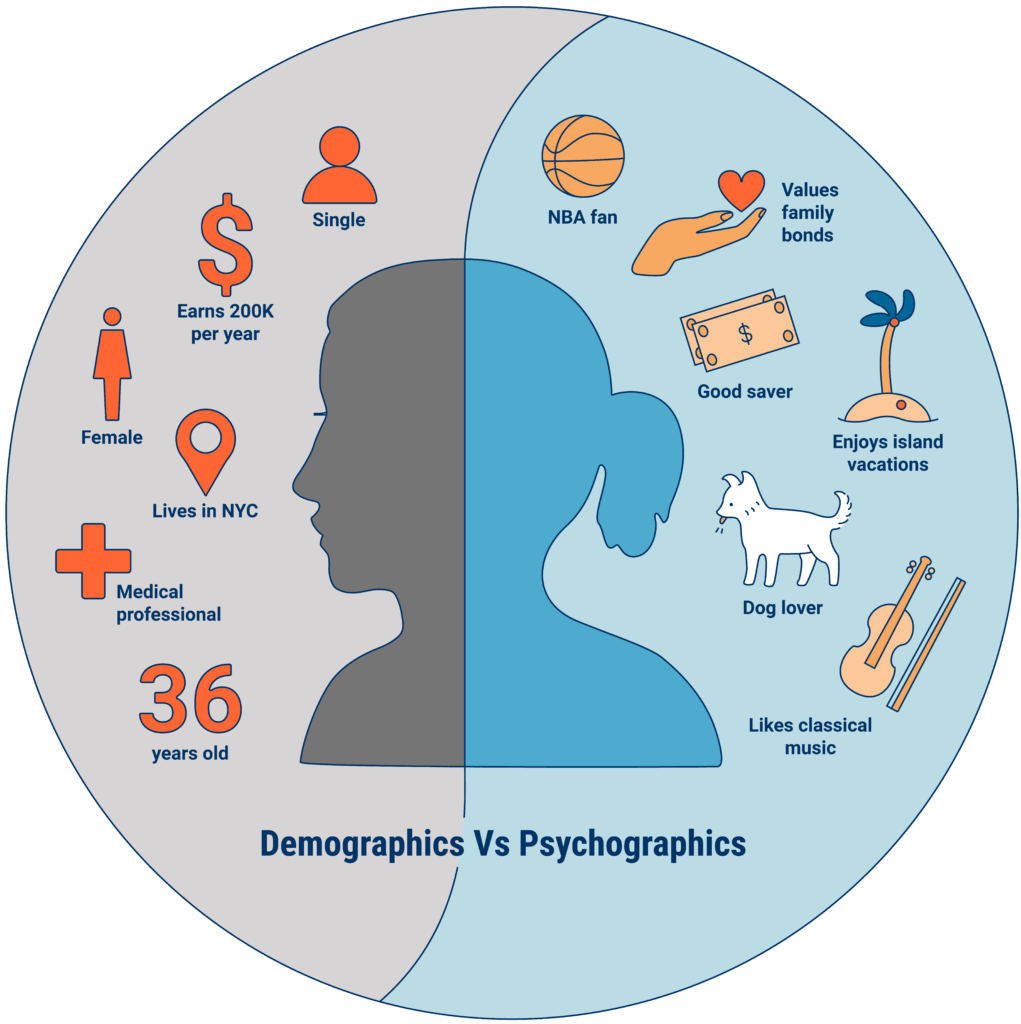
Demographics are an old-fashioned method and is only used by people who don’t want to understand psychographics. Demographics is all about what do you look like on the national census form, whereas psychographics are about what do you believe? What do you want? What do you dream about? I think that if I know that you drive a cabriolet, this far more informative for me than knowing that you are 45 years old and a woman. We need to find the choices people are already choosing to make and then help them make their dreams come true.


Focus on things under your control

Often, we focus on things that don’t matter and things that are beyond our control. In times of crisis, organisations often forget about their sales and marketing strategies because there’s so much else to focus on and this results in wasted time and wasted opportunities. For me it’s all about customer satisfaction, giving good advice and solving customer problems to improve their customer’s lives. 


I think knowing which things we should focus on is key to getting what we want. From my perspective, customer loyalty is truly satisfying and many of my customers have become real friends. Focusing on the human side instead of the sales and marketing side helps because visibility to attract new customers is key to expanding my customer base as I work in human-to-human industry. 


The feedback loop

The world is changing to compensate for our lack of focus and SoMe deliver endless feeds of bite-sized content, bombarding our brains with dopamine. Are you actively seeking out and welcoming customer feedback? Do you have systems in place to incorporate feedback? Are you familiar with the term “Feedback Loop”? It’s a system that helps organisations gather information about their products, services, and performance from people outside of their organisation. What feedback loop approach works best for your organisation depends on your structure and culture.


There are two components of a feedback loop: an action and a reaction. What makes it a “loop” is when the results of the reaction feed back into the process. The ways in which organisations design feedback loops makes a difference in whether or not responses actually get incorporated. Every business has to find their protocol. The challenge is to make sure you empower employees to make and embrace change. 


I think there are 3 Feedback Loop approaches:
1. Role Based Feedback
2. Direct Outreach
3. Social Listening
Following are three that can apply to any organisation of any size.
Contact me via e-mail for a deeper dive into your organisations feedback loop.


Awareness can travel

c/o Getty Images

In psychology, a heuristic is a mental shortcut that allows people to make decisions quickly and efficiently. It is the way you feel (your affect) toward a particular stimulus that influences the decisions you make. No one likes to be outwitted or to be tricked, I wrote a little about “affect heuristics” on Tuesday because advertisers are perpetually after our attention and politicians after our votes, both of them employing as much inducement and enticement as they can muster. With heuristics, the brain can make faster and more efficient decisions, albeit at the cost of accuracy. Do people in your organisation exhibit curious, predictable biases?

In 1974, behavioural economics researchers Amos Tversky and Daniel Kahneman identified a specific mental process used to simplify decision-making. They showed that humans rely on a limited set of heuristics when making decisions with information about which they are uncertain. The three key heuristics are as follows: 

1. Representativeness - allows people to judge the likelihood that an object belongs in a general category or class based on how similar the object is to members of that category.

2. Anchoring - allows people to estimate a number by starting at an initial value (the “anchor”) and adjusting that value up or down. 

3. Adjustment and availability - allows people to assess how often an event occurs or how likely it will occur, based on how easily that event can be brought to mind.

You decide for yourself

c/o Harvard Business Review

How do we balance the need to be rational, cautious, and sceptical with the benefits of being curious and open minded to new ideas?
I think our emotions influence all types of decisions, both big and small. By nature, we are wired to pay attention to our emotions whereas we only listen to our thoughts, so when we feel something, it engages so much of our body. We are emotional creatures by nature, we are not the rational thinking animals we like to think we are. Marketing gurus know how to communicate and appeal to the animal in us, as people buy things based on emotions and not based on rational decisions. Consider how advertising can sometimes make unhealthy activities such as smoking or eating unhealthy foods seem both positive and appealing. These ads can sometimes influence the emotions of consumers, which can lead to poor health decisions and risky behaviours that can have serious, long-term consequences.


What can you do to prevent emotions from contributing to poor decision making?
Heuristics are efficient mental processes that help humans solve problems and learn new concepts and these processes make problems less complex by ignoring some of the information that’s coming into the brain, either consciously or unconsciously. The affect heuristic is a type of mental shortcut in which people make decisions that are heavily influenced by their current emotions, in other words, your emotional response plays a critical role in the choices and decisions you make. I think the next time you need to decide during an emotional moment, take a moment to talk silently to yourself using the third person. It might help you stay calm, collected, and level-headed, a strategy that may prevent bad decisions made in the heat of the moment.


Everyone is looking for answers

brand-idendity.jpg

Yesterday an accountant asked me a question, “What is marketing for?”

My answer went a little like this: “I think marketing is about making change happen. Marketing works, therefore, as marketing professionals then each and every one of us are responsible for the effects and side effects of what we do.”


Accountant: “Who do want our customers to become?”
Me: “Marketing is the act of going into the world with intention to make a change happen. I use marketing to convert non-customers into customers. Sometimes, I help my customers become the person(s) they seek to be, and I help to create an environment that I think my customers want to see happen. Turning people from this to that!”


Accountant: “What are you going to spend all this time and money trying to do?”
Me: “I seek to help you become somebody who can make the change in the world that you want to be responsible for and be proud of. I seek to make an impact and clarify to the market the direction you are heading, leveraging the activity by using marketing tools to make a change happen.”


You are reading this because you are a passionate and caring human being. Contact me via e-mail and tell me about the change you are trying to make for your organisation.


What's your story?

Storytelling.jpg

Story is the oldest human technology, it is the way that we communicate an idea to someone else. The story we tell ourselves, it’s the story we tell others about ourselves and we don’t have to tell it in words. It’s a story about oneself, it’s a story about health, sex, commitment. All of those pieces add up to the narrative we have about who we are and how we want other people to see us. Contact me via e-mail and tell me your story.


I travel light

I don’t think that complete objectivity is possible! That’s a massive statement, but in reality If I led a media channel, for example, even if I didn’t mean for it to, it would naturally reflect some of my passions. So, when you have similarly educated people with similar backgrounds running all of the main media institutions, even if they don’t intend it, the outcome will obviously be biased. This week’s UEFA EURO 2020 Semi-Final between England and Denmark showed the problems with nationalism and how it makes people delusional and ugly. It’s hard to get better until you become humble.


I think the beauty of an action comes not only from when it becomes a habit, but also from its sensitivity, consciousness, clarity of perception and accuracy of response. The older I get, the more I realise that I am not compelled by any conditioning or programming from my past experiences or from my culture. Jamaican parent, British societal values and Danish awakening has stamped everything on me, fortunately, I am now in a position where I no longer react on the basis of my upbringing. I have learned how to experience things fully, both good and bad experiences. How to learn from them and then drop them, and move on to the next moment, uninfluenced by the previous ones. I travel light as I am uninfluenced by labels and titles, I just treat people with respect. 


There's nothing wrong with you

nothing wrong.jpg

The general consensus for creative people is that discipline stifles creativity, I’m not sure that is the case. I think that in reality discipline allows you to focus on what matters. And when you to focus on what matters, you get more clarity and space in your mind to be creative. You should be seeking to solve the problems of the people you seek to serve. And the only way you can solve the problems of the people you seek to serve is to know what their problems are. 


I think that marketing is not the same as advertising, marketing is not about hyping lousy stuff. Marketing is about telling a true story to people who want to hear it. In my experience marketing at its best is when we make things better that are seen and understood by the target audience. I think that if there is a person, cause, organisation or brand that you care about it’s because they do good marketing. Contact me via e-mail for a non-binary meeting about your organisations marketing engagement.